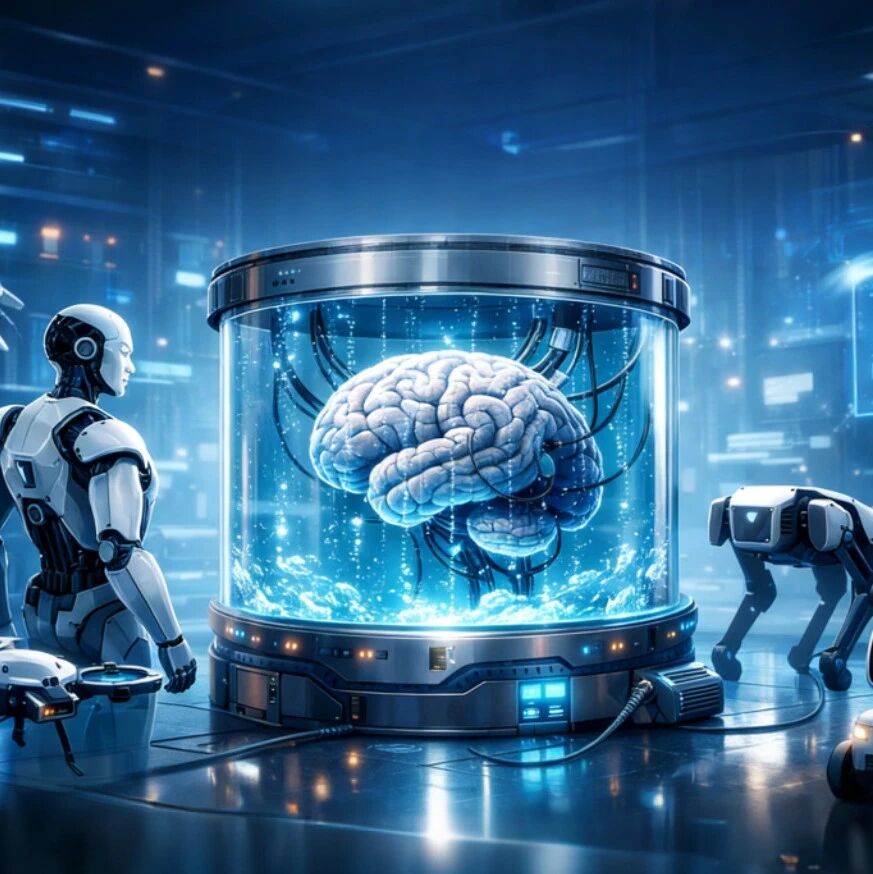
缸中之脑

Search documents
具身智能走到分水岭:机器人大脑,应该卖“整机”还是“能力”?
机器人大讲堂· 2025-12-23 07:04
Core Insights - The core viewpoint of the article emphasizes that the next stage of competition in robotics will not be about the physical appearance of robots but rather about whether the robotic brain can operate independently, universally, and be adaptable [1][9][10] Group 1: Industry Trends - The mainstream business model in the robotics industry has traditionally been "whole machine driven," but as application scenarios expand rapidly, the limitations of this model are becoming apparent [2] - There is a shift from "selling robots" to "selling brains," indicating a change in industry logic where intelligent capabilities are deeply integrated with hardware [2][5] Group 2: Technological Evolution - The robotics industry may evolve towards a layered structure similar to that of autonomous driving and cloud computing, where the brain is no longer an "accessory module" but a foundational infrastructure with independent product attributes [3] - The concept of "brain in a jar" proposed by Qianjue Technology signifies a new industrial-level intelligent organization method, allowing the brain to be integrated with various manufacturers and robot forms without starting from scratch [3][5] Group 3: Decoupling and Learning - The design of robotic systems aims to decouple the brain from specific task logic, enabling continuous learning and iteration in real-world scenarios [6][8] - The decision-making process does not rely on frequent human prompts, creating a closed loop between perception and decision-making [7] Group 4: Market Feedback and Ecosystem - There is a notable trend where more robotics manufacturers are beginning to procure "intelligent capabilities" as independent entities rather than developing them in-house, indicating a division of labor in the industry [8] - The launch of the "Chaoyang District Intelligent Robot Ecosystem Partner Construction Plan" during the Robo Summit highlights the importance of ecosystem development over short-term project collaborations, which is crucial for the establishment of the independent robotic brain route [9]