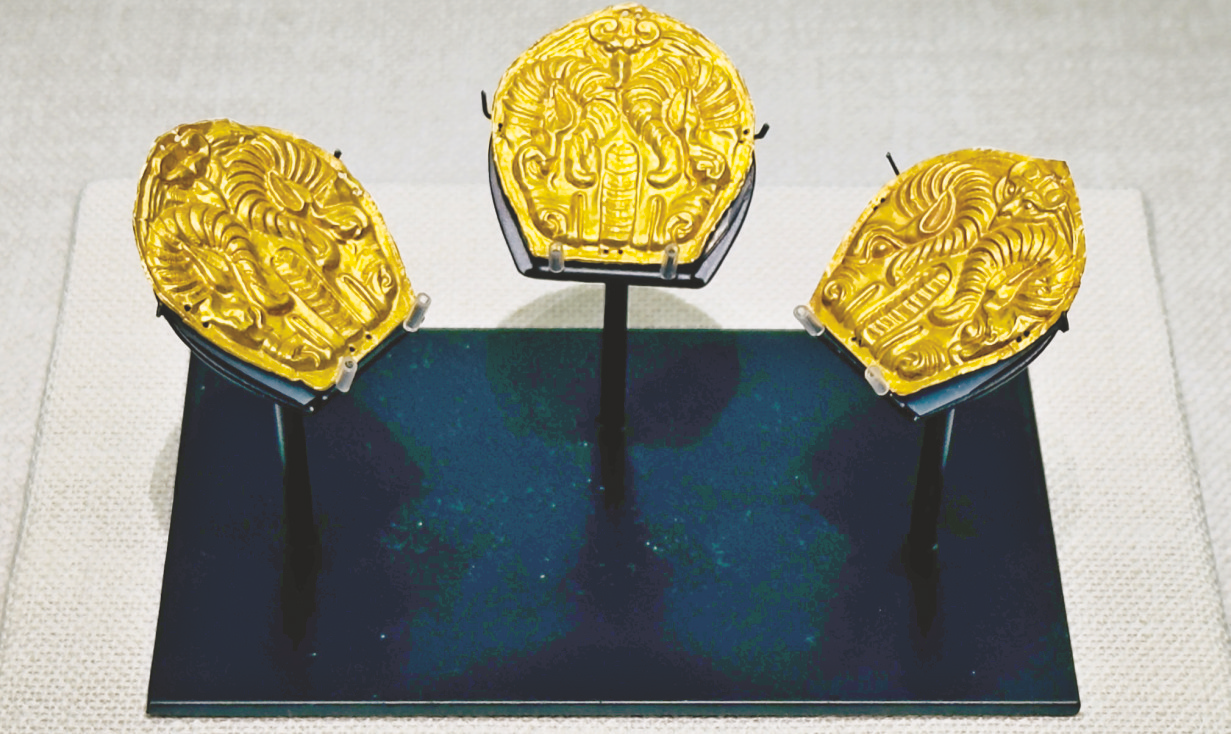
羊头纹杏形金饰片

Search documents
共溯千年文明 同赏玉韵南疆
Xin Lang Cai Jing· 2026-01-29 21:59
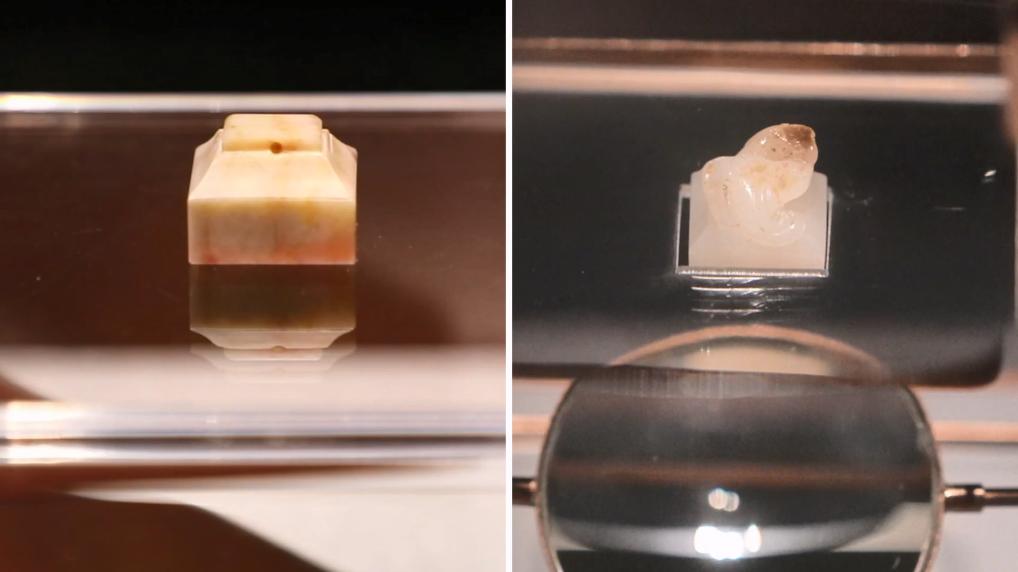
◀"西汉南越国历史文化展"上展出的羊头纹杏形金饰片。 ▲"西汉南越国历史文化展"上展出的精美文物展品引人注目。 ▲观众欣赏"南宁市博物馆藏古代玉器展"上的古玉。 藏古代玉器展"上展出的雕成吉祥字样的古玉。 本报记者潘浩 摄 ▶"南宁市博物馆 本报讯(记者莫岚远 通讯员张璐瑶 黎珈均)1月29日,南宁市博物馆精心策划推出的两大特展——"帝国南疆——西汉南越国历史文化展"与"玉的N次方 ——南宁市博物馆藏古代玉器展"开展。 展览分别从地域文明与物质文化两大维度,深入阐释中华优秀传统文化的丰富内涵与持久魅力。两大特展主题虽异,但共同立足于中华文明的历史深处,以 文物为纽带,连接古今,生动展现中华民族兼收并蓄、绵延不息的文化基因。 "帝国南疆——西汉南越国历史文化展"以西汉时期的南越国历史文化成就为主题,聚焦两千年前岭南地区的政治、经济与文化面貌。展览汇聚南越文王墓、 南越国宫署遗址等重要考古成果文物147件(套),其中珍贵文物93件(套)。展览分为"南越世家""古国芳华""文王风雅""丝路序章"4个单元,从南越文王 墓葬的考古发掘,到南越国社会历史图景,从南越文王奢华的宫廷生活,到南越国联通陆海的对外交流,为大家展 ...

“海昏侯遇见南越王”国庆探馆:从南越国到海昏侯国,管窥西汉盛世之形成
Xin Hua She· 2025-10-06 00:40
Core Viewpoint - The article highlights the cultural exchange and historical significance of the artifacts discovered from the Han Dynasty tombs of the South Yue Kingdom and the Haihunhou Kingdom, showcasing the prosperity and openness of the Western Han civilization through their burial practices and artifacts [2][16]. Group 1: Artifacts and Their Significance - The South Yue Kingdom and Haihunhou Kingdom artifacts reflect the integration of Central Plains and Baiyue cultures, emphasizing the open and inclusive nature of their civilizations [2]. - The jade seals found in the tombs of Zhao Mo and Liu He serve as private seals, with distinct designs indicating their status; Liu He's seal is made from higher quality jade and features more intricate craftsmanship [4]. - The jade burial suit from Zhao Mo's tomb, made of 2,291 pieces of jade, is the only complete example of its kind found in China, highlighting the high status of its owner [6]. Group 2: Trade and Cultural Exchange - The artifacts indicate that the South Yue Kingdom engaged in maritime trade, becoming a precursor to the Maritime Silk Road, which facilitated trade with Southeast Asia and South Asia [10]. - The discovery of imported frankincense in Zhao Mo's tomb suggests that foreign resin-based fragrances were already entering China during the early Western Han period, replacing traditional herbal scents [11]. - The unique design of the incense burners from both tombs illustrates the evolution of incense use and the aesthetic preferences of the time, reflecting a blend of practicality and beauty [13]. Group 3: Cultural Interactions - The artifacts from both tombs demonstrate the cultural exchanges between the Central Plains and the grassland cultures, as seen in the decorative motifs on the gold and silver items [14]. - The findings from these two significant archaeological sites provide a comprehensive view of the development of Western Han society, illustrating the grandeur of the Han civilization [16].