联盟营销

Search documents
出海联盟营销的主要模式有哪些,联盟营销平台推荐
Sou Hu Cai Jing· 2026-01-07 04:06
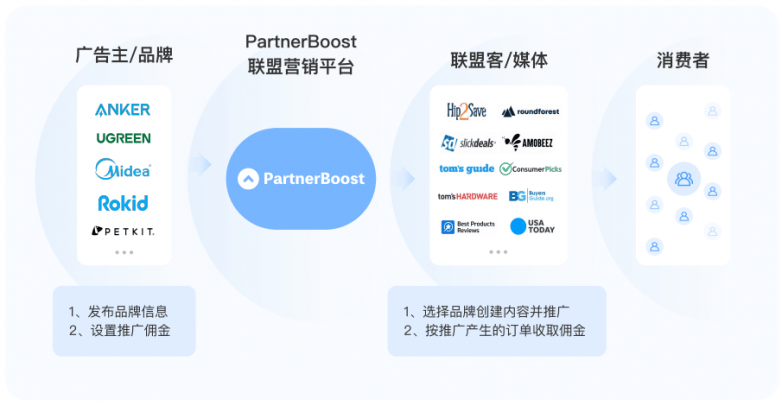
Group 1 - The core concept of affiliate marketing is a performance-based marketing strategy where merchants pay commissions to partners (affiliates) for direct product recommendations, differing fundamentally from traditional advertising [2] - In the U.S., 81% of brand owners are utilizing affiliate marketing, contributing to 16% of the e-commerce transaction volume, with the affiliate marketing industry expected to exceed $10 billion in spending by 2024 [2][3] - The affiliate marketing ecosystem includes various types of affiliates such as vertical content websites, discount platforms, and social media creators, which are crucial for brands looking to penetrate new markets [3][4] Group 2 - Affiliate marketing commission structures are diversifying, with brands employing various strategies like tiered commissions, performance-based commissions, and fixed fees plus commissions [5][7] - Successful affiliate marketing requires maintaining relationships with affiliates, employing scientific commission strategies, and providing continuous content support to enhance promotional effectiveness [15][16][17] Group 3 - PartnerBoost serves as a bridge for Chinese brands entering the affiliate marketing space, offering comprehensive services and leveraging AI technology to optimize affiliate partnerships [10][11] - The platform has demonstrated significant results, with sales through affiliate channels increasing by 520% during the 2025 Prime Day promotion and achieving a record sales figure of $297,568 for a single brand [13][14] Group 4 - The future of affiliate marketing is evolving with the rise of social media influencers, who are becoming the most valued affiliate group, surpassing traditional channels in driving consumer conversion [18]

中小品牌启动联盟营销指南:联盟营销平台推荐
Sou Hu Cai Jing· 2025-12-18 19:45
Core Insights - The article emphasizes that affiliate marketing is a crucial strategy for small and medium-sized brands to overcome challenges in marketing, particularly in high-cost traffic environments and trust barriers [1][12]. Group 1: Understanding Affiliate Marketing - Many small and medium-sized brands misunderstand affiliate marketing as a strategy exclusive to large companies, while it is actually tailored to their resource constraints [2]. - Affiliate marketing allows brands to recruit influencers and content creators to promote products, paying commissions only upon achieving actual sales or registrations, making it a cost-effective solution [2]. - The advantages for small brands include controlled risks, rapid trust-building through established influencers, and low-cost scaling without the need for in-house marketing teams [2]. Group 2: Steps to Launch Affiliate Marketing - The article outlines a four-step process for effectively launching affiliate marketing, emphasizing the importance of avoiding common pitfalls [3]. - The first step involves clarifying goals and ensuring product readiness to avoid ineffective spending [4]. - The second step highlights the importance of selecting the right platform, recommending established affiliate marketing platforms to streamline the process [5]. - The third step focuses on the careful selection of affiliate partners, prioritizing alignment with target audiences over sheer follower counts [11]. - The final step stresses the need for ongoing optimization and data-driven adjustments to maximize the effectiveness of affiliate marketing efforts [11]. Group 3: Recommended Affiliate Marketing Platforms - PartnerBoost is highlighted as a localized platform with a vast network of influencers and content creators, suitable for brands with limited budgets seeking efficient conversions [6]. - Archer Affiliates is tailored for Amazon sellers, providing a cooperative ecosystem but with limitations in resource flexibility and scalability [8]. - AvantLink, established in 2005, specializes in outdoor and niche markets but may pose challenges for small brands due to higher entry costs and strict platform rules [9]. Group 4: Conclusion on Affiliate Marketing - Affiliate marketing serves as a growth lever for small and medium-sized brands, enabling them to achieve significant results with limited budgets by following a structured approach [12].

联盟营销:品牌的攻城锤,还是利润的回旋镖?
科尔尼管理咨询· 2025-09-10 10:41
Core Insights - The article discusses the dual nature of affiliate marketing for retail brands, highlighting its potential as a market expansion tool and the risks of profit erosion if not managed properly [1][4][11] Affiliate Marketing Overview - The affiliate marketing market has surpassed $32 billion in 2024, experiencing a 50% growth over the past three years [1] - Major players like Rakuten, LTK, and Capital One are driving innovation with new services that enhance consumer engagement throughout the shopping journey [1] Challenges and Risks - Some retailers are scaling back their affiliate marketing programs due to negative public perception and enhanced sales tracking capabilities [1][2] - A notable case involved the discount plugin Honey facing a lawsuit from content creators over alleged theft of sales contributions [2] - The rise of influencer marketing has led to concerns about coupon leakage, which can dilute brand value and affect pricing strategies [2] Best Practices for Successful Affiliate Marketing - Brands should adopt a dual approach to market penetration, utilizing both front-end channels like influencers and back-end strategies such as loyalty programs [7] - Timing is crucial; brands should leverage strategic moments like joint promotions and peak seasons to maximize impact [7] - Coordination across channels is essential to align marketing strategies and promotional efforts [7] - Transitioning from a scattered promotional approach to a more strategic, controlled marketing cycle can enhance effectiveness [8] Key Strategies for Implementation - Successful affiliate marketing requires real-time maintenance and continuous optimization, including tracking incremental sales and reassessing commission structures [11] - Companies should establish a robust tracking system for performance metrics beyond standard revenue indicators [12] - Reducing reliance on intermediaries while fostering direct relationships with affiliate channels can lead to more tailored promotional strategies [12] - Implementing strict monitoring mechanisms for discount codes is vital to prevent misuse and protect brand integrity [12] Strategic Questions for Brands - What is the primary goal of affiliate marketing: conversion or exposure? - How can discount strategies align with brand pricing and value propositions? - Which channels and touchpoints should be prioritized for affiliate marketing efforts? - How to set success metrics and establish protective measures for proactive management? - What is the role of long-tail affiliate partners versus head channels, and how should they be managed? [13]