股票投资组合

Search documents
“股神”巴菲特时代将落幕 商界大佬们铭记的四大人生与商业课
Xin Lang Cai Jing· 2025-12-31 08:06
Core Insights - Warren Buffett, known as the "Oracle of Omaha," is stepping down as the head of Berkshire Hathaway, with Greg Abel set to take over [2][12] - Buffett is regarded as a teacher and mentor to many business leaders, sharing insights on business management and life through his shareholder letters and annual meetings [2][12] Communication Style - Buffett is recognized as one of the best communicators in business, using straightforward language to explain complex concepts [3][13] - His shareholder letters are noted for their humor and clarity, making them enjoyable reads for many [3][13] Investment Philosophy - Buffett emphasizes a long-term investment strategy, famously stating, "Our favorite holding period is forever," and often maintains significant cash reserves to wait for the right investment opportunities [5][15] - He has a disciplined approach to investing, focusing on clear direction and principles [8][17] Wealth and Philanthropy - Buffett's net worth is approximately $150 billion, yet he stresses the importance of honesty and integrity in business [8][17] - He co-founded the "Giving Pledge" with Bill Gates, encouraging the wealthy to donate a significant portion of their wealth to charity during their lifetimes [8][17] Legacy and Influence - Buffett's teachings have inspired many to think beyond monetary success, emphasizing the value of helping others [8][17] - His insights on wealth and its potential to dominate one's life reflect a deeper understanding of success and responsibility [8][17]

今晚美国CPI——关税通胀传导的首次真正考验
Hua Er Jie Jian Wen· 2025-06-11 08:39
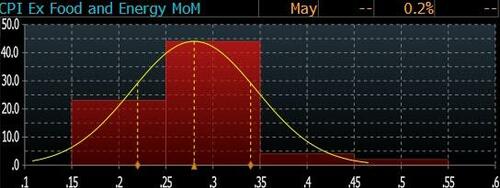
Core Viewpoint - The upcoming May CPI data is expected to be a turning point for the U.S. economy, potentially reshaping the Federal Reserve's interest rate expectations and market risk pricing logic due to the impact of tariffs on consumer prices [1][10]. Group 1: CPI Predictions - The May CPI is projected to increase by 0.3% month-over-month, consistent with April's growth, and a year-over-year increase of 2.5%, up from 2.3% in April [2]. - Core CPI is expected to rise by 0.3% month-over-month and 2.9% year-over-year, compared to 0.2% and 2.8% in April, respectively [2][4]. Group 2: Tariff Impact - Economists believe that the May CPI data will mark the beginning of inflation readings related to tariffs, with the impact expected to last until the end of the year [4]. - Goldman Sachs anticipates a moderate increase of 5 basis points in core CPI, primarily driven by categories such as entertainment, communications, and furniture [4][6]. Group 3: Transmission Effects - There is concern about the amplification of transmission effects from tariffs, with expectations of a monthly increase of about 10-15 basis points in core inflation from June to August [5][6]. - If significant price acceleration does not occur, the market may debate whether the transmission effects are merely due to data delays or if exporters and retailers are absorbing a larger share of tariff costs [7]. Group 4: Key Trends in CPI Components - Key trends highlighted by Goldman Sachs include a projected 0.5% decrease in used car prices, a 0.1% increase in new car prices, and a moderate rise of 0.4% in auto insurance prices [8]. - Categories particularly affected by tariffs, such as clothing, furniture, and education, are expected to see mild upward pressure [8]. Group 5: Market Reactions and Risks - The significance of the CPI data extends beyond short-term market volatility, as it may redefine the Federal Reserve's policy framework and market risk pricing logic [10]. - There is a noted asymmetry in market reactions to inflation shocks, with the implied volatility of the S&P 500 index significantly lower than in April, indicating insufficient preparation for potential shocks [12]. Group 6: Federal Reserve's Stance - The debate within the Federal Reserve regarding the impact of tariffs on inflation is intensifying, with some officials suggesting that the effects may be more persistent than previously thought [16][17]. - Current market pricing indicates expectations for rate cuts by the end of the year, with a significant probability of multiple cuts [18].