胆红素

Search documents
江大张荣珍教授团队:突破胆红素合成瓶颈,实现克级高效生物制造
合成生物学与绿色生物制造· 2025-12-26 01:33
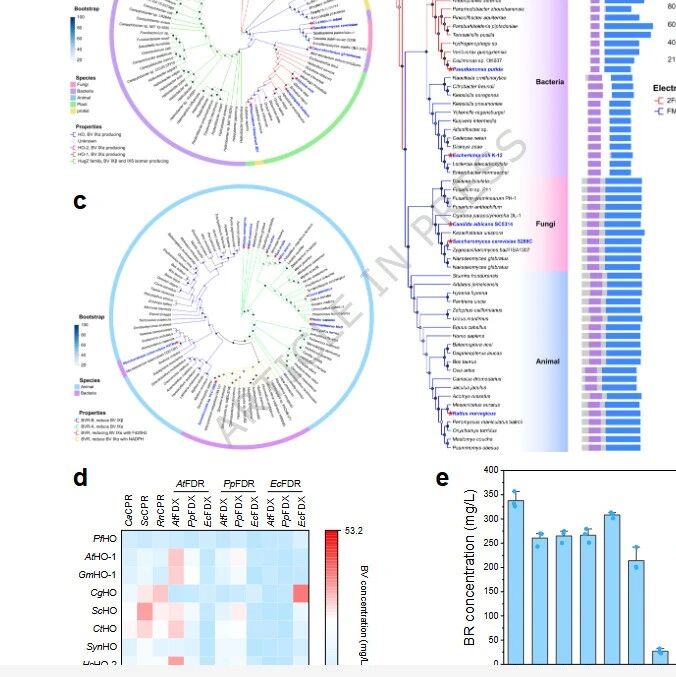
Core Viewpoint - The research led by Professor Zhang Rongzhen's team has successfully developed an efficient in vitro enzyme-catalyzed system for high-level bilirubin biosynthesis, achieving a yield of 1.7 g/L and a conversion rate of 95.8%, laying a solid foundation for industrial production [2][4]. Group 1: Enzyme Optimization - The study clarified the classical two-enzyme catalytic pathway from heme to bilirubin and identified the most efficient enzyme combinations through systematic evolutionary analysis [4]. - The combination of rat HO-1 and its specific cytochrome P450 reductase (CPR) showed the highest efficiency in converting heme to biliverdin, while the rat BVR-A subtype performed best in reducing biliverdin to bilirubin [4]. - Structural analysis of key enzymes led to the development of soluble truncated variants RnCPRΔ54 and RnHO-1Δ22, which maintained substrate affinity and catalytic efficiency while improving solubility [4][5]. Group 2: Addressing Inhibitory Factors - Initial one-pot reactions showed a heme conversion rate of 83.9%, but bilirubin yield was only 48.1%, indicating material loss due to bottlenecks in the first step of heme oxygenase catalysis [5]. - The study identified Fe²⁺ as a negative factor affecting product stability, as it formed complexes with deprotonated biliverdin or bilirubin, leading to degradation [7]. - The researchers developed a dual strategy to stabilize the reaction, using HEDP to chelate Fe²⁺ and lowering the reaction pH to suppress deprotonation, which together increased bilirubin yield to 80.1% [7][8]. Group 3: Integrated Multi-Enzyme System - The research revealed carbon monoxide (CO) as another inhibitory factor, as it formed stable complexes with heme, obstructing substrate binding and enzyme activity [8]. - To eliminate all inhibitory factors, the team constructed a fully integrated multi-enzyme system, incorporating a CO dehydrogenase and a formate dehydrogenase for in situ NADPH regeneration [8]. - This integrated system successfully converted 3 mM of heme to 2.87 mM of bilirubin in a 1-liter reaction, achieving a yield of 95.8%, confirmed as the bioactive bilirubin IXα isomer [8].

从技术突破到产值跃迁 常德“生物制造谷”加速崛起
Xin Hua Cai Jing· 2025-09-26 14:12
Core Viewpoint - The biomanufacturing sector is recognized as a key engine for the new technological revolution and industrial transformation, with Changde aiming to establish itself as a national-level industrial cluster by 2025 [1][4]. Group 1: Industry Development - Changde has nurtured several biopharmaceutical companies, including YunGang Bio and LiEr Bio, with 35 core enterprises in synthetic biomanufacturing expected to achieve a production value exceeding 7.5 billion yuan by mid-2025 [1][4]. - YunGang Bio has developed a GMP-standard automated production line for extracting and synthesizing ursodeoxycholic acid from animal bile, achieving a conversion rate of over 99% and capturing more than one-third of the domestic market for its core product [2][3]. - Changde's synthetic biomanufacturing industry has shown significant growth, with a production value of 7.689 billion yuan as of July 2025, reflecting a year-on-year increase of 23.52% [3]. Group 2: Technological Innovation - The foundation of synthetic biology and biomanufacturing is held by companies like MuEn Bio, which has identified over 320,000 proprietary microbial strains, enabling high-throughput screening for bioactive microorganisms and their metabolites [2][3]. - MuEn Bio has established a comprehensive DREAM technology platform that covers the entire process from resource discovery to product development, enhancing its competitive edge in biomanufacturing [3]. Group 3: Ecosystem and Support - Changde is building a comprehensive industrial ecosystem with support from policies, talent acquisition, and financial backing, aiming to accelerate the transition from technological breakthroughs to large-scale implementation [4][5]. - The establishment of a 5 billion yuan biomanufacturing mother fund and a 1 billion yuan innovation guidance fund is part of Changde's strategy to inject "patient capital" into the biomanufacturing sector [4]. Group 4: Future Prospects - By 2028, Changde aims to achieve a production value of over 30 billion yuan in synthetic biomanufacturing and to cultivate more than 100 enterprises in the sector, including over 50 high-tech companies [6]. - The biomanufacturing industry in China has reached a total scale of nearly 1 trillion yuan, with fermentation capacity accounting for over 70% of the global market, indicating significant growth potential [5][6].
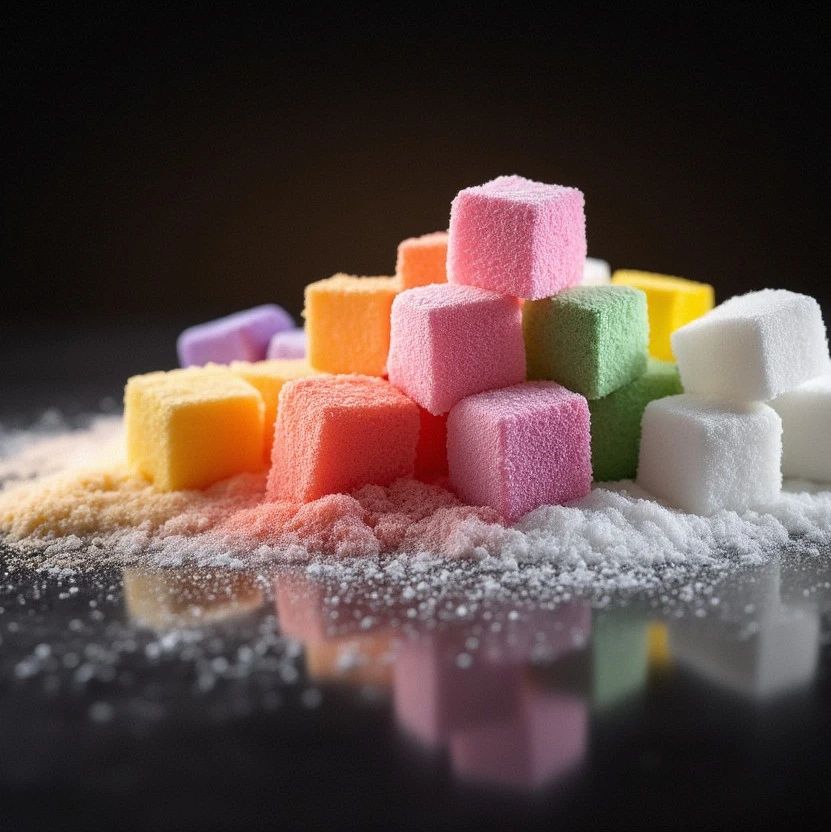
投资4000万!微元合成绿色生物制造二期健康糖项目(柔性生产阿洛酮糖和甘露糖醇)
合成生物学与绿色生物制造· 2025-06-03 12:36
Project Overview - The project is named "Micro Yuan Synthesis Green Biological Manufacturing Phase II Health Sugar Project" with an investment of 40 million yuan [2] - The project aims to produce 2,000 tons annually of alitame and mannitol, utilizing existing fermentation and public utility equipment along with new membrane separation, ion exchange, concentration, crystallization, and drying equipment [2] - Alitame is a new low-calorie sweetener with various physiological benefits, while mannitol is widely used in pharmaceuticals, food, and chemicals as a sweetener, humectant, and excipient [2] Ongoing Projects - The "Micro Yuan Synthesis Green Biological Manufacturing Phase II Project" employs biological extraction technology to produce bilirubin from a fermentation process using glucose, citric acid, and other components, with an expected annual production of 5 tons of bilirubin upon completion [3] Company Background - Micro Yuan Synthesis Biotechnology (Qinhuangdao) Co., Ltd. is a wholly-owned subsidiary of Micro Yuan Synthesis Biotechnology (Beijing) Co., Ltd., established in May 2022 and located in the Qinhuangdao High-tech Industrial Development Zone [4] - The company focuses on innovation and industrialization in synthetic biology technology, providing bio-based raw materials and solutions for various industries including pharmaceuticals, daily chemicals, agriculture, food, feed, and materials [4]