阿洛酮糖

Search documents
代糖行业深度报告-阿洛酮糖开启功能代糖新时代
2026-03-20 02:27
Summary of the Conference Call on the Allulose Industry Industry Overview - The report focuses on the **allulose industry**, highlighting its potential as a functional sugar substitute and its regulatory journey in various markets, particularly in the U.S., Europe, and China [1][2][3]. Key Points and Arguments Allulose Characteristics and Market Advantages - Allulose exhibits **Maillard reaction properties**, allowing it to replicate caramel color and aroma, addressing distortion issues in baked goods and candies, with broader application boundaries than stevia and erythritol [1]. - The FDA excluded allulose from the "added sugars" label in 2019, setting a market explosion point, leading to a **200% increase** in new products in North America [1]. - By 2025, China is expected to approve allulose as a new food ingredient, with a projected **7 trillion yuan** market for sugar-sweetened beverages transitioning to sugar substitutes [1][3]. - Production costs have decreased from **$65,000/ton** to approximately **20,000 yuan/ton**, making it commercially viable in the **5-10 yuan** premium beverage price range [1]. Regulatory Pathways and Challenges - The U.S. is the first country to complete allulose compliance, primarily through the **GRAS** (Generally Recognized as Safe) pathway, which allows for market entry based on consensus rather than direct FDA certification [4][5]. - The approval process in Europe is more stringent, with the **EFSA** (European Food Safety Authority) requiring extensive toxicological data, leading to delays in market entry [6][7]. - The approval process in China began in 2020, with allulose expected to be officially approved by **July 2025**, although production licenses are still pending [8]. Market Dynamics and Growth Potential - The global allulose market is currently valued at approximately **$350 million**, with the U.S. being the most mature market [9]. - The market in China is anticipated to grow rapidly post-approval, with major brands like **Nai Xue** and **Mengniu** already integrating allulose into their products [15]. - The market for sugar substitutes is expected to expand significantly due to rising health consciousness and government initiatives to reduce sugar consumption [2][3]. Production and Cost Factors - Key factors influencing allulose production costs include raw material costs, primarily derived from corn syrup, which significantly impacts profit margins [18]. - Companies are focusing on improving conversion rates and optimizing extraction technologies to enhance production efficiency and reduce costs [19]. - The price of allulose has decreased from **$26,900/ton** to **$20,600/ton**, indicating a downward trend in production costs [19]. Competitive Landscape - Leading companies in the allulose market include **Bailong Chuangyuan**, **Sanyuan Bio**, and **Baolingbao**, which have established significant production capacities and technological advantages [20]. - Concerns exist regarding potential oversupply and the impact of new production technologies, such as microbial fermentation, on existing production methods [21][22]. Additional Important Insights - The allulose market is characterized by high customer loyalty, with established companies maintaining strong relationships with clients through customized solutions and extensive supplier certification processes [22]. - The report emphasizes the importance of ongoing research and development to address regulatory challenges and enhance product offerings in the competitive landscape of sugar substitutes [22].
中粮科技(000930) - 000930中粮科技投资者关系管理信息20260319
2026-03-19 01:38
Group 1: Core Competitive Advantages in Corn Procurement - The company has four core advantages in corn procurement: 1. Industry chain synergy, leveraging resources from COFCO Group to ensure supply stability and mitigate production risks [4] 2. Cost advantages from regional layout, with production bases in major corn-producing areas, reducing transportation costs [4] 3. Professional risk control and cost management systems that combine futures hedging with spot procurement to manage price volatility [4] 4. Flexible production capabilities with diversified raw materials, allowing adjustments based on price fluctuations of corn and cassava [4] Group 2: Barriers to Entry in Ethanol Industry - The corn fuel ethanol industry has strong supply-side rigidity, with barriers to entry including: 1. Policy barriers, as government regulations favor non-grain ethanol production, making it difficult for new entrants to obtain production licenses [4] 2. Raw material assurance barriers, where the company benefits from COFCO Group's stable supply chain, making it hard for newcomers to establish similar procurement systems [4] 3. Channel and customer barriers, with established relationships with major oil companies requiring rigorous qualification and certification for new entrants [4] 4. Technological, financial, and platform advantages, as the company is the only publicly listed entity in COFCO Group's bio-manufacturing sector [4] Group 3: Pricing Mechanism and Market Dynamics - The pricing mechanism for corn ethanol involves: 1. A market-based pricing model established through annual framework agreements with clients, allowing for flexible bidding based on local market conditions [5] 2. Price adjustments driven by regional supply-demand dynamics, including seasonal demand increases and supply tightness [5] 3. The company’s stable partnerships with leading oil firms provide consistent cash flow and profit contributions [5] Group 4: Core Competitiveness in Fructose Business - The fructose (starch sugar) business is a core profit driver, with competitive advantages including: 1. Nationwide production capacity strategically located near key consumer markets, reducing logistics costs and enhancing responsiveness [5] 2. Technological and product advantages, enabling the development of high-value customized products that significantly boost profit margins [5] 3. Strong brand recognition and food safety standards, ensuring long-term partnerships with major clients [5] Group 5: Progress in Allulose Sugar Business - The company is making significant strides in the allulose sugar sector, with: 1. Leading technological barriers, being the first to produce allulose sugar through enzyme methods and obtaining regulatory approvals [6] 2. A comprehensive product and service offering that meets diverse application needs across various food sectors [6] 3. A channel expansion strategy that includes partnerships with major brands and a focus on emerging market segments [6] Group 6: Cost Management and Raw Material Flexibility - The company has developed capabilities to handle low-quality corn, which aids in cost management: 1. Established processes for utilizing low-quality raw materials, enhancing procurement flexibility and cost optimization [8] 2. The ability to adjust raw material ratios based on cost conditions, contributing to overall cost reduction and efficiency [8]

海外经验镜鉴与量化测算:糖税风起,软饮行业影响几何?
ZHONGTAI SECURITIES· 2026-03-12 14:59
Investment Rating - The industry investment rating is "Increase Holding" [4] Core Insights - The report discusses the potential impact of sugar tax policies on the soft drink industry, emphasizing that the implementation of such taxes is likely to follow a gradual approach, with a low probability of immediate and significant increases in tax rates. If enacted, the sugar tax could raise industry cost levels, accelerate market consolidation, and favor leading companies with strong brands and supply chain advantages, while smaller firms may face significant challenges [6][13][31]. Summary by Sections Industry Overview - The report highlights the ongoing discussions and expectations regarding sugar tax policies in China, driven by global trends where over 116 countries have implemented similar taxes. The aim is to regulate consumption behavior and promote healthier choices [6][13]. Global Sugar Tax Context - The sugar tax is defined as a consumption or sales tax on sugar-sweetened beverages (SSBs), aimed at reducing high sugar consumption. The report notes that many countries have seen a decline in SSB sales and an increase in the sales of sugar-free alternatives following the implementation of such taxes [14][18]. Impact of Sugar Tax on the Industry - The report predicts that if a sugar tax is introduced in China, it will likely lead to increased costs for beverage companies, which may result in price hikes for consumers. The report estimates that the retail price of taxed beverages could rise by approximately 4% [27][30]. - The analysis suggests that while revenue may initially increase due to price hikes, overall profit margins could decline due to the added tax burden, with net profit potentially decreasing by 11.8% [30]. Future of Sugar Alternatives - The report indicates that the sugar tax could accelerate the transition towards low-sugar and sugar-free products, benefiting companies involved in the production of sugar alternatives. It highlights the growing market for natural sweeteners like stevia and monk fruit, as well as the emergence of new sweeteners like allulose [20][31]. Company Performance Predictions - The report provides a quantitative analysis of how the sugar tax could affect company revenues and profits, suggesting that leading companies with robust product portfolios and the ability to pass on costs to consumers will be better positioned to withstand the impacts of the tax [25][30]. Conclusion - Overall, the report emphasizes the need for careful consideration of the sugar tax's implementation in China, balancing public health goals with the stability of the beverage industry. It suggests that the tax could lead to a more concentrated market, favoring larger players while putting pressure on smaller firms [31].
百龙创园20260227
2026-03-01 17:22
Summary of Conference Call for Bailong Chuangyuan Company Overview - **Company**: Bailong Chuangyuan - **Industry**: Dietary Fiber and Functional Sugar Key Points Sales and Production - In 2025, total dietary fiber sales exceeded 48,000 tons, with polydextrose at approximately 21,000 tons and resistant dextrin at about 27,000 tons. Resistant dextrin sales grew nearly 50% year-on-year, while polydextrose saw a decline of about 20% due to capacity constraints, not weak demand [2][7] - The sales volume of allulose in 2025 was slightly over 10,000 tons, with a year-on-year growth of less than 30%. Prices decreased by 10%-20% due to upstream raw material price influences [2][8] - A new capacity project for 20,000-30,000 tons of dietary fiber is in the commissioning phase, expected to contribute to revenue and profit starting in Q2 2026 [2][12] Profit Margins - The company expects overall gross margins in 2026 to remain stable compared to 2025. Polydextrose gross margin is around 20%, resistant dextrin is approximately 50%-60%, and other prebiotic products are about 30% [4][13] - Allulose gross margin improved by less than 10 percentage points in 2025, attributed to new production lines and upstream raw material cost reductions [9][15] Market Trends and Product Development - The introduction of prebiotic beverages by major overseas brands reflects ongoing trends in health and nutrition. Domestic manufacturers are expected to launch similar products in 2026 [5][6] - The potential impact of a "sugar tax" policy in China is uncertain, but it could stimulate the alternative sugar market significantly if implemented [3] Capacity and Production Strategy - The company prioritizes high-value-added products in its capacity arrangements without setting rigid production ratios or gross margin targets [4][14] - The Thai factory is expected to commence production in 2027, with raw material sourcing differing from domestic operations [17][18] Market Position and Growth Potential - The company holds a market share of approximately 20%-30% in resistant dextrin globally and 30%-40% in allulose, making it the largest supplier [20] - The growth of the dietary fiber market is driven by increasing health awareness and innovation in end products, with a projected mid-term growth rate for allulose sales of 20%-30% or higher [10][21] Financial Guidance - The company targets a revenue and profit growth of no less than 25%-30% in 2026, driven by new capacity and domestic market product launches [24][25] Challenges and Considerations - Price remains a key constraint for allulose, which currently has the highest production cost among alternative sugars. Increased health awareness and consumer education are necessary for market expansion [11] - The company is cautious about predicting industry demand and growth due to limited public data and uncertainties in overseas expansion [22][23] Additional Insights - The company is actively involved in R&D and technical reserves for allulose, with several manufacturers already preparing for market entry [9][10] - The domestic beverage market is likely to adopt allulose more readily due to its larger size and the feasibility of producing sugar-free products [10]

百龙创园跌1.41%,成交额1.84亿元,近5日主力净流入-2168.58万
Xin Lang Cai Jing· 2026-02-27 08:21
Core Viewpoint - The company, Shandong Bailong Chuangyuan Biotechnology Co., Ltd., is experiencing fluctuations in stock performance and is involved in the production of health sweeteners, particularly allulose, which serves as a low-calorie sugar substitute beneficial for obesity and diabetes patients [2][8]. Company Overview - Shandong Bailong Chuangyuan was established on December 30, 2005, and went public on April 21, 2021. The company specializes in the research, production, and sales of prebiotic products, dietary fiber products, other starch sugar (alcohol) products, and health sweeteners [8]. - The revenue composition of the company includes dietary fiber series (54.15%), prebiotic series (28.00%), health sweeteners (13.57%), and others (3.91%) [8]. Financial Performance - For the period from January to September 2025, the company achieved a revenue of 969 million yuan, representing a year-on-year growth of 18.10%. The net profit attributable to the parent company was 265 million yuan, with a year-on-year increase of 44.93% [9]. - The company has distributed a total of 204 million yuan in dividends since its A-share listing, with 193 million yuan distributed over the past three years [10]. Market Position and Recognition - The company holds a 5.14% stake in Shandong Yucheng Rural Commercial Bank, which may provide financial benefits [3]. - The company has been recognized as a "specialized, refined, distinctive, and innovative" enterprise, a prestigious title awarded to small and medium-sized enterprises in China that excel in niche markets and innovation [4]. International Presence - The company reports that 60.62% of its revenue comes from overseas markets, benefiting from the depreciation of the Chinese yuan. It exports products to countries including the United States, Canada, Russia, and South Korea [4]. Client Relationships - The company has established strong partnerships with numerous well-known domestic and international brands, including Quest Nutrition, Halo Top, and Wahaha, among others, across various industries such as food, beverages, dairy, health products, and pharmaceuticals [4].
实现“以生物造万物” 北京昌平合成生物企业同比增长近七成
Xin Lang Cai Jing· 2026-02-26 22:50
Core Insights - The synthetic biology manufacturing industry in Changping District, Beijing, is experiencing significant growth, with the number of enterprises increasing by nearly 70% compared to the same period in 2025 [1][2] - Microbial "workers" are efficiently producing various bio-manufactured products such as allulose and feed proteins, showcasing the industrial capabilities of synthetic biology [1][2] Industry Overview - As of now, there are 146 synthetic biology manufacturing companies established in Changping, indicating a robust expansion in the sector [2] - The industry is entering a new phase of cluster development, with a focus on various subfields including bio-based materials, collagen, biological breeding, and gas fermentation [2] Company Developments - Micro Yuan Synthetic Biology Technology (Beijing) Co., Ltd. has successfully commercialized products like mannitol, allulose, and xylitol, and is advancing multiple product lines in human nutrition, animal nutrition, daily chemical raw materials, and pharmaceutical excipients [1] - The company has grown from a few employees to a team of hundreds, with over 60% being research and development personnel, highlighting its commitment to innovation [1] Future Goals - Changping District aims to establish 10 landmark synthetic biology manufacturing projects by 2026 and achieve an industry revenue exceeding 10 billion yuan [2] - The district plans to transition from regional leadership to national influence, aspiring to become a significant source of innovation and a leading area in synthetic biology manufacturing [2]
昌平合成生物企业同比增长近七成
Xin Lang Cai Jing· 2026-02-26 22:49
Core Insights - The synthetic biology manufacturing industry in Changping District is experiencing significant growth, with the number of enterprises increasing by nearly 70% compared to the same period in 2025 [1][2] - The industry is moving towards a cluster development phase, with a target to establish 10 landmark synthetic biology projects by 2026 and achieve an industry revenue exceeding 10 billion yuan [2] Group 1: Company Developments - Micro Yuan Synthetic Biology Technology (Beijing) Co., Ltd. has successfully commercialized products such as mannitol, allulose, and xylitol, focusing on various product lines including human nutrition, animal nutrition, daily chemical raw materials, and pharmaceutical excipients [1] - The company has grown from a few employees to a team of several hundred, with over 60% being research and development personnel [1] Group 2: Industry Growth and Goals - As of now, there are 146 synthetic biology manufacturing enterprises established in Changping, with ongoing efforts in subfields such as bio-based new materials, collagen, biological breeding, and gas fermentation [2] - The Changping District aims to transition from regional leadership to national influence, establishing itself as a significant source of innovation and industry leadership in synthetic biology manufacturing [2]


百龙创园跌0.12%,成交额1.78亿元,今日主力净流入-1006.12万
Xin Lang Cai Jing· 2026-02-24 07:43
Core Viewpoint - The company, Shandong Bailong Chuangyuan Biotechnology Co., Ltd., is engaged in the production of health sweeteners and has shown significant growth in revenue and profit, benefiting from the depreciation of the RMB and its status as a "specialized, refined, distinctive, and innovative" enterprise [2][4][9]. Company Overview - The company was established on December 30, 2005, and went public on April 21, 2021. Its main business includes the research, production, and sales of prebiotics, dietary fibers, and health sweeteners [8]. - The revenue composition of the company is as follows: dietary fibers 54.15%, prebiotics 28.00%, health sweeteners 13.57%, and others 3.91% [8]. Financial Performance - For the period from January to September 2025, the company achieved a revenue of 969 million yuan, representing a year-on-year growth of 18.10%. The net profit attributable to the parent company was 265 million yuan, with a year-on-year increase of 44.93% [9]. - The company has distributed a total of 204 million yuan in dividends since its A-share listing, with 193 million yuan distributed over the past three years [10]. Market Position and Shareholder Information - The company holds a 5.14% stake in Shandong Yucheng Rural Commercial Bank [3]. - As of February 10, 2025, the number of shareholders increased to 15,700, with an average of 26,777 circulating shares per person, a decrease of 10.05% from the previous period [9]. - The company is recognized as a "specialized, refined, distinctive, and innovative" enterprise, which is a prestigious title for small and medium-sized enterprises in China [4]. Industry Context - The company operates within the basic chemical industry, specifically in food and feed additives, and is part of several concept sectors including sugar substitutes and specialized small giant enterprises [9]. - The company benefits from the global demand for its products, exporting to countries such as the USA, Canada, Russia, and South Korea, and has established partnerships with numerous well-known domestic and international brands [4].
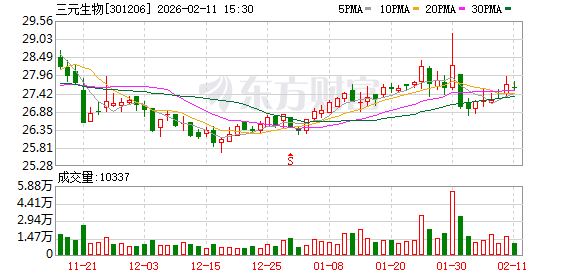
三元生物面临美欧反倾销税影响,阿洛酮糖项目推进中
Jing Ji Guan Cha Wang· 2026-02-12 09:13
Core Viewpoint - Sanyuan Biotech is facing multiple dynamics including the final ruling of anti-dumping duties in the U.S., progress on the allulose project, and the promotion of new products [1] Group 1: Stock Recent Trends - The U.S. Department of Commerce has announced a final ruling on anti-dumping and countervailing investigations regarding Chinese erythritol products, with Sanyuan Biotech facing a comprehensive execution tax rate of 93.58% for exports to the U.S. This ruling will take effect upon publication in the Federal Register and may have a lasting impact on the company's U.S. market operations [2] - The European Union will impose a 156.7% anti-dumping tax on Chinese erythritol starting January 2025, lasting for five years. The company has responded by launching blended products, indicating that the impact of this event may persist [2] Group 2: Company Project Progress - The company's annual production project for 20,000 tons of allulose has completed the construction of the main engineering and equipment installation for the remaining 10,000 tons of capacity. The next steps will involve organizing environmental assessments and gradually advancing production. This project aims to enrich the product portfolio, but the production schedule and benefits are subject to approval processes and market demand [3] Group 3: Business Development Status - Sanyuan Biotech is continuously providing samples of Reb M to domestic and international potential customers and conducting application experiments. Some customers have already incorporated it into their reduced-sugar product formulations. Tagatose, as a key new functional sugar, is in a critical phase of market promotion and industrial application [4] Group 4: Company Status - The company will hold a board meeting on February 4, 2026, to review the proposal for convening the first extraordinary shareholders' meeting of 2026, with further arrangements to be announced [5]

三元生物:目前公司莱鲍迪苷M正持续向国内外意向客户提供样品、开展技术对接与应用实验
Mei Ri Jing Ji Xin Wen· 2026-02-11 09:44
Group 1 - The company is actively providing samples of Reb M to domestic and international potential clients, with some clients already incorporating it into their sugar-reduction product formulations [2] - Tagatose, as a key focus for the company, is currently in a critical phase of market promotion and industrial application, with steady progress being made [2] - The company has utilized Reb M in the formulation of products containing erythritol and allulose, enhancing product quality and market competitiveness [2]