背面供电网络(BPDN)

Search documents
背面供电,太难了
半导体行业观察· 2026-02-24 01:23
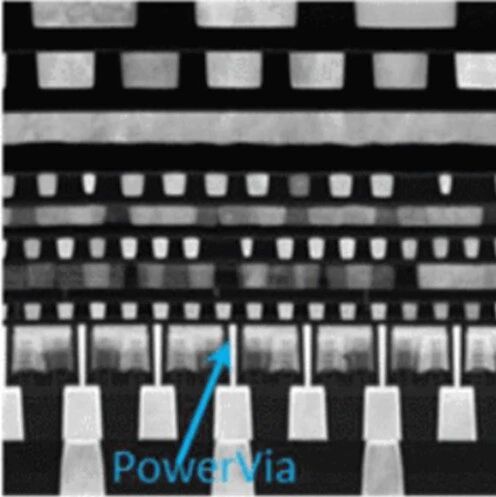
Group 1 - The core concept of Back Power Distribution Network (BPDN) is to enhance processor performance, significantly reduce power loss, and improve power efficiency by supplying power directly from the back of the wafer to the transistors [2][3] - BPDN can reduce IR voltage drop by up to 30%, improving power integrity and allowing for smaller metal spacing on the front, which lowers lithography costs [3][5] - The transition to nanosheet FETs and the adoption of BPDN by leading manufacturers like Intel, Samsung, and TSMC indicate significant advancements in semiconductor technology [2][3] Group 2 - BPDN is crucial for workloads requiring high power and rapid power consumption changes, such as AI accelerators and gaming chips [5][6] - The implementation of BPDN can lead to a 20% to 30% reduction in IR drop, a 2% to 6% increase in maximum frequency, and a 5% to 15% reduction in core area [6] - New manufacturing challenges arise with BPDN, including precise alignment of back metal to front transistors and managing thermal effects [6][10] Group 3 - The manufacturing process for BPDN involves thinning the wafer, bonding, and precise alignment, which are critical for achieving the desired performance [9][11] - The introduction of BPDN changes the design process by reducing wiring congestion on the front side, allowing for more efficient layout and routing [13][14] - The separation of power and signal routing in BPDN can significantly reduce congestion and improve signal integrity, particularly for high-speed IP modules [13][15] Group 4 - Thermal management is a significant concern with BPDN, as simulations indicate that peak temperatures can be 14°C higher compared to traditional front-side PDN [17][18] - The reduction of the silicon substrate thickness during the BPDN process affects thermal diffusion, leading to increased thermal resistance and potential hotspots [17][19] - IBM has developed a machine learning model to predict thermal resistance in BEOL stacks, which aids in managing the thermal challenges associated with BPDN [19][20] Group 5 - The implementation of BPDN is seen as a major breakthrough for the 2nm process node, addressing long-standing voltage loss issues and layout congestion [23] - Companies are exploring better thermal materials for wafer bonding to enhance heat dissipation in BPDN structures [23] - Future challenges include aligning back interconnects with front vias and managing thermal impacts to mitigate hotspot issues [23]