
能源项目

Search documents
基建板块大涨背后:15省市年度计划投资规模超6万亿,医卫领域成补短板新发力方向
Mei Ri Jing Ji Xin Wen· 2025-11-24 08:07
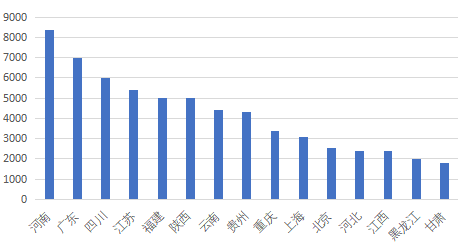
Core Viewpoint - The construction sector is experiencing a significant surge in investment, driven by local governments' accelerated project launches to meet annual targets amid the ongoing recovery from the pandemic [1][14]. Group 1: Market Performance - On the first trading day of March, the Shanghai and Shenzhen stock markets saw strong gains, particularly in the infrastructure sector, which experienced a wave of limit-up stocks [1]. - Among the 28 Shenwan first-level industry indices, cyclical industries such as construction materials and construction decoration rose over 8%, with major state-owned enterprises like China State Construction and China Railway Construction performing exceptionally well [1]. Group 2: Investment Plans - A total of 15 regions have announced clear plans for major projects in 2020, with a combined planned investment exceeding 6 trillion yuan, and nine provinces reporting total project investments over 24 trillion yuan [1][2]. - Six provinces, including Henan, Guangdong, Sichuan, Jiangsu, Fujian, and Shaanxi, have annual investment plans exceeding 500 billion yuan [2][4]. Group 3: Project Details - The investment plans include significant infrastructure projects across various sectors such as highways, high-speed rail, and energy, with Yunnan Province planning a total investment of approximately 3.6 trillion yuan for major infrastructure projects [1][8]. - In addition to traditional infrastructure, there is a notable emphasis on healthcare and elderly care facilities, reflecting a shift in investment focus [1][8]. Group 4: Regional Highlights - Sichuan Province has identified 700 key projects with an expected annual investment of over 600 billion yuan, while Fujian Province has 1,567 key projects with a total investment of 3.84 trillion yuan [5][4]. - Yunnan plans to launch 525 key projects with a total investment of around 5 trillion yuan, emphasizing large-scale projects [8][9]. - Chongqing's investment in infrastructure is projected at approximately 1.45 trillion yuan, focusing on various public health emergency service projects [9][8]. Group 5: Future Directions - Analysts suggest that the new round of infrastructure investment will not only focus on traditional sectors but also expand into healthcare and other public service areas, addressing long-standing deficiencies [14]. - The emphasis on increasing public investment in healthcare infrastructure is seen as a strategy to mitigate economic downturns while improving regional healthcare conditions [14].

四川全力以赴做实项目服务保障 发挥投资“压舱石”作用
Huan Qiu Wang· 2025-08-22 12:38
Core Insights - The meeting highlighted the effectiveness of the provincial major project scheduling mechanism in addressing implementation challenges and accelerating project construction [1][2] - Emphasis was placed on infrastructure construction as a key method for stabilizing economic growth, with a focus on expanding effective investment [2] Group 1: Project Implementation - The provincial major project scheduling mechanism has played a positive role this year, effectively resolving bottlenecks in project implementation and significantly speeding up major project construction [1] - The pilot mechanism for local government special bond projects has shown notable results, improving project review quality and implementation efficiency [1] Group 2: Economic Strategy - The meeting underscored the need to accurately grasp the current economic situation and enhance the role of investment as a stabilizing force [2] - Major engineering projects are to be leveraged to drive growth, with a focus on accelerating the construction of highways, high-speed rail, freight rail, aviation hubs, and energy projects [2] Group 3: Project Quality and Support - There is a call to enhance project tracking, supervision, and service levels from provincial departments, ensuring comprehensive management from approval to production [2] - The meeting advocated for increasing project quality and optimizing project structure, with a focus on planning and implementing large-scale, high-quality projects to support high-quality development [2]