
新型基建

Search documents
电力巡检无人机行业深度报告:智能电网时代的平台化演进
Tou Bao Yan Jiu Yuan· 2026-01-29 12:33
Investment Rating - The report indicates a strong investment opportunity in the power inspection drone industry, highlighting its transition towards intelligent grid systems and the expected market growth [5][19]. Core Insights - The power inspection drone industry is evolving from a simple aerial imaging tool to a comprehensive diagnostic platform, driven by the increasing demand for efficient inspection methods and advancements in AI and IoT technologies [6][8]. - The market is projected to grow significantly, with the global market size reaching approximately 19.516 billion yuan in 2023, and expected to exceed 23.4 billion yuan in 2024, driven by smart grid upgrades and aging infrastructure [19][20]. Summary by Sections Industry Overview - The report outlines the evolution of power inspection drones, emphasizing the shift from manual inspections to automated systems due to the expansion of the power grid and aging equipment [7][12]. - The National Grid's investment of 12 billion yuan aims to establish a nationwide drone inspection system covering 80% of high-voltage lines by 2025, which is expected to drive the industry scale beyond 20 billion yuan [7][19]. Technological Architecture - The report discusses the critical technological advancements in the industry, including multi-modal sensor integration, lightweight AI models, and digital twin technology, which enhance the accuracy and efficiency of inspections [24][25]. - Key performance indicators for 2025 include a defect recognition accuracy of 98.7% and the ability to conduct inspections over distances of 50 kilometers per flight [16][19]. Platform Evolution - The platformization of drone technology is transforming traditional power maintenance processes, enabling real-time monitoring and automated defect identification, significantly reducing response times from 8 hours to 2.5 hours [43][44]. - The report highlights a successful case study where a drone group combined with digital twin technology achieved a 95% warning accuracy rate and reduced fault rates by 40% [44][45]. Market Dynamics - The report identifies three phases of market growth: hardware sales dominance from 2023 to 2025, a rise in software and services from 2025 to 2027, and platform ecosystem competition from 2028 to 2030 [20][21]. - The growth is fueled by the demand for smart grid upgrades, government subsidies, and the need for efficient maintenance of aging infrastructure [19][20]. Challenges and Solutions - The report addresses challenges such as airspace management, algorithm adaptability, and data fusion, proposing solutions like geographic fencing technology and federated learning to enhance operational efficiency [59][64]. - A pilot project in Shenzhen demonstrates effective urban drone application management, achieving a threefold increase in inspection efficiency while maintaining compliance with urban airspace regulations [60][62].

黑色金属-能源化工专场
2026-01-23 15:35
Summary of Key Points from Conference Call Records Industry Overview - **Iron Ore Market**: The iron ore market is expected to experience oversupply in 2026, with major miners like FMG, Rio Tinto, and Vale planning production increases. Total import increment is projected to reach 31.5 million tons, with 16.1 million tons in the first half and 15.4 million tons in the second half. Price range is estimated between $85 and $110 per ton [1][16]. - **Steel Demand**: The demand for steel in the Chinese real estate market is expected to be weak, with new home transaction volumes dropping over 50% since 2020. Infrastructure investment is anticipated to be neutral to slightly optimistic, but mainly focused on new infrastructure, which may not significantly boost steel demand [9][10]. - **Coal and Coke Market**: The coal and coke market will focus on policy changes affecting supply and demand structures. Price rebounds were noted in the second half of 2025, with inventory levels returning to reasonable positions. Future price volatility is expected to be less than in previous years, but changes in delivery standards may increase pricing by 100 yuan [17][18]. Core Insights and Arguments - **Iron Ore Supply**: In 2026, major iron ore producers are expected to continue increasing output, with total increments from major and non-mainstream mines estimated at around 40 million tons. This includes significant contributions from projects like FMG's Iron Bridge and Atlas Iron [5][6]. - **Steel Price Projections**: Rebar prices are expected to range between 2,850 and 3,350 yuan, while hot-rolled coil futures are projected between 2,950 and 3,500 yuan. The upward pressure on prices is primarily due to the closure of export profit windows, while downward pressure is influenced by raw material costs [15]. - **Manufacturing Sector Impact**: The manufacturing sector has seen a rapid decline in investment since the second half of 2025, leading to reduced demand for steel. The overall manufacturing demand is expected to weaken further in 2026, despite some support from consumption policies [11][19]. - **Steel Exports**: China's steel exports are expected to remain high, but the growth rate may slow down. The export volume for 2025 is projected to exceed 112 million tons, with an average price decrease of 10.3% year-on-year. The Asian market remains the largest export region, while North America has seen reductions due to tariff issues [12]. Additional Important Insights - **Inventory Pressure**: By the end of 2025, iron ore inventory levels were high, but prices remained stable. The structure of inventory accumulation is expected to become more pronounced in 2026, with different scenarios predicting significant changes in port inventory levels based on price fluctuations [13]. - **Overall Demand Expectations**: The overall demand for iron ore and steel in 2026 is expected to stabilize or slightly decline, leading to a tendency for steel prices to operate within a bottom range [14]. - **Coal Market Dynamics**: The coal market's supply-demand balance is influenced by seasonal factors and production rhythms. Overall, the coal market is expected to remain balanced, with no significant imbalances anticipated [25][26]. - **Glass and Soda Ash Market**: The glass and soda ash markets are projected to face downward pressure due to high supply and weak demand. Opportunities for arbitrage may arise from production adjustments and market dynamics [29][30]. - **Natural Rubber Market**: The natural rubber market is expected to see opportunities as it approaches a cyclical reversal point, with prices projected to fluctuate between 14,000 and 18,000 yuan [39][47]. - **Chemical Industry Outlook**: The chemical industry is at a cyclical bottom, with strong performance in TA (terephthalic acid) and significant new capacity coming online. Market dynamics will be influenced by raw material price fluctuations and capacity releases [48][49]. This summary encapsulates the key insights and projections from the conference call records, providing a comprehensive overview of the current and expected future states of the relevant industries.
从入局者到领导者,远程新能源商用车2030年剑指百万辆销量! | 头条
第一商用车网· 2026-01-12 05:29
Core Viewpoint - The article discusses the ambitious goals and strategic plans of Yuan Cheng New Energy Commercial Vehicles as it enters the "3.0 era," aiming to become the top seller in both domestic and global new energy commercial vehicle markets by 2030, with a target of 1 million annual sales [1][10]. Group 1: Strategic Goals and Market Performance - Yuan Cheng aims to achieve an annual sales target of 1 million vehicles by 2030, positioning itself as the leader in both domestic and global new energy commercial vehicle sales [1]. - In 2025, Yuan Cheng's commercial vehicle sales are projected to exceed 160,000 units, with cumulative sales surpassing 500,000 units, reflecting a compound annual growth rate of over 120% since 2020 [3]. - The company has established a sales target of 260,000 units for 2026, indicating a strong growth trajectory in the commercial vehicle sector [5]. Group 2: Technological Advancements and Product Development - Yuan Cheng focuses on two core technology routes: "alcohol-hydrogen + electric," continuously leading the industry through innovation and product optimization [7]. - The company has launched a series of new energy commercial vehicle products tailored to various market segments, including urban logistics and intercity transportation, which have gained significant traction among logistics companies and individual transport operators [8]. - The introduction of the "X platform" enhances the company's competitive edge, offering a wide range of specifications for electric and alcohol-hydrogen vehicles, outperforming industry averages [15]. Group 3: Market Expansion and Competitive Landscape - Yuan Cheng has achieved significant growth in overseas markets, with exports leading in key regions such as the UK, Spain, and Australia, and a nearly 500% year-on-year increase in overseas business [5]. - The new energy commercial vehicle industry is expected to see a penetration rate of 30% in 2025, rising to 40% in 2026, and over 70% by 2030, indicating a rapidly evolving competitive landscape [12]. - The favorable policy environment, including investments in artificial intelligence and high-end manufacturing, provides opportunities for Yuan Cheng to expand its market presence [13]. Group 4: Future Outlook and Industry Positioning - Yuan Cheng is committed to building a green and intelligent transportation ecosystem, focusing on user needs and market-driven product development [21]. - The company plans to launch various new models in 2026, including advanced electric and hydrogen-powered vehicles, as well as autonomous driving solutions, to cover all market scenarios [19]. - With a clear strategic path and strong technological foundation, Yuan Cheng aims to solidify its position as a global leader in the new energy commercial vehicle sector [21].


全球新增产量有限,铝期货再创4年新高
Xuan Gu Bao· 2026-01-05 23:24
Industry Overview - The core logic supporting the surge in aluminum prices is a tight balance between supply and demand, with domestic electrolytic aluminum production capacity reaching 44.46 million tons, nearing the 45 million tons capacity ceiling, and only an estimated 550,000 tons of new capacity expected by 2026 [1] - On the supply side, projects in Indonesia and India are experiencing slow capacity release due to power and political factors, with an expected annual increase of only 1.3 million tons [1] - Demand is being driven by the accelerated "aluminum replacing copper" trend in the air conditioning and home appliance sectors, as well as new demand from emerging fields such as AI and energy storage [1] Company Insights - Xinjiang Zhonghe's main products include high-purity aluminum, electronic aluminum foil, electrode foil, aluminum products, and alloy products, with a market share of approximately 40% for high-purity aluminum [3] - China Aluminum has the largest alumina production capacity in the world [4]
华泰期货:宏观驱动下累库不改铝价上涨走势
Xin Lang Cai Jing· 2026-01-05 02:01
Group 1: Aluminum Oxide - The supply surplus in the aluminum oxide market remains unchanged, with previous prices significantly below spot prices, stimulating warehouse inventory digestion. However, as prices rise at the end of the month, delivery profits will reduce warehouse risks [2][13] - The market concentration for aluminum oxide is high, and without substantial supply reductions, prices lack sustained upward momentum. Current raw material reserves at electrolytic aluminum plants are sufficient, and expectations for winter storage are low [2][13] - The overseas supply of bauxite remains excessive, with the end of the Guinea referendum and the resumption of Axis mine production reducing risk levels. Although bauxite prices are approaching the marginal cost, there is still slight downward potential [2][13] Group 2: Electrolytic Aluminum - The supply-demand imbalance remains largely unchanged, with high-frequency data indicating a transition from peak to off-peak consumption. Downstream processing product operating rates and output are declining, leading to an increase in aluminum ingot social inventory [3][14] - The absolute price, driven by macroeconomic factors, has significantly increased, suppressing downstream purchasing enthusiasm, resulting in a continuous expansion of spot discounts [3][14] - Despite the lack of positive fundamental factors, the macro outlook remains optimistic, with domestic policies supporting new infrastructure and major projects, alongside expectations of monetary easing [3][14] Group 3: Bauxite - In November 2025, China's bauxite imports reached 15,108,975 tons, a month-on-month increase of 1,342,917 tons and a year-on-year increase of 22.34%. The cumulative import volume from January to November was 185.96 million tons, up 29.23% year-on-year [4][15] - The latest port inventory of imported bauxite is 26.021 million tons, with a decrease of 2 million tons in December. The inventory at aluminum oxide plants is 24.16 million tons, down 370,000 tons month-on-month [4][15] - The resumption of Axis mine shipments in January will support future supply, maintaining the oversupply situation in the market. The first quarter long-term contract price is set at CIF $66 per ton, down $5 from the fourth quarter of 2025 [4][15] Group 4: Aluminum Production and Costs - In December 2025, China's aluminum oxide production was 7.52 million tons, with a month-on-month increase of 80,000 tons and a year-on-year increase of 0.79%. The net import of aluminum oxide in November was 62,000 tons, with a cumulative net export of 1.39 million tons from January to November [5][17] - The weighted cost of the electrolytic aluminum industry is currently 16,138 yuan per ton, with a profit margin of 6,322 yuan per ton [20][22] - The total social inventory of aluminum reached 5.171 million tons, with an increase of 230,000 tons in December. The inventory of electrolytic aluminum plants increased by 140,000 tons, while warehouse receipts decreased by 100,000 tons [6][18] Group 5: Downstream Consumption - The operating rate for cables is 56.8%, with a month-on-month increase of 3.5%. The operating rate for aluminum plates is 65.9%, down 4.4%, and for aluminum foils, it is 65.5%, down 0.7% [9][21] - In November 2025, China's net aluminum product exports were 466,000 tons, a year-on-year decrease of 22.8%, while cumulative net exports from January to November were 4.737 million tons, down 13% year-on-year [10][21] - The export of aluminum products was 289,000 tons, up 1.73% year-on-year, with cumulative exports from January to November reaching 2.949 million tons, an increase of 10.8% year-on-year [10][21]

长江有色:22日铅价上涨 年末交投清淡刚需为主
Xin Lang Cai Jing· 2025-12-22 10:08
Group 1: Market Overview - Today's Shanghai lead futures saw a slight increase, with the main contract opening at 16,970 yuan, reaching a high of 17,030 yuan and a low of 16,890 yuan, closing at 16,920 yuan, up 70 yuan or 0.42% [1] - The latest LME lead price reported at 1,978.5 USD, down 6 USD [1] - The average price for ccmn Longjiang comprehensive 1 lead was reported at 17,025 yuan, an increase of 75 yuan compared to the previous day [1] Group 2: Macro Analysis - The expectation of a Federal Reserve interest rate cut has led to a weaker dollar, providing liquidity support for dollar-denominated commodities like lead [2] - LME inventory continues to decrease, with a weekly reduction of 3,500 tons, reinforcing bullish sentiment and expectations of tight supply in the global market [2] - Domestic macro sentiment is improving, but the impact on lead demand is undergoing structural changes, with traditional infrastructure support weakening due to capital flow towards debt reduction [2] Group 3: Supply and Demand Dynamics - The lead market is characterized by "internal tightness and external shortage," with supply facing rigid gaps due to raw material shortages and environmental production limits affecting domestic recycled lead [3] - While primary lead production is recovering, delivery brand output is tightening due to maintenance, and LME inventory outflows are exacerbating global supply tightness [3] - Demand shows structural weakness, with core support from seasonal replacement demand for automotive starter batteries, but electric bicycle battery demand is weak due to new standards and export barriers [3] Group 4: Spot Market and Price Forecast - The current lead spot market is in a weak balance supported by low inventory, with traders reluctant to sell, leading to increased spot premiums [4] - Short-term price trends are expected to show strong fluctuations, with lead prices likely to continue high-level oscillations in the near term [4]

建筑装饰行业投资策略报告:厚积固根本,乘新拓远疆-20251128
CAITONG SECURITIES· 2025-11-28 12:52
Group 1 - The report maintains a positive outlook on the construction and decoration industry, emphasizing the sustained growth policies and the favorable economic environment in the western regions of China, particularly in Xinjiang and Sichuan [5][12][22] - The "14th Five-Year Plan" is expected to drive high-quality development in domestic infrastructure investment, with significant projects like the Yarlung Tsangpo River downstream hydropower project and the Duku Highway in Xinjiang set to commence construction [10][11][15] - The report highlights the importance of new infrastructure needs, including the construction of a modern energy system and the development of smart transportation systems, which are anticipated to create new investment opportunities for companies in the sector [25][26] Group 2 - The report identifies key companies that are likely to benefit from the infrastructure boom in Xinjiang, such as Xinjiang Communications Construction, Qingsong Construction, and China Chemical Engineering, due to their involvement in major projects [14][16][19] - The coal chemical industry in Xinjiang is entering a phase of accelerated investment, with numerous projects planned or under construction, which is expected to enhance the operational performance of companies like China Metallurgical Group and China Railway Group [17][19][20] - The report notes that the Belt and Road Initiative continues to present overseas construction opportunities, with significant growth in new orders for major state-owned enterprises in both domestic and international markets [5][19][22] Group 3 - The report emphasizes the potential for companies involved in the new energy sector, as the government aims to construct a new energy system and achieve carbon peak goals, creating opportunities for firms engaged in renewable energy projects [25][26] - Companies like Suzhou Transportation Science and Technology and Huase Group are highlighted for their roles in the emerging low-altitude economy, which is expected to see accelerated development in infrastructure and operational capabilities [5][25] - The report discusses the rising prices of key minerals such as gold, copper, and cobalt, suggesting that companies involved in mineral resource development, like China Metallurgical Group and China Railway Group, may see increased value from their operations [17][19][22]






基建板块大涨背后:15省市年度计划投资规模超6万亿,医卫领域成补短板新发力方向
Mei Ri Jing Ji Xin Wen· 2025-11-24 08:07
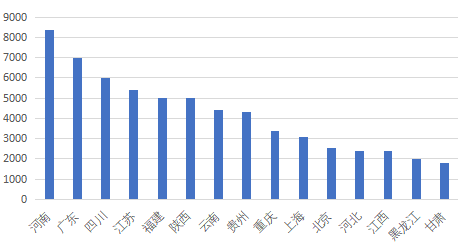
Core Viewpoint - The construction sector is experiencing a significant surge in investment, driven by local governments' accelerated project launches to meet annual targets amid the ongoing recovery from the pandemic [1][14]. Group 1: Market Performance - On the first trading day of March, the Shanghai and Shenzhen stock markets saw strong gains, particularly in the infrastructure sector, which experienced a wave of limit-up stocks [1]. - Among the 28 Shenwan first-level industry indices, cyclical industries such as construction materials and construction decoration rose over 8%, with major state-owned enterprises like China State Construction and China Railway Construction performing exceptionally well [1]. Group 2: Investment Plans - A total of 15 regions have announced clear plans for major projects in 2020, with a combined planned investment exceeding 6 trillion yuan, and nine provinces reporting total project investments over 24 trillion yuan [1][2]. - Six provinces, including Henan, Guangdong, Sichuan, Jiangsu, Fujian, and Shaanxi, have annual investment plans exceeding 500 billion yuan [2][4]. Group 3: Project Details - The investment plans include significant infrastructure projects across various sectors such as highways, high-speed rail, and energy, with Yunnan Province planning a total investment of approximately 3.6 trillion yuan for major infrastructure projects [1][8]. - In addition to traditional infrastructure, there is a notable emphasis on healthcare and elderly care facilities, reflecting a shift in investment focus [1][8]. Group 4: Regional Highlights - Sichuan Province has identified 700 key projects with an expected annual investment of over 600 billion yuan, while Fujian Province has 1,567 key projects with a total investment of 3.84 trillion yuan [5][4]. - Yunnan plans to launch 525 key projects with a total investment of around 5 trillion yuan, emphasizing large-scale projects [8][9]. - Chongqing's investment in infrastructure is projected at approximately 1.45 trillion yuan, focusing on various public health emergency service projects [9][8]. Group 5: Future Directions - Analysts suggest that the new round of infrastructure investment will not only focus on traditional sectors but also expand into healthcare and other public service areas, addressing long-standing deficiencies [14]. - The emphasis on increasing public investment in healthcare infrastructure is seen as a strategy to mitigate economic downturns while improving regional healthcare conditions [14].
黑色系周度报告-20251031
Xin Ji Yuan Qi Huo· 2025-10-31 13:18
Report Information - Report Title: Black Series Weekly Report [2] - Report Date: October 31, 2025 [2] - Analyst: Shi Lei [2] - Research Assistant: Shi Zhuoran [2] Industry Investment Rating - Not provided Core Views - **Mid - to - Long - Term**: For steel and iron ore, the "Golden September and Silver October" period is over, macro - level positive impacts are weakening, and the market is returning to fundamental influences. With increasing environmental restrictions and approaching winter storage, there is an expectation of a mild rebound in steel and iron ore futures, but trading should be based on an oscillatory mindset. For glass and soda ash, glass inventory has stopped increasing and started to decline, with stable supply and weak downstream demand, maintaining a weak pattern. Soda ash has a slight reduction in inventory, weak downstream demand, and a supply - surplus situation, with the main contract continuing a weak oscillatory trend [62][66] - **Short - Term**: For black series products, influenced by the "14th Five - Year Plan" on new infrastructure and stable real estate policies and the easing of Sino - US trade relations, the overall market showed an oscillatory upward trend this week, but cooled on Friday. Steel, hot - rolled coils, and iron ore are expected to oscillate, with risks of repeated fluctuations. Glass and soda ash followed the sector up and then down, with prices under pressure, and short - term trading should be based on fundamental logic [63][67] Summary by Directory Black Series Weekly Market Review | Variety | Futures Closing Price (10/24/2025) | Futures Closing Price (10/31/2025) | Change | Percentage Change | Spot Price | Basis (Unconverted) | | --- | --- | --- | --- | --- | --- | --- | | Rebar (RB2601) | 3046.0 | 3106.0 | 60.0 | 2.0% | 3230.0 | 124.0 | | Hot - rolled Coil (HC2601) | 3250.0 | 3308.0 | 58.0 | 1.8% | 3330.0 | 22.0 | | Iron Ore (I2601) | 771.0 | 800.0 | 29.0 | 3.8% | 814.0 | 14.0 | | Coke (J2601) | 1757.5 | 1777.0 | 19.5 | 1.1% | 1670.0 | - 107.0 | | Coking Coal (JM2601) | 1248.5 | 1286.0 | 37.5 | 3.0% | 1450.0 | 164.0 | | Glass (FG601) | 1092.0 | 1083.0 | - 9.0 | - 0.8% | 1210.0 | 127.0 | | Soda Ash (SA601) | 1229.0 | 1225.0 | - 4.0 | - 0.3% | 1270.6 | 45.6 | [3] Rebar - **Blast Furnace Profit**: On October 30, the rebar blast furnace profit was - 58 yuan/ton [7] - **Supply Side**: As of October 31, the blast furnace operating rate was 81.75%, a decrease of 2.96 percentage points; the daily average pig iron output was 2.3636 million tons, a decrease of 35,400 tons; the rebar output was 2.1259 million tons, an increase of 55,200 tons [12] - **Demand Side**: In the week of October 31, the apparent consumption of rebar was 2.3218 million tons, a week - on - week increase of 61,700 tons; as of October 30, the trading volume of construction steel by mainstream traders was 90,196 tons [16] - **Inventory**: In the week of October 31, the social inventory of rebar was 4.3081 million tons, a week - on - week decrease of 66,800 tons; the in - plant inventory was 1.7171 million tons, a week - on - week decrease of 129,200 tons [21] Iron Ore - **Supply Side**: In the week of October 24, the global iron ore shipment volume was 3.3884 million tons, a week - on - week increase of 54,900 tons; the arrival volume at 47 ports in China was 2.0843 million tons, a week - on - week decrease of 592,000 tons [26] - **Inventory**: In the week of October 31, the inventory of imported iron ore at 47 ports in China was 15.27293 million tons, a week - on - week increase of 163,440 tons; the inventory of imported iron ore at 247 steel enterprises was 8.84986 million tons, a week - on - week decrease of 229,330 tons [31] - **Demand Side**: In the week of October 31, the average daily discharge volume of imported iron ore at 47 ports in China was 331,220 tons, a week - on - week increase of 91,500 tons; as of October 30, the trading volume at major Chinese ports was 74,000 tons [36] Float Glass - **Supply Side**: In the week of October 31, the number of operating float glass production lines was 226; the weekly output was 1,128,925 tons, unchanged from the previous week; as of October 30, the capacity utilization rate was 80.63%, unchanged; the operating rate was 76.35%, unchanged [41] - **Inventory**: In the week of October 31, the in - plant inventory of float glass was 65.79 million weight boxes, a decrease of 823,000 weight boxes compared to October 24; the available days of in - plant inventory were 28 days, a week - on - week decrease of 0.3 days [46] Soda Ash - **Supply Side**: In the week of October 31, the capacity utilization rate of soda ash was 86.89%, an increase of 1.95 percentage points from the previous week; the output was 757,600 tons, an increase of 17,000 tons from the previous week [50] - **Inventory**: As of October 31, the in - plant inventory of soda ash was 1.702 million tons, a week - on - week decrease of 10 tons [55] - **Production and Sales Rate**: As of October 31, the production and sales rate of soda ash was 100.01%, a week - on - week increase of 0.23 percentage points [59]
调研速递|东莞勤上光电接受投资者调研 上半年营收2.63亿元等要点披露
Xin Lang Cai Jing· 2025-09-19 12:12
Core Viewpoint - Dongguan Qunshang Optoelectronics Co., Ltd. held an online performance briefing on September 19, 2025, where the management discussed the company's operational status and business layout, revealing a revenue of 263 million yuan for the first half of the year, representing an 18.8% year-on-year increase [1][2]. Group 1: Financial Performance - The company achieved a revenue of 263 million yuan in the first half of 2025, marking an 18.8% increase compared to the same period last year [1]. - The company plans to continue expanding both domestic and international markets in the second half of the year and accelerate project construction progress [1]. Group 2: Business Strategy - The company is focusing on opportunities presented by the "new infrastructure" policy, leveraging its smart pole technology to launch integrated solutions that include smart poles, smart boxes, RSU roadside units, MEC edge computing devices, and holographic digital intersection platforms [2]. - Management expressed confidence in future development and is actively working to improve the company's fundamentals and enhance core competitiveness [2]. Group 3: Shareholder and Market Concerns - The company has not triggered any delisting risk warnings according to Shenzhen Stock Exchange regulations [3]. - In response to concerns about cash flow management, the company explained that it engages in entrusted financial management to improve fund utilization efficiency while ensuring normal business operations [3]. - The company has repurchased a total of 16,498,650 shares, accounting for 1.15% of the current total share capital, and will arrange further repurchases as per regulations [3].
