脊柱手术机器人

Search documents
2025年骨科手术机器人中标全景观察与格局分析——基于公立医院公开中标数据
思宇MedTech· 2026-01-10 01:09
Core Insights - The orthopedic surgical robot market in public hospitals in China continues to grow, with a total of 84 units awarded in 2025, involving 18 manufacturers. The leading company, Tianzhihang, secured 28 units, maintaining a significant lead over competitors [2][3][4]. Overall Landscape - Tianzhihang remains the dominant player in the orthopedic surgical robot market, winning 28 units in 2025, significantly higher than other manufacturers. The competition among other manufacturers is characterized by a "many parallel, vying for supremacy" pattern, with key competitors including Jianjia (10 units), Rosenbot (7 units), Tadao (6 units), and Stryker (5 units [3][4][5]. Bid Quantity and Amount - In 2025, 76 projects disclosed procurement amounts, totaling approximately 643 million yuan. Tianzhihang led both in quantity and total bid amount, with 28 units corresponding to about 221 million yuan. Other notable manufacturers include Jianjia and Rosenbot, with total amounts of approximately 63 million yuan and 62 million yuan, respectively [7][8]. Hospital Dimension - Public hospital bidding reflects only a portion of the orthopedic robot market. The market also includes private hospitals, specialized medical institutions, and overseas markets. The procurement data serves as a lens to observe public hospital purchasing logic rather than a complete market representation [11][12]. - The procurement landscape shows a clear multi-tier structure, with hospitals ranging from national orthopedic centers to local and specialized hospitals. This indicates that orthopedic surgical robots are being integrated into various hospital capabilities based on their specific needs [12][14]. - The predominant configuration method is "single unit introduction," reflecting a rational validation approach rather than simple budget constraints. Hospitals prefer to validate the technology and team capabilities before expanding their configurations [13][15]. - Some leading hospitals have begun to adopt multiple brands, indicating a trend towards diversified clinical applications. For instance, Beijing University Third Hospital has integrated multiple robotic systems from different manufacturers within the same year [14][15].


行业聚焦:全球脊柱手术机器人市场头部企业份额调研(附Top10 厂商名单)
QYResearch· 2025-09-26 04:21
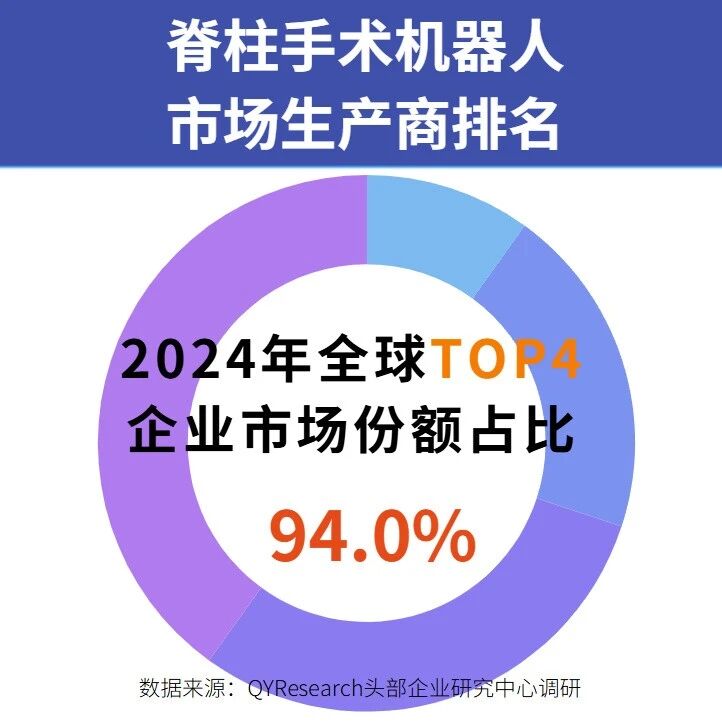
Core Insights - The article discusses the advancements and market potential of spinal surgery robots, highlighting their role in enhancing surgical precision and safety through integrated technologies [1][16]. Market Overview - The global spinal surgery robot market is projected to reach $900 million by 2031, with a compound annual growth rate (CAGR) of 19.6% in the coming years [1]. - The leading manufacturers in the spinal surgery robot market include Medtronic, Globus Medical, Zimmer Biomet, Tianzhihang, and Brainlab, with the top four companies holding approximately 94.0% of the market share in 2024 [5]. Product Segmentation - Guided surgical robots dominate the market, accounting for about 99.0% of the total market share [8]. - Minimally invasive surgery is the largest application segment, representing approximately 80.7% of the demand [10]. Market Drivers - Key drivers for the spinal surgery robot market include technological innovation, increasing clinical demand, and the ongoing digital transformation in the healthcare sector [16]. - The aging global population and the rise in spinal degenerative diseases are contributing to the growing need for precise and minimally invasive surgical solutions [16]. Challenges - The market faces challenges such as high equipment procurement and maintenance costs, which create economic pressure on smaller hospitals [17]. - There is a need for extensive training and integration with existing imaging and navigation systems, which can hinder adoption in underdeveloped regions [17]. Future Trends - The spinal surgery robot industry is expected to accelerate towards greater intelligence, integration, and minimally invasive techniques [18]. - Future robots will likely incorporate advanced technologies such as AI, big data, and machine vision for improved decision-making and surgical planning [18].