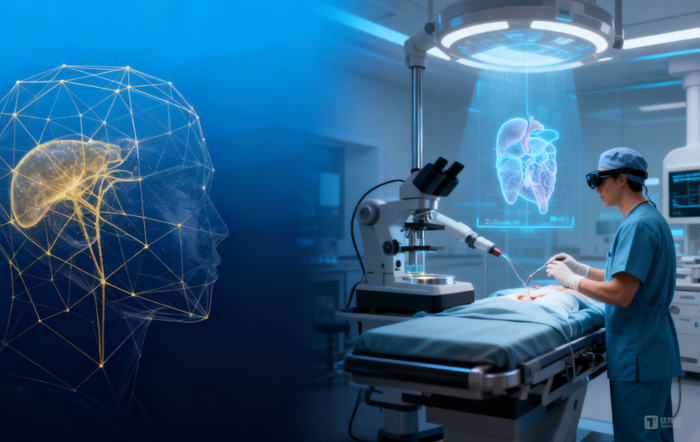
脑机双学习闭环系统

Search documents
AI医疗进阶3.0:医疗普惠潮下的效率革命与商业化破局丨2025·大复盘
Tai Mei Ti A P P· 2025-11-29 01:57
Core Insights - The consensus in the medical industry is that AI will not replace doctors but will serve as an essential assistant, supported by a strong regulatory framework [2] - The AI medical sector is transitioning from conceptual hype to substantial development driven by policies and market forces, with a projected industry scale of 115.7 billion yuan by 2025 [3][4] - The integration of AI into various medical applications is deepening, with significant advancements in areas such as imaging analysis and drug development [4][10] Industry Growth and Projections - The AI medical industry in China is expected to reach 115.7 billion yuan by 2025, with a compound annual growth rate of 10.5% from 2022 to 2028 [3] - By 2028, the industry scale is projected to increase to 159.8 billion yuan [3] Application Maturity and Areas of Focus - AI applications have expanded from diagnostic tools to encompass drug development, decision support, and medical robotics, with imaging analysis being the most mature area [4][10] - AI in medical imaging is projected to exceed 15 billion yuan by 2025, with a significant increase to 23.57 billion yuan by 2026 [10] Data Infrastructure and Challenges - As of July 2025, 206 algorithmic medical products have been registered, with 160 companies providing AI services directly to patients through apps [6] - The quality and standardization of medical data remain significant challenges, with a large volume of data being poorly structured and difficult to utilize effectively [21][22] Payment and Commercialization Issues - The integration of AI into the payment system is still developing, with current regulations preventing additional charges for AI-assisted diagnoses [23] - The recognition of AI's clinical value is crucial for its inclusion in payment systems, with a focus on demonstrating its effectiveness in improving patient outcomes [23][24] Future Directions and Sustainable Development - The AI medical sector is exploring diverse commercialization paths, with a focus on creating clear clinical value to ensure sustainability [27][30] - The concept of "inclusive healthcare" is emerging as a key focus, aiming to balance service quality, accessibility, and cost [30]