自动体外除颤器(AED)

Search documents
快讯丨3只新股在美上市 2家递交招股书 含1家中企
Sou Hu Cai Jing· 2025-12-12 06:12
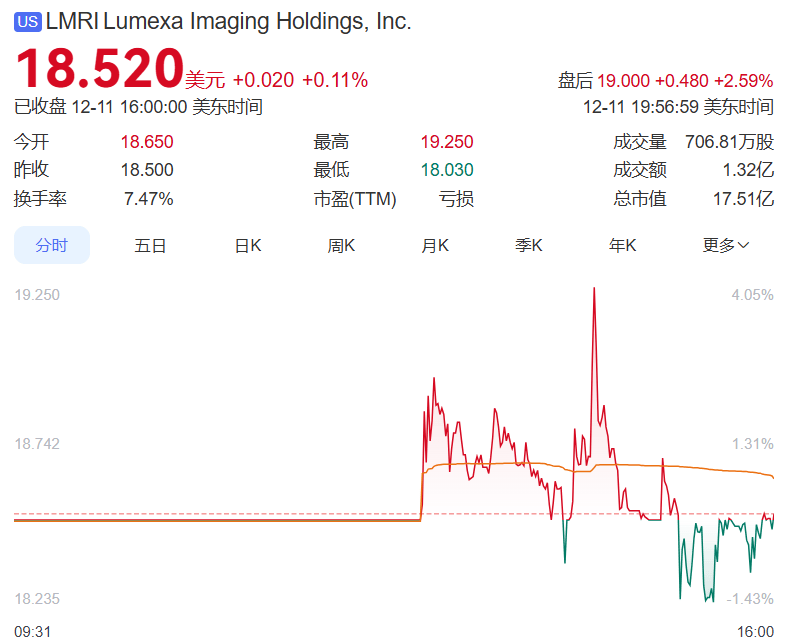
Core Insights - Lumexa Imaging Holdings, Bluerock Acquisition, and Carbon Capital Partners collectively raised $913 million upon their NASDAQ debut on December 11 [1] - Lumexa Imaging Holdings opened at $18.65 per share, slightly above its offering price, and closed at $18.52, with a total market capitalization of $1.751 billion [1][4] - Lumexa Imaging reported revenues of $755 million and a net loss of $18.41 million for the nine months ending September 30, 2025 [4] New Listings - Lumexa Imaging Holdings (LMRI) raised $463 million by issuing 25 million shares at $18.50 each, with funds allocated for repaying existing loans and general corporate purposes [4] - Bluerock Acquisition (BLRKU) and Carbon Capital Partners (KBONU) also listed on the same day, raising $150 million and $300 million respectively [5] IPO Filings - Brand Meditech Limited, a Chinese company, filed for an IPO with plans to list on NASDAQ under the ticker AED, aiming to raise between $6.3 million and $8.1 million by offering 900,000 shares at $7 to $9 each [6][10] - Brand Meditech specializes in medical devices and software, including infusion pumps and portable X-ray machines, targeting various medical fields [10] Financial Data - For the fiscal years ending March 31, 2024, and 2025, Brand Meditech reported revenues of $2.619 million and $2.549 million, with net profits of $1.47 million and $1.21 million respectively [11]

《银川市院前医疗急救服务条例》2026年1月1日正式施行
Zhong Guo Xin Wen Wang· 2025-11-20 10:56
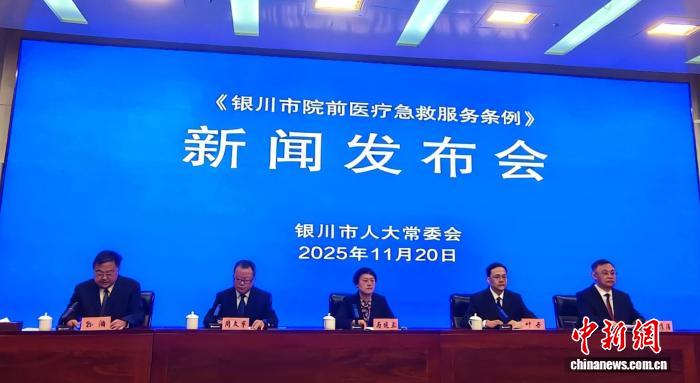
Core Viewpoint - The "Yinchuan Pre-Hospital Medical Emergency Service Regulations" will officially take effect on January 1, 2026, marking a new phase of legal and standardized development in pre-hospital emergency services in Yinchuan, providing stronger institutional guarantees for public health and safety [1]. Group 1: Legislative Purpose and Structure - The regulations aim to solidify existing urban and rural emergency network achievements, addressing prominent issues in service development and meeting public demand for efficient and high-quality pre-hospital emergency care [2]. - The regulations consist of 6 chapters and 34 articles, focusing on building a comprehensive guarantee system that includes general principles, system construction, management services, guarantee mechanisms, legal responsibilities, and supplementary provisions [3]. Group 2: Key Provisions - The regulations address the enhancement of public self-rescue and mutual rescue capabilities, as well as the protection of rescuers' rights, through three main aspects: training responsibilities, equipment configuration, and exemption clauses [3]. - Training responsibilities include mandatory emergency skills training by health departments and the Red Cross, as well as incorporating emergency knowledge into educational curricula [3]. - The regulations require scientific planning for the placement of Automated External Defibrillators (AEDs) in public areas, ensuring they are connected to the "120" command and dispatch system, and mandating training for personnel in key locations [3]. - Exemption clauses are established to relieve rescuers from civil liability for damages caused during voluntary emergency assistance, and to exempt them from penalties for violations while avoiding emergency vehicles [3]. Group 3: Implementation and Impact - Yinchuan has established a network emergency system centered around the Yinchuan Emergency Rescue Center, supported by various medical units and 28 emergency stations, achieving full coverage within the city [4]. - The implementation of these regulations is expected to promote the high-quality development of pre-hospital emergency services, enhancing public sense of gain, happiness, and safety [4].
山西:“救命神器”+急救培训再显实效 两日连救两条生命
Zhong Guo Xin Wen Wang· 2025-11-10 12:40
Core Points - The article highlights the effectiveness of automated external defibrillators (AEDs) and emergency rescue training in saving lives in Shanxi province, with two successful rescues occurring within two days [1][2]. Group 1: Life-saving Incidents - A child was saved from choking using the Heimlich maneuver by a student trained in emergency rescue [1]. - A man suffering from cardiac arrest was revived using an AED by a police officer who had undergone emergency rescue training [2]. Group 2: Training and Implementation - The AED used in the second incident was part of a government initiative, with 7 successful rescues recorded since its installation [2]. - A collaborative emergency rescue mechanism was established between the Shanxi Red Cross and the provincial police, integrating rescue training into police annual training programs [2]. Group 3: Training Outreach - The Shanxi Red Cross has expanded its training network, providing emergency rescue training to over 118,000 certified rescuers and reaching more than 650,000 individuals through public lectures in 2025 [4]. - The initiative aims to empower ordinary citizens to become active rescuers in emergencies, transforming them from bystanders to lifesavers [4].

中新健康丨专家紧急提醒,大降温这类人别“硬抗”
Zhong Guo Xin Wen Wang· 2025-10-22 09:33
Core Viewpoint - The article discusses the health risks associated with sudden temperature drops in autumn, particularly for cardiovascular disease patients, and provides recommendations for maintaining heart health during this season [2][3][11]. Group 1: Health Risks from Temperature Drops - Sudden temperature drops can lead to increased cardiovascular disease incidents due to factors such as blood vessel contraction, increased blood viscosity, and emotional stress [3][4][6]. - The phenomenon of "thermal expansion and contraction" in blood vessels can elevate blood pressure and increase the risk of heart attacks [3]. - Dry autumn air can lead to thicker blood, which slows circulation and promotes blood clot formation [4]. Group 2: Recommendations for Cardiovascular Patients - Patients with cardiovascular diseases should avoid extreme temperature exposure and adjust clothing based on their comfort level, especially as temperatures drop [8][10]. - Key body parts such as the head, neck, abdomen, and feet should be kept warm to prevent cold-related health issues [9]. - A layered clothing approach is recommended, with thicker clothing on the lower body to maintain warmth [10]. Group 3: Heart Health Maintenance Tips - Maintain a balanced diet with low salt, oil, and sugar, while ensuring dietary variety [11]. - Engage in moderate exercise, adapting to indoor activities when outdoor temperatures are low [11]. - Stay hydrated by drinking water regularly, not just when thirsty, to avoid increasing heart strain [11]. - Regularly monitor health indicators such as blood pressure and blood sugar levels [11]. Group 4: Emergency Response for Cardiac Events - Recognize symptoms of potential cardiac events, such as chest pain or shortness of breath, and take immediate action [12][13]. - If symptoms persist, seek emergency medical assistance promptly [14].