
航班运输服务

Search documents
今年春节假期青岛机场旅客吞吐量单日最高超9万人次 创历史新高
Zhong Guo Xin Wen Wang· 2026-02-24 13:50
Core Viewpoint - Qingdao Airport achieved a record high passenger throughput during the Spring Festival holiday, with a peak of over 90,200 passengers on February 23, 2023, and a total of 715,700 passengers throughout the holiday period [1][3]. Group 1: Passenger Traffic - During the Spring Festival holiday, Qingdao Airport executed a total of 4,735 flight takeoffs and landings, averaging 526 flights per day and serving approximately 79,500 passengers daily, marking a 3% and 8% increase compared to the 2025 Spring Festival holiday [3]. - From February 19 to February 23, the airport's passenger throughput exceeded 85,000 for five consecutive days, indicating a strong demand driven by family visits, tourism, and labor migration [3]. Group 2: Operational Enhancements - Qingdao Airport proactively planned and enhanced flight operation support and passenger services to accommodate the increased traffic, focusing on traditional travel demands such as "winter escape" and "family reunions" [3]. - The airport optimized check-in and security processes to improve efficiency during peak periods, while also enhancing safety measures in response to increased restrictions on carry-on items [3]. Group 3: Cargo Operations - The airport has seen a significant increase in the transportation of goods related to the Spring Festival, implementing upgraded logistics measures including a green channel for priority handling of goods [4]. - Qingdao Airport is positioned as a key gateway to Northeast Asia, with a capacity to handle an annual passenger throughput of 35 million and cargo/mail throughput of 500,000 tons [4].

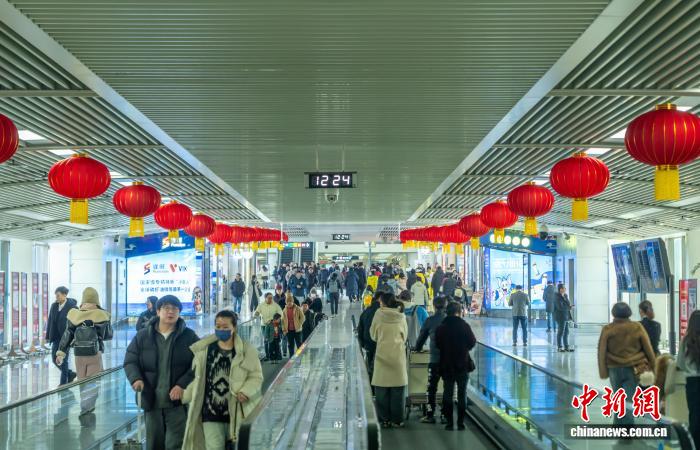
2026春运|717架次 湖北空管单日计划保障武汉天河机场起降架次创新高
Zhong Guo Min Hang Wang· 2026-02-12 11:30
Core Viewpoint - The Wuhan Tianhe International Airport is experiencing a peak in flight operations during the Spring Festival travel season, with a record of 717 flights expected on February 12, 2026, surpassing previous forecasts by 5.4% [1][3]. Group 1: Flight Operations - The airport has recorded a total of 6,798 flights in the first ten days of the Spring Festival, averaging 680 flights per day [1]. - The Hubei Air Traffic Control Bureau has entered a "high-pressure offensive period" for Spring Festival operations, with a total of 20,453 flights supported in the Hubei region [1]. Group 2: Operational Strategies - The Hubei Air Traffic Control Bureau is focusing on a "safe, convenient, and warm Spring Festival" theme, utilizing a three-runway operational model and three key systems: refined control, collaborative meteorology, and zero-failure equipment [2]. - To manage the high-density operation pressure of 717 flights, the bureau has dynamically optimized sector resource allocation and increased runway capacity during peak hours by opening additional control sectors [3]. Group 3: Weather Management - The airport is facing significant weather challenges, including low clouds, fog, and frost, prompting the air traffic control bureau to collaborate with the Hubei Meteorological Bureau for timely weather alerts [4]. - The bureau's meteorological team provides detailed forecasts, allowing seamless transitions between low visibility operations and runway de-icing, minimizing weather impacts on flight operations [4]. Group 4: Equipment Reliability - The technical support team has ensured the reliability of critical equipment, achieving zero-failure operation of navigation and monitoring devices since the start of the Spring Festival [6]. - Preparations included thorough inspections and the installation of insulation for outdoor radar and navigation systems, ensuring robust technical support for air traffic control [6]. - The peak flight operations are expected to continue for four more days, with daily averages projected to remain above 700 flights [6].

大连机场进入春运高峰 加密重点航线运力
Xin Lang Cai Jing· 2026-02-10 23:13
Group 1 - The core point of the news is that Dalian International Airport is experiencing a significant increase in passenger traffic during the Spring Festival travel season, with daily passenger numbers exceeding 50,000 and a peak expected on February 13 and February 23, where daily passenger numbers may surpass 60,000 [1][3] - On February 10, which coincides with the Little New Year, Dalian Airport plans to operate 403 flights and transport 52,000 passengers [3] - To meet diverse travel demands, Dalian Airport is coordinating with airlines to increase capacity on key routes to various cities, including Beijing, Shanghai, and Shenzhen, with the Shanghai route having up to 25 flights daily and the Beijing route having 18 flights daily [1] Group 2 - Dalian Airport has launched festive activities such as a "Next Stop: Home" theme music flash mob and a "Dalian Impression" folk experience, enhancing the holiday atmosphere for travelers [2] - The airport has decorated the premises with traditional Chinese New Year decorations, including red lanterns and flowers, and has implemented lighting projects to create a warm and welcoming environment for returning travelers [2]
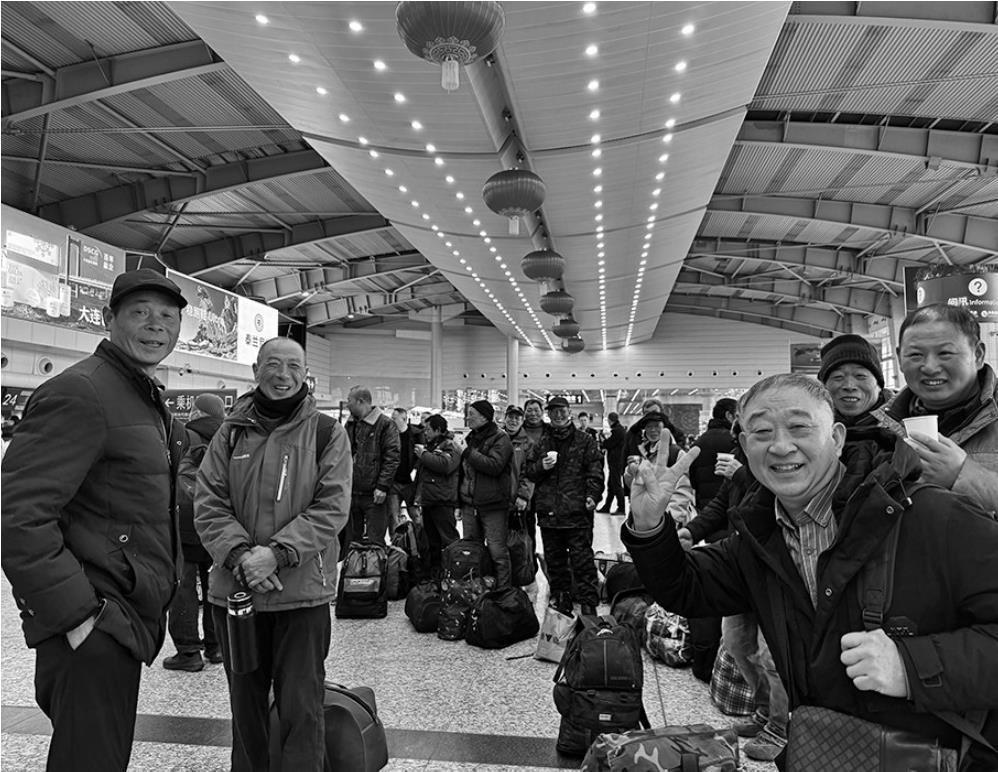
春运期间西安机场预计保障航班3.9万架次
Zhong Guo Xin Wen Wang· 2026-02-02 13:45
Core Insights - During the Spring Festival travel season, Xi'an Airport is expected to handle 39,000 flights, serve 5.762 million passengers, and transport 35,000 tons of cargo and mail, representing year-on-year increases of 1.6%, 2.5%, and 7.5% respectively [2] Group 1: Passenger Flow and Flight Operations - The peak travel days at Xi'an Airport are anticipated to be February 13 and February 23, driven by a combination of traditional homecoming, family visits, student travel, and strong tourism demand [2] - To meet the winter travel surge, Xi'an Airport is coordinating with airlines to increase flight frequencies, including new routes and additional flights to various destinations [2] Group 2: Passenger Services and Experience Enhancement - Xi'an Airport has introduced several convenient services for elderly passengers, including emergency assistance phones, wheelchairs, and personalized service [3] - The airport is also providing free rest services and meals for travelers with short layovers between air and rail transport [3] - A festive atmosphere is being created with activities such as calligraphy for Spring Festival greetings and cultural exhibitions, enhancing the travel experience [3] Group 3: Weather Preparedness and Safety Measures - Xi'an Airport has established a real-time information sharing mechanism with meteorological departments to monitor weather conditions and implement emergency response plans for adverse weather [5] - The airport is focusing on seamless coordination among airlines and ground services to manage potential flight delays and ensure smooth operations [5] - Safety training has been conducted to mitigate risks associated with hazardous materials, ensuring passenger safety during the travel season [5]
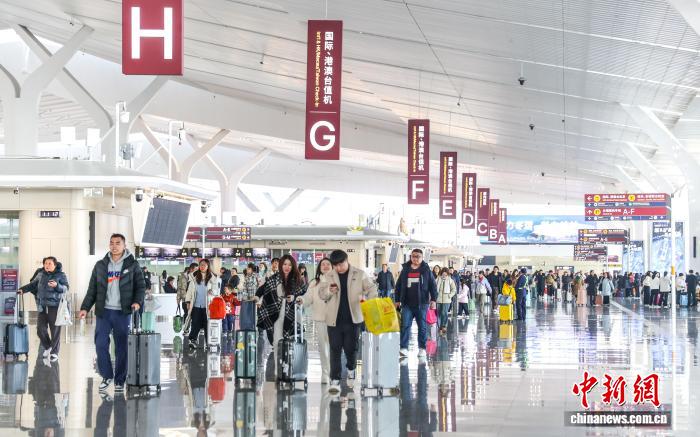
海口美兰机场:春运预计运送旅客438.5万人次
Xin Lang Cai Jing· 2026-01-30 04:12
Core Viewpoint - Meilan International Airport is expected to see an increase in flight operations and passenger traffic during the 2026 Spring Festival travel season, indicating a recovery in travel demand post-pandemic [1] Group 1: Flight Operations - Meilan Airport is projected to operate 27,000 flights during the Spring Festival travel season, representing a year-on-year increase of 0.3% [1] - During the Spring Festival holiday period from February 15 to February 23, the airport anticipates 6,095 flights, with a significant peak on February 23, when daily flights could reach 700 [1] Group 2: Passenger Traffic - The airport expects to transport 4.385 million passengers during the Spring Festival travel season, which is a year-on-year growth of 5.06% [1] - During the holiday period, Meilan Airport is forecasted to serve 1 million passengers, with a daily peak of over 120,000 passengers on February 23 [1] Group 3: Capacity and Demand - Meilan Airport plans to continuously increase flight capacity to meet the growing travel demand during the Spring Festival [1]
华北空管局:迎春运 提质效 保畅通
Zhong Guo Min Hang Wang· 2026-01-29 03:52
Core Viewpoint - The 2026 Spring Festival travel season in China will run from February 2 to March 13, lasting 40 days, with a total of 88,800 flight takeoffs and landings planned at Beijing Capital and Daxing airports, representing a year-on-year increase of approximately 1.67% [1] Group 1: Flight Operations - Beijing Capital Airport plans 49,600 flight takeoffs and landings, a year-on-year increase of 1.64% [1] - Daxing Airport plans 39,200 flight takeoffs and landings, a year-on-year increase of 1.77% [1] Group 2: Travel Demand Characteristics - The travel demand during the Spring Festival is characterized by family visits and tourism, with a trend of dispersed travel before the holiday and concentrated return travel afterward [1] - Popular domestic travel destinations include Sanya and Harbin, while "south-north crossover" travel routes are gaining popularity [1] - Significant growth in flight demand is noted for regions with strong traditional customs, such as Foshan and Quanzhou [1] - For international travel, Seoul and Bangkok are the preferred destinations for outbound travelers [1] Group 3: Safety and Efficiency Measures - The North China Air Traffic Management Bureau emphasizes a "safety first, people-oriented" approach, focusing on refined flow management to enhance efficiency and optimize flight release [2] - The bureau plans to dynamically optimize flow control measures and strengthen collaboration with airports, airlines, and meteorological units to improve overall operational efficiency [2] - Key risks will be addressed with detailed emergency plans to ensure the safe and smooth operation of every flight during the Spring Festival [2]
东航江西分公司迎战2026年首场寒潮天气
Zhong Guo Min Hang Wang· 2026-01-20 03:53
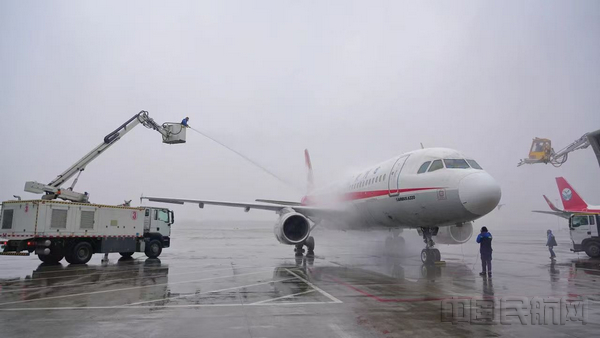
Core Viewpoint - The Eastern Airlines Jiangxi branch effectively managed the challenges posed by a cold wave in Nanchang on January 20, 2026, ensuring all flights operated normally without significant delays or cancellations due to snow and low temperatures [1][4]. Group 1: Preparation and Response - The Eastern Airlines Jiangxi branch and related units proactively planned and activated winter extreme weather contingency measures ahead of the cold wave [4]. - The operations command center closely monitored weather changes and maintained real-time communication with air traffic control and airports to assess the impact of snowfall on flight operations [4]. - The technical division completed maintenance and testing of de-icing equipment in advance, ensuring sufficient de-icing fluid was available and conducting pre-shift training for staff [4]. Group 2: Execution of De-icing Operations - De-icing operations for the first flight commenced at 5:40 AM, with personnel following a systematic process to apply warm de-icing fluid to the aircraft [7]. - The average time for de-icing each of the 11 flights was kept under 10 minutes, achieving efficiency, precision, and safety [8]. - The ground service department enhanced personnel presence to ensure safe operations and effective passenger services, including guidance and information dissemination [4][8]. Group 3: Ongoing Monitoring and Future Actions - The Eastern Airlines Jiangxi branch will continue to monitor weather conditions and adjust support plans dynamically to ensure passenger safety during travel [8].

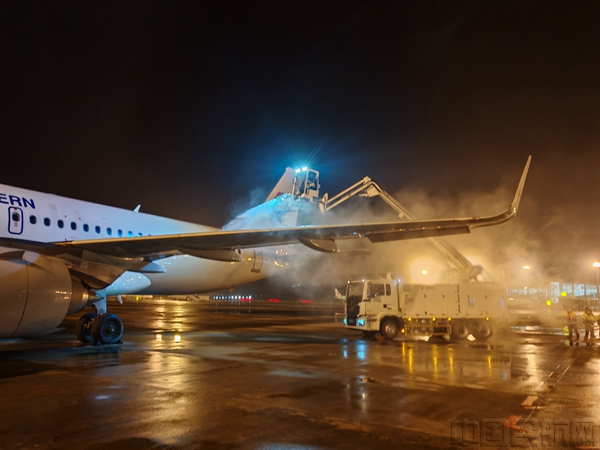
华东民航全力应对2026年首场寒潮降雪
Zhong Guo Min Hang Wang· 2026-01-19 04:37
Core Viewpoint - The article highlights the proactive measures taken by the East China Civil Aviation Administration and various airlines in response to extreme weather conditions, including snow and low temperatures, to ensure flight safety and passenger comfort during the winter season [1][2]. Group 1: Response to Weather Conditions - The East China Civil Aviation Administration organized a dispatch meeting to address the extreme weather, emphasizing the need for comprehensive understanding of flight scheduling, de-icing capabilities, and runway conditions [2]. - Various regulatory bodies, such as the Shandong and Jiangsu regulatory bureaus, conducted on-site inspections and remote supervision to ensure operational readiness and safety measures were in place [2][3]. - Airports in the East China region activated winter snow protection plans, ensuring that de-icing vehicles and materials were adequately prepared and that flight crews were trained in de-icing procedures [3][5]. Group 2: Operational Adjustments - Air traffic control departments increased the frequency of weather observations and forecasts to manage flight flow effectively, minimizing the risk of widespread delays [5]. - Continuous snow removal operations were conducted at airports, with personnel working around the clock to maintain runway and taxiway safety [5]. - Airports implemented various passenger services, including priority check-in for late arrivals and special assistance for vulnerable travelers, to mitigate the impact of weather on travel [5][6]. Group 3: Future Plans - The East China Civil Aviation Administration plans to implement a comprehensive management approach for winter operations, focusing on pre-snow inspections, ongoing supervision during snow events, and post-event reviews to enhance safety [6].
民航深圳监管局:从暖阳到寒冬 一场跨越三千公里的安全守护
Zhong Guo Min Hang Wang· 2025-12-04 12:26
Core Viewpoint - The article highlights the importance of winter operational safety in the aviation industry, particularly focusing on the preparations and inspections conducted by the Shenzhen Civil Aviation Regulatory Bureau at the Shenzhen Airlines Shenyang branch to ensure readiness for harsh winter conditions [2][3][4]. Group 1: Winter Operational Challenges - The transition to winter operations presents significant challenges, including the risk of ice formation on aircraft, which can severely affect flight safety [2]. - Low temperatures can lead to reduced fuel flow, altered braking performance, and slower responses from various sensors and mechanical components [2]. - Ground support operations must be robust, with timely and thorough de-icing procedures, as well as addressing the risks posed by icy runways and taxiways [2]. Group 2: Inspection and Evaluation Process - The inspection conducted by the regulatory team was a proactive measure to assess the winter operational readiness of Shenzhen Airlines before severe cold weather sets in [3]. - Inspectors evaluated various aspects of winter operations, including personnel qualifications, training implementation, risk management, and emergency response capabilities [3]. - Specific attention was given to the tools and equipment used in maintenance, emphasizing the importance of having reliable tools in cold conditions [3]. Group 3: Feedback and Recommendations - The inspection team reported that Shenzhen Airlines Shenyang branch demonstrated solid winter operational preparations and a commendable employee attitude [4]. - Recommendations included enhancing awareness of safety responsibilities, conducting thorough winter risk assessments, and improving training for extreme weather conditions [4]. - The importance of political and psychological support for employees was also highlighted, emphasizing the need for comprehensive care in their work environment [4]. Group 4: Cross-Regional Learning - The inspection served as a platform for mutual learning, with employees from the Shenyang branch sharing valuable experiences related to winter operations, such as training and coordination during de-icing [5]. - The regulatory team acknowledged the unique challenges faced in northern winter operations and expressed a commitment to ensuring safety across all regions [5].

东航武汉公司:紧抓“新”与“变”,确保“换季换的是安全”
Zhong Guo Min Hang Wang· 2025-10-23 06:07
Core Viewpoint - The Eastern Airlines Wuhan Company is focusing on safety and operational efficiency as it prepares for the upcoming winter-spring flight season starting on October 26, 2025, with a comprehensive plan for new routes and safety measures [1][2][3] Group 1: Flight Operations and Planning - The company plans to operate 63 domestic routes and 12 international and regional routes, covering 54 domestic airports, 3 regional airports, and 12 international airports, with 14 new routes and 6 new operating airports expected [1] - All routes for the seasonal transition have been fully declared as of now [1] Group 2: Training and Safety Measures - Starting from October 13, the company has initiated comprehensive training and assessment for key personnel in flight and operations control to ensure familiarity with the new seasonal route network and operational characteristics [1] - The training emphasizes special airport operational restrictions and emergency response procedures to enhance safety and flight support capabilities [1] Group 3: Weather Preparedness and Risk Management - The company is enhancing meteorological warnings and utilizing AI models to predict operational risks from adverse weather conditions such as low temperatures and snow, with a 72-hour advance assessment [2] - Various departments are collaborating to manage seasonal risks, including the safety supervision department overseeing risk management and the flight department adjusting crew assignments for special airports and routes [2] Group 4: Resource Allocation and Emergency Preparedness - The company is proactively assessing winter operational support resources, stocking de-icing materials, and conducting comprehensive checks on vehicles and outdoor equipment [2] - A tabletop exercise for handling large-scale flight delays was conducted on October 15 to identify and resolve bottlenecks in the delay management process [2][3]