
春运出行

Search documents
三亚直飞深圳机票逼近9000元
Xin Lang Cai Jing· 2026-02-22 15:52
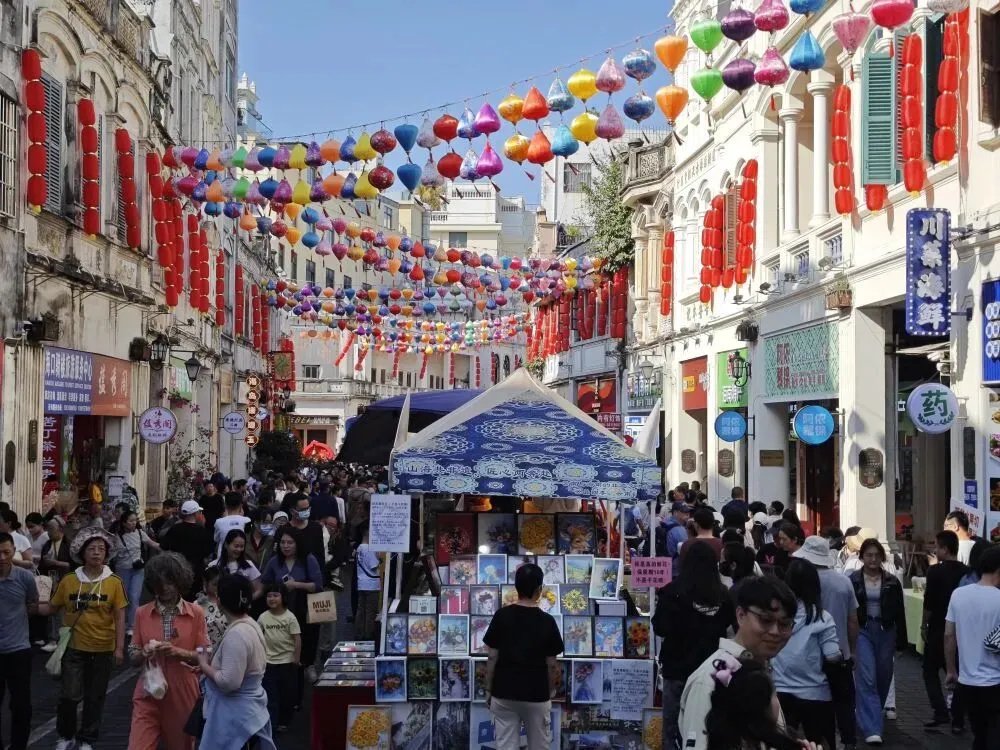
Group 1 - The core point of the article highlights that Hainan has become a popular destination for domestic and international tourists during the first Spring Festival holiday after the Hainan Free Trade Port's closure [1][24] - Many travelers are choosing to travel from Shenzhen to Hainan for the New Year celebrations [3][7] - The return traffic from Hainan is experiencing a peak as the holiday comes to an end, with significant demand for outbound transportation [9][34] Group 2 - There is a severe shortage of tickets for flights and ferries leaving Hainan, with prices for direct flights from Sanya to Shenzhen nearing 9,000 yuan [11][14] - As of February 22, all direct flights from Sanya to Shenzhen were sold out, indicating high demand [11][24] - The ticket availability for ferries is also tight, with all tickets for certain routes sold out [28][30] Group 3 - The top ten source cities for tourists to Sanya during this period include Beijing, Shanghai, Chengdu, and others, indicating a broad interest in Hainan as a travel destination [24] - The article suggests that as the peak travel period subsides, ticket prices are expected to return to more reasonable levels starting from February 26 [34]

北京“八站两场”春运出行攻略⑩:北京通州站
Xin Lang Cai Jing· 2026-02-20 03:09
Core Viewpoint - Beijing Tongzhou Station, located in the city's sub-center, is set to officially open on December 30, 2025, integrating multiple transportation modes including intercity trains, metro, and bus services [1] Transportation Modes - **Metro**: Currently, Line 6 can be accessed at Beiyunhe East Station, with a 10-minute walk to the train station via a connecting corridor. Future connections will include Line 22 and M101 [2] - **Buses**: The underground M1 level features a bus station with three routes (T61, T109, T115) heading to various local destinations, and an area for tourist buses with three additional routes [3] - **Taxis/Ride-hailing**: The drop-off area for taxis and ride-hailing services is located on B1 level, with a total of 277 taxi spots and 181 ride-hailing spots available [4] - **Airport Buses**: Two airport bus lines connect to Capital Airport and Daxing Airport, operating daily from 8:00 AM to 7:30 PM [5] - **Private Cars**: Drivers can drop off passengers at designated areas on B1 level, with 660 parking spots in the west area and 220 in the east area [6] Flow of Entry and Exit - **Entry Flow**: Passengers can enter through the "Jingfan" shaped entrances, proceed to B1 for security checks, and then to B2 for waiting areas [7] - **Exit Flow**: Passengers exit from B3 to B2 and can choose their next steps based on their transportation needs [8] Station Features - **Space Layout**: M1 level is designated for buses and tourist buses, B1 for entry and commercial areas, B2 for transfers and waiting, and B3 for intercity platforms [10] - **Cultural Integration**: The station hosts various cultural activities, including art exhibitions and seasonal events to enhance the travel experience [11] - **Customer Service**: Volunteer staff and service stations are available to assist passengers with inquiries and provide amenities like medical assistance and charging stations [12] Travel Recommendations - **Ticket Purchase**: It is advised to purchase tickets one day in advance during peak times, with a preference for electronic tickets [13] - **Transfer Tips**: Passengers are encouraged to use the indoor transfer corridor for comfort and to choose bus routes that enter the underground station to minimize walking [14] - **Parking and Taxi**: For private vehicles, the west parking area is recommended due to more available spots, and taxi drop-off should be directed to the designated areas on B2 level [15] - **Navigation**: Passengers should search for "Beijing Tongzhou Station" to avoid confusion with "Tongzhou West Station" [16]
北京“八站两场”春运出行攻略⑧:北京首都国际机场出行攻略
Bei Jing Ri Bao Ke Hu Duan· 2026-02-17 04:38
Group 1: Subway Service - The Capital Airport Line is a rapid transit line connecting Beijing's city center to the Capital Airport, featuring 5 stations with a 10-minute interval between trains, making it a time-efficient and economical travel option [1] - The ticket price for a one-way trip is unified at 25 yuan, with transfer options available at various stations to connect with other subway lines, covering key areas in Beijing [3] Group 2: Airport Bus Service - The airport bus service includes city buses to various districts and intercity buses to surrounding cities, with dedicated ticketing and waiting areas at both T2 and T3 terminals [4][5] - There are currently 8 city bus routes from the airport to major transport hubs and tourist attractions, with some routes offering 24-hour night service [7][8] Group 3: Taxi Service - Taxis operate 24 hours a day with dedicated waiting areas at both terminals, following Beijing's unified pricing standards, suitable for travelers with large luggage or those arriving late at night [11][12] Group 4: Ridesharing and Self-Driving Services - Ridesharing services have designated pick-up areas at both terminals, with upgrades planned for 2025 to enhance the waiting experience and reduce congestion [16][17] - Self-driving travelers can utilize temporary parking and long-term parking services at both terminals, with real-time parking availability and online payment options [21] Group 5: Shuttle Bus Service - A free shuttle bus service operates between T2 and T3 terminals, with frequent departures throughout the day, facilitating easy transfers for passengers [22]
各地水路出行迎高峰 最新交通信息→
Xin Lang Cai Jing· 2026-02-16 08:48
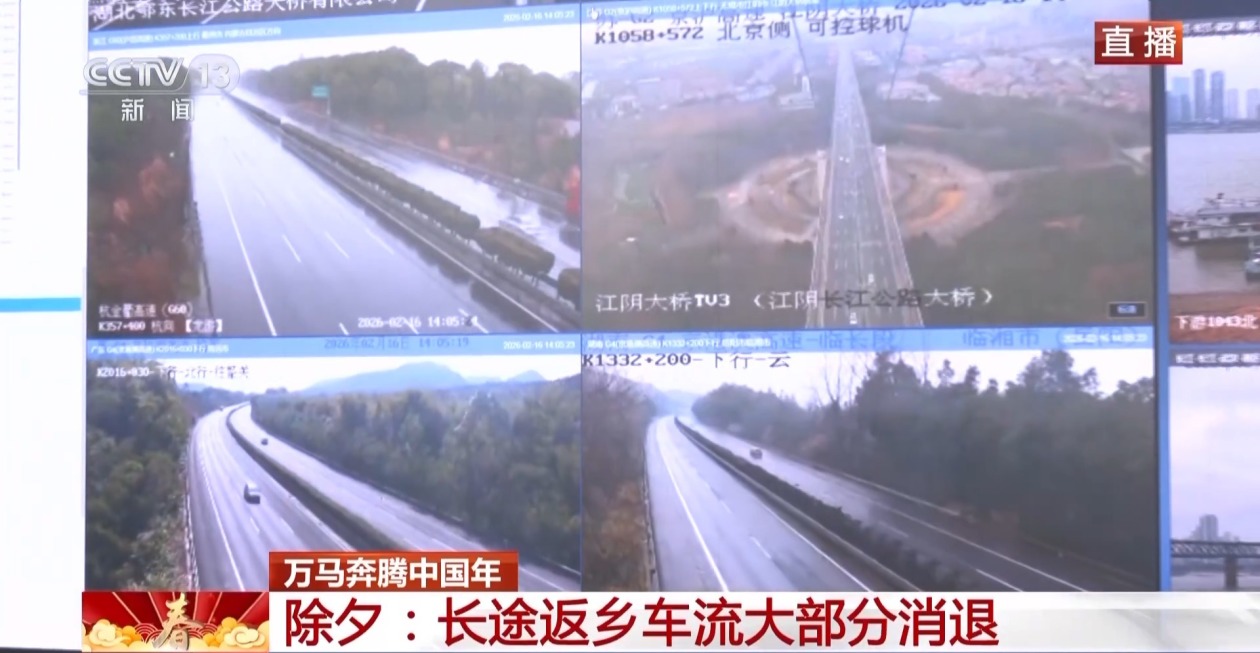
Group 1 - The overall travel situation on New Year's Eve is described as stable and calm, with long-distance return traffic having significantly decreased compared to last year's congested conditions [1] - The weather across various regions is generally favorable for travel, although some areas are experiencing temporary low-temperature rain and snow, leading to proactive road closures in specific segments [1] - Self-driving travel dominates this year's Spring Festival travel, with key highways like G4 Jinggang'ao Expressway showing minimal traffic as the last batch of travelers returns home [3] Group 2 - In the central and western regions, major highways such as G50 and G55 are experiencing low traffic volumes, indicating that most travelers have already reached their destinations [5] - Service areas along major highways are functioning well, providing essential services such as parking, dining, and charging, with some offering New Year gifts to travelers [7] - Waterway travel is also peaking today, with an expected 810,000 passengers transported nationwide, marking a 37.92% increase compared to the same period last year [9]
2026春运|郑州机场:旅客出行前请做好携带物品检查和相关准备
Zhong Guo Min Hang Wang· 2026-02-15 12:20
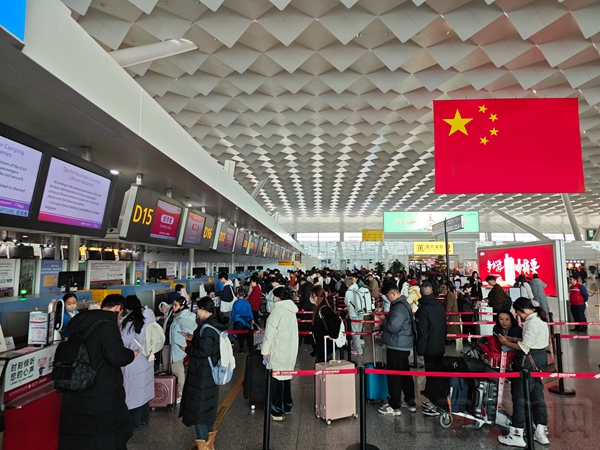
Core Viewpoint - Zhengzhou Airport is experiencing a significant increase in passenger traffic during the pre-New Year period, with historical highs in flight operations and passenger numbers, highlighting the airport's operational capacity and the importance of travel safety measures [2]. Group 1: Passenger Traffic and Operations - From February 11 to 13, Zhengzhou Airport recorded an average of over 720 aircraft takeoffs and landings per day, setting a new historical record [2]. - The daily average number of passengers exceeded 90,000, indicating a strong demand for travel during the festive season [2]. Group 2: Travel Safety and Regulations - Travelers are reminded to check their luggage for prohibited items such as lighters, matches, fireworks, and controlled knives before heading to the airport [2]. - According to civil aviation safety regulations, passengers are prohibited from carrying non-3C certified power banks on domestic flights, and those with unclear or damaged 3C labels should also be avoided [2]. - Travelers are advised to stay informed about weather conditions, as adverse weather such as snow, temperature drops, and strong winds may affect travel plans around the New Year [2].
假期天气总体适宜出行
Xin Lang Cai Jing· 2026-02-14 16:39
Group 1 - The 2026 Spring Festival travel season will officially start on February 2 and end on March 13, lasting a total of 40 days, with an expected cross-regional population flow of 9.5 billion people, marking a historical high [1] - The weather during the Spring Festival holiday is expected to be generally suitable for travel, with no significant rain, snow, or freezing weather predicted [1] Group 2 - Air travel is significantly affected by weather conditions, with major factors including fog, rain, snow, and strong winds. Passengers are advised to monitor weather alerts and flight status through official channels [2] - The peak travel day after the holiday is anticipated to be February 23, with a trend of dispersed passenger flow before the holiday and concentrated return flow afterward [2] Group 3 - The railway department has sold over 200 million train tickets for the Spring Festival travel period, with extreme low temperatures, heavy snowfall, and dense fog being critical weather factors affecting rail operations [3] - The total vehicle flow on highways in Hunan province is expected to reach a historical high of 48.473 million vehicles during the holiday, representing a year-on-year increase of approximately 5.9% [3] - Road travel during the Spring Festival requires careful planning due to potential adverse weather conditions, and drivers are advised to check vehicle conditions and plan alternative routes accordingly [3]
自驾、赶飞机,春运出行看这里(信息服务台)
Ren Min Ri Bao· 2026-02-14 00:51
Core Viewpoint - The upcoming Spring Festival travel rush is expected to see a significant increase in passenger flow, with self-driving trips dominating the travel mode, accounting for approximately 80% of the total. The civil aviation passenger volume is projected to reach 95 million, surpassing historical records for both overall scale and daily peak [1]. Group 1: Self-Driving Travel - Self-driving remains the primary mode of travel, with 80% of travelers opting for this method [1] - New energy vehicle drivers can use the "e Road Smooth" app to check the status of charging stations in real-time, and should allow extra time for charging due to reduced efficiency in winter [2] - The upgraded "Eagle Eye Guardian" warning system provides real-time alerts for adverse weather and driving conditions, enhancing safety for self-driving travelers [3] Group 2: Car Rentals - Rental car orders are expected to surge during the Spring Festival, with companies optimizing pick-up and drop-off processes [4] - Shenzhou Car Rental offers free or low-cost options for returning cars in different locations, particularly in snow tourism hotspots [4] - Didi Car Rental provides free third-party damage assessment services to resolve disputes, while iRent continues to offer services like credit-free deposits and self-service returns [4] Group 3: Highway Travel - Small passenger cars will continue to enjoy free highway tolls during the Spring Festival, with the Ministry of Transport advising drivers to exit highways before the end of the free period to avoid full toll charges [5] Group 4: Air Travel - Passengers are advised to arrive at the airport 2-3 hours before their flight during the peak travel period to avoid missing flights [6] - Travelers can apply for temporary boarding passes through WeChat or Alipay if they forget their ID [7] - Specific guidelines for carrying and checking in seasonal goods, such as seafood and alcohol, are provided to ensure compliance with airline regulations [9][10] - Passengers should be cautious of scams involving fake calls about flight cancellations and verify information through official channels [11]

自驾、赶飞机,春运出行看这里
Bei Jing Ri Bao Ke Hu Duan· 2026-02-13 23:32
Core Viewpoint - The upcoming Spring Festival travel season is expected to see a peak in passenger flow, with self-driving trips remaining the primary mode of transportation, accounting for approximately 80% of total travel. The civil aviation passenger volume is projected to reach 95 million, surpassing historical records for both overall scale and single-day peak [1]. Self-Driving Travel - Charging and navigation tips include using the "e Road Smooth" app to check the status of charging stations in real-time, and being aware that charging efficiency may decrease in winter temperatures, necessitating more time for charging [2]. - Safety measures for self-driving include the upgraded "Eagle Eye Guardian" warning system, which provides real-time alerts for adverse weather conditions and critical driving scenarios, helping drivers to respond appropriately [3]. - Rental car services are enhancing their processes, with companies like Shenzhou Car Rental offering free or low-cost options for returning cars in different locations, and Didi Car Rental providing free third-party damage assessment services to avoid disputes [4]. Highway Travel - During the Spring Festival, small passenger cars will continue to enjoy free highway tolls, with the Ministry of Transport advising drivers to exit highways before the end of the free period to avoid full toll charges [5]. Air Travel - Passengers are advised to arrive at the airport 2-3 hours before their flight during the peak travel period to ensure timely check-in and customs clearance, especially for international flights [6]. - In case of forgetting identification, travelers can apply for a temporary boarding pass through WeChat or Alipay, or obtain a paper version at the airport police station [7]. - For carrying seasonal goods, it is recommended to properly package perishable items for checked baggage, while certain items like seafood are prohibited on international flights [9]. - Different airlines have varying policies for oversized luggage, such as ski equipment, and travelers should confirm these details in advance [10]. - Travelers are warned about potential scams involving impersonation of airline customer service representatives, and are advised to verify any flight changes through official channels [11].
本周末将迎来节前客流最高峰
Xin Lang Cai Jing· 2026-02-12 17:29
Core Viewpoint - The 2026 Spring Festival travel season is expected to see a total of 9.5 billion trips, with self-driving trips accounting for approximately 80% of the total [1] Group 1: Railway Transportation - The Yangtze River Delta railway department plans to add 437.5 pairs of passenger trains, with a peak of over 1,700 pairs running daily during the peak period [2] - The expected peak travel days before the festival are February 14-15, with an average of 174,000 passengers per day [2] - The first peak day after the festival is anticipated on February 24, with 175,000 passengers, and the second peak on February 28, with 180,000 passengers [2] Group 2: Civil Aviation - Hefei Airport is expected to operate 12,000 passenger flights during the Spring Festival, averaging over 300 flights per day, with a total passenger throughput of approximately 1.62 million, a 6% increase year-on-year [3] - The peak travel period for civil aviation is expected from February 11 to February 15, with an average throughput of 43,000 passengers per day [3] - The return peak is expected on February 22-23, with daily throughput potentially exceeding 46,000 passengers [3] Group 3: Highway Transportation - The provincial highway system is expected to see approximately 71 million vehicle exits during the Spring Festival, averaging about 1.78 million exits per day, a 9% year-on-year increase [4] - The total traffic on the provincial highway network is projected to reach 140 million trips, also a 9% increase year-on-year [4] - The highway congestion is expected to exhibit a "double peak" pattern, with the return peak occurring on February 21 and the highest traffic on February 22-23 [4] Group 4: Traffic Management and Free Passage - During the Spring Festival, small passenger vehicles (7 seats or fewer) will enjoy free passage on highways from February 15 to February 23, totaling 9 days [5] - Key congestion points have been identified, including specific highway segments, service areas, and toll stations that travelers should avoid [5] - New highway segments have been added to improve traffic capacity, although some areas will still have construction, requiring travelers to plan alternative routes [5]
北京“八站两场”春运出行攻略②:北京西站
Bei Jing Ri Bao Ke Hu Duan· 2026-02-12 02:57
Core Viewpoint - The article provides a comprehensive travel guide for passengers during the Spring Festival travel rush at Beijing West Station, highlighting various transportation options and facilities to ensure a smooth travel experience. Transportation Options - Beijing West Station offers multiple transportation methods including subways, buses, ride-hailing services, and taxis to facilitate convenient travel for passengers [1] - The subway lines 7 and 9 are accessible from the underground level of Beijing West Station, along with 40 bus routes, including 6 night bus services that connect with the city's bus network [2] Taxi Services - There are four taxi dispatch stations located at the north and south squares of Beijing West Station, with clear signage to guide passengers [3] - During the Spring Festival, high passenger flow may lead to long queues, and passengers can use the "Taxi Dispatch Station Mini Program" to check queue lengths and choose less crowded stations [4] Ride-Hailing Services - Passengers can use designated ride-hailing pick-up areas at the south square and the north square, with the south square's underground area providing a sheltered waiting space for improved comfort [5][6] - The north square has specific areas for ride-hailing drop-offs, ensuring a smooth transition to the station [8] Bus Services - The bus drop-off points include the north square P2 parking lot, temporary drop-off areas, and the south square ground parking lot, with recommendations for optimal parking based on expected traffic [9][10][11] Airport Shuttle Services - The Capital Airport Shuttle Bus operates from Beijing West Station with specific schedules, including early morning and late-night services, ensuring connectivity to the airport [13] - The shuttle bus routes include both airport-bound and city-bound services, with detailed timing and frequency provided for passenger convenience [14]