
航空医疗转运

Search documents
航空医疗转运从试点到普及,还有多远?
Di Yi Cai Jing· 2025-10-14 09:36
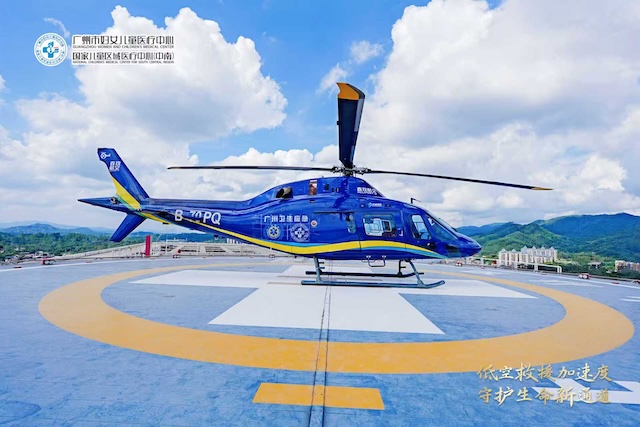
Core Insights - Guangzhou has established a preliminary low-altitude medical rescue network, enhancing emergency medical response capabilities in the region [1][4] - The network includes 1 aviation medical rescue training base, 1 aviation medical rescue base, 26 drone transport routes, and 19 helicopter landing points across 17 medical institutions [1] - The efficiency of emergency medical treatment has improved by 70%, with 45 successful emergency transfers completed [1] Group 1: Development of Low-Altitude Medical Rescue - The Guangdong Province has outlined plans to promote the high-quality development of low-altitude economy, emphasizing the application of low-altitude aircraft in medical transport [3] - The province aims to establish a comprehensive emergency medical rescue system by 2025, including the formulation of relevant planning and standards [3] - Shanghai is also advancing low-altitude emergency medical services, utilizing helicopter facilities at major hospitals for urgent patient transfers [4] Group 2: Operational Efficiency and Challenges - The use of helicopters significantly reduces transfer time; for example, a 270 km flight from Meizhou to Guangzhou takes only 75 minutes compared to at least 4 hours by ground ambulance [5] - Despite the progress, challenges remain in the widespread adoption of air medical transport due to high costs, lack of standardization, airspace restrictions, and insufficient professional personnel [6][7] - The cost of air rescue services currently ranges from 15,000 to 30,000 yuan per hour, with efforts underway to reduce these costs through government investment and insurance participation [7] Group 3: Future Directions and Improvements - The recent emergency drill in Guangzhou tested the coordination and operational mechanisms for using helicopters and drones in medical rescue [8] - Future efforts will focus on enhancing safety, expanding service coverage, and developing technical standards for low-altitude medical rescue [8] - The Guangdong health authorities plan to promote the "Guangzhou experience" to improve rapid response capabilities across more cities [8]

把好群众看病就医“价格关”(无影灯)
Ren Min Ri Bao· 2025-05-29 22:15
Core Viewpoint - The recent implementation of standardized medical service pricing guidelines by the National Healthcare Security Administration aims to unify and regulate medical service pricing across provinces, addressing inconsistencies and confusion in medical billing for patients [1][2]. Group 1: Current Issues in Medical Pricing - Long-standing issues in medical service pricing include significant regional disparities, with some provinces having as few as 4,000 pricing items while others exceed 20,000, leading to confusion and increased billing burdens for medical institutions [2]. - The lack of uniformity in pricing has resulted in unreasonable charges and necessitates a reform to establish standardized pricing, ensuring fair costs for patients [2]. Group 2: Reform Initiatives - The reform initiated in August 2021 aims to create a dynamic pricing mechanism that stabilizes patient costs, ensures the sustainability of public medical institutions, and maintains the affordability of healthcare funds [2]. - The recent acceleration in the issuance of pricing guidelines reflects a systematic overhaul of existing pricing items, clarifying project names, service outputs, and pricing structures [2]. Group 3: Enhancements in Medical Services - New pricing projects have been introduced to enhance accessibility and inclusivity in healthcare, such as "air medical transport" and "home service fees," addressing the needs of an aging population [3]. - The guidelines emphasize the value of clinical personnel's technical labor, particularly for high-difficulty procedures, which is expected to improve service quality and motivate healthcare professionals [3]. Group 4: Implementation and Impact - Successful implementation of the guidelines relies on local healthcare departments and medical institutions actively cooperating to ensure compliance and transparency in pricing [4]. - Following the introduction of the pricing guidelines for radiological services, significant price reductions have been observed, such as the decrease in PET/CT scan costs in Anhui Province, which dropped from 5,000 yuan to 2,500 yuan for single-site scans [4].