
医疗救援

Search documents
9个小时直飞 跨洲生命接力
Xin Lang Cai Jing· 2026-01-15 19:28
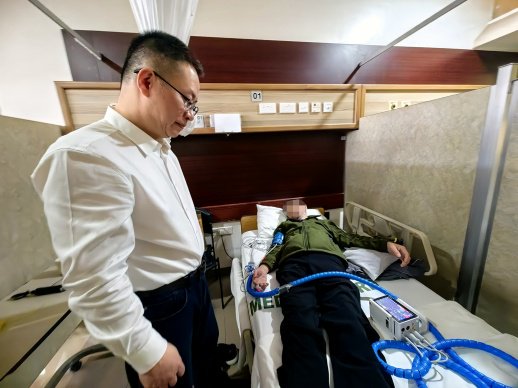
Core Viewpoint - The successful medical transfer of a critically ill overseas worker from Kenya to China highlights the capabilities of the Xiangya Second Hospital's air medical rescue team and their commitment to international medical assistance [2][3][4][6]. Group 1: Medical Transfer Details - The patient, diagnosed with viral encephalitis after initial treatment in Chad, was stabilized in Kenya but required further treatment in China [3]. - The air medical rescue team conducted a remote multidisciplinary consultation to assess the patient's condition and confirmed the feasibility of the intercontinental transfer [3][4]. - The transfer utilized a direct flight from Nairobi to Changsha, reducing travel time to 9 hours, and involved continuous monitoring of the patient's vital signs during the flight [4][5]. Group 2: Operational Efficiency - The transfer was executed with a seamless transition from the aircraft to the hospital, ensuring immediate medical attention upon arrival [6]. - This operation marked the hospital's first successful completion of a 9,000-kilometer international air medical rescue, showcasing its competitive edge in high-end international medical services [6]. - The hospital plans to expand its air medical transfer services to regions including Africa, the Middle East, and South America over the next three years, enhancing medical safety for overseas Chinese citizens and international health needs [6].

广西发布4项卫生健康地方标准
Guang Xi Ri Bao· 2026-01-05 02:49
Group 1 - The core viewpoint of the news is the introduction of four local standards in Guangxi related to occupational disease prevention and control, which will be implemented on March 30, 2026 [1][2] - The standards include guidelines for stainless steel production, lead-zinc and copper smelting industries, internet-based nursing services, and medical helicopter emergency transport [1][2] - The lead-zinc and copper smelting standards focus on engineering and personal protective measures to enhance occupational health for workers in these sectors [1] - The "Internet + Nursing Services" standard aims to improve home care for discharged patients and those with mobility issues through a combination of online applications and offline services [1] Group 2 - The "Medical Helicopter Emergency Transport Standard" is the first local standard in Guangxi for the aviation medical rescue field, outlining specific requirements for each stage of emergency transport [2] - This standard is significant for promoting the large-scale development of medical helicopter emergency rescue and improving the overall medical rescue system in Guangxi [2]
省儿童应急救援中心在郑挂牌成立
Zheng Zhou Ri Bao· 2025-10-16 01:08
Core Points - The establishment of the Henan Children's Emergency Rescue Center marks a significant advancement in the province's pediatric emergency care system [1] - The center aims to create a three-tiered emergency rescue network for children, enhancing the capacity for trauma prevention and critical care [1] Group 1 - The center will leverage the opportunity of establishing a national children's regional medical center to collaborate with multidisciplinary medical teams [1] - The focus is on improving the emergency response capabilities for pediatric trauma, which is a leading cause of severe injuries in children [1] - The center will develop various rescue plans to strengthen the emergency response system for pediatric emergencies across the province [1] Group 2 - A training program titled "Henan Children's Emergency Rescue and Comprehensive Prevention of Children's Accidental Injuries" has commenced, gathering pediatric emergency professionals from across the province [2] - The curriculum covers four core areas: prevention, treatment, rescue, and construction, addressing the complete chain from monitoring to advanced life support [2] - Key topics include management of severe traumatic brain injuries, early assessment of serious trauma, and ECMO strategies for pediatric cardiac and respiratory failure [2]
航空医疗转运从试点到普及 还有多远?
Di Yi Cai Jing· 2025-10-14 14:55
Core Insights - The article discusses the establishment and development of a low-altitude medical emergency rescue network in Guangzhou, highlighting its significance in improving emergency medical services and response times [1][3][4]. Group 1: Low-altitude Medical Rescue Network - Guangzhou has established a low-altitude medical rescue network, including an aviation medical rescue training base, 26 drone transport routes, and 19 helicopter landing points across 17 medical institutions [1][3]. - The network has successfully completed 45 emergency air medical transfers, improving patient rescue efficiency by 70% and creating a one-hour medical rescue circle in the Guangdong-Hong Kong-Macao Greater Bay Area [1][3]. Group 2: Government Initiatives and Plans - The "Guangdong Province Action Plan for Promoting High-Quality Development of the Low-altitude Economy (2024-2026)" emphasizes the application of low-altitude aircraft in medical transfers and the integration of air medical rescue into emergency response systems [2]. - Shanghai is also promoting air emergency medical pilot scenarios, utilizing helicopter facilities from top hospitals for emergency patient transfers and drone delivery of medical supplies [2]. Group 3: Challenges and Future Development - Despite the advancements, challenges remain in the widespread adoption of air medical transfers, including high costs, lack of standardization, airspace restrictions, and insufficient professional personnel [6][7]. - The cost of air rescue services currently ranges from 15,000 to 30,000 yuan per hour, with efforts underway to reduce costs through government investment and insurance participation [7]. - The Guangzhou exercise tested the coordination and operational mechanisms for using helicopters and drones in medical rescue, indicating a need for further evaluation and improvement [7][8].
航空医疗转运从试点到普及,还有多远?
Di Yi Cai Jing· 2025-10-14 09:36
Core Insights - Guangzhou has established a preliminary low-altitude medical rescue network, enhancing emergency medical response capabilities in the region [1][4] - The network includes 1 aviation medical rescue training base, 1 aviation medical rescue base, 26 drone transport routes, and 19 helicopter landing points across 17 medical institutions [1] - The efficiency of emergency medical treatment has improved by 70%, with 45 successful emergency transfers completed [1] Group 1: Development of Low-Altitude Medical Rescue - The Guangdong Province has outlined plans to promote the high-quality development of low-altitude economy, emphasizing the application of low-altitude aircraft in medical transport [3] - The province aims to establish a comprehensive emergency medical rescue system by 2025, including the formulation of relevant planning and standards [3] - Shanghai is also advancing low-altitude emergency medical services, utilizing helicopter facilities at major hospitals for urgent patient transfers [4] Group 2: Operational Efficiency and Challenges - The use of helicopters significantly reduces transfer time; for example, a 270 km flight from Meizhou to Guangzhou takes only 75 minutes compared to at least 4 hours by ground ambulance [5] - Despite the progress, challenges remain in the widespread adoption of air medical transport due to high costs, lack of standardization, airspace restrictions, and insufficient professional personnel [6][7] - The cost of air rescue services currently ranges from 15,000 to 30,000 yuan per hour, with efforts underway to reduce these costs through government investment and insurance participation [7] Group 3: Future Directions and Improvements - The recent emergency drill in Guangzhou tested the coordination and operational mechanisms for using helicopters and drones in medical rescue [8] - Future efforts will focus on enhancing safety, expanding service coverage, and developing technical standards for low-altitude medical rescue [8] - The Guangdong health authorities plan to promote the "Guangzhou experience" to improve rapid response capabilities across more cities [8]
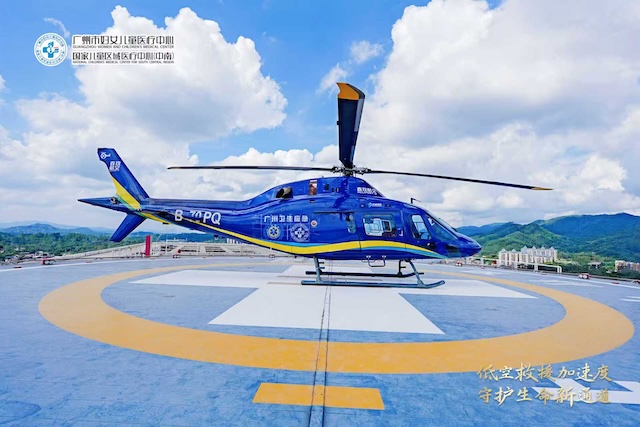
全球首款“急救(转运)直升机”在赣完成实战演练
Bei Ke Cai Jing· 2025-05-29 13:53
Core Viewpoint - The first domestically developed "Emergency (Transport) Helicopter" has successfully completed practical application drills in Jiangxi, enhancing China's air-ground coordinated medical rescue capabilities [1][2]. Group 1: Product Development and Innovation - The "Emergency (Transport) Helicopter" is a significant achievement under the national "first set, supplementing short boards" major scientific research initiative, addressing issues such as the lack of onboard medical equipment and poor adaptability in aviation medical rescue [2]. - The helicopter's performance was validated through drills that demonstrated its medical rescue capabilities in various scenarios, including natural disasters and emergencies [2]. Group 2: Operational Efficiency and Integration - The drills established a seamless connection between "treatment and transport," creating a comprehensive rescue and support system that integrates "on-site, airborne, and base" operations [2]. - The integration of the helicopter with advanced medical equipment allows for real-time data exchange with emergency centers, ensuring the safety of injured individuals during transport [1]. Group 3: Future Implications - The development of the "Emergency (Transport) Helicopter," along with the first "Emergency (Transport) Drone" and "Emergency (Transport) Robot," forms a cohesive emergency medical rescue chain that enhances the capabilities of China's emergency medical rescue system [2]. - This innovation is expected to contribute significantly to the upgrade of the national emergency medical rescue system and the high-quality development of the low-altitude economy [2].