航空器试验和检测设备

Search documents
*ST立航2026年1月23日涨停分析:航空装备+业绩预期+板块联动
Xin Lang Cai Jing· 2026-01-23 07:11
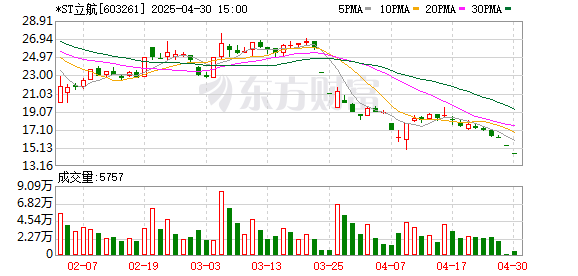
Group 1 - The core point of the article is that *ST Lihang (sh603261) reached its daily limit with a price of 32.41 yuan, reflecting a 4.99% increase and a total market capitalization of 2.512 billion yuan, driven by factors such as aviation equipment demand, performance expectations, and sector linkage [1] Group 2 - The company primarily engages in the business of ground support equipment for aircraft, as well as testing and inspection equipment for aviation, indicating a growing demand in the aviation industry that supports the stock price increase [1] - The company is set to release its annual report on April 23, 2026, and market expectations for its performance may attract investor interest, potentially contributing to the stock's limit-up [1] - The aviation equipment sector has recently gained market attention, with multiple related stocks experiencing simultaneous increases, creating a sector linkage effect that has enhanced the focus on *ST Lihang [1] - Technical indicators, such as a bullish short-term moving average, may also attract technical investors, further supporting the stock price increase [1]

毛利下降营收仍低于3亿元 立航科技“披星戴帽”
Zhong Guo Jing Ying Bao· 2025-04-30 16:11
Core Viewpoint - Despite a year-on-year revenue increase, *ST Lihang's 2024 revenue remains below 300 million yuan, and the company continues to operate at a loss, leading to a delisting risk warning for its stock [2][4]. Revenue and Profitability - In 2024, *ST Lihang achieved a revenue of 290 million yuan, a year-on-year increase of 23.54%, but reported a net loss of 94 million yuan, a decline of 37.51% compared to the previous year [4]. - The company's gross profit margin has significantly decreased, with 2023 and 2024 gross profit margins at 13.82% and 6.21%, respectively, and net profit margins at -29.12% and -32.96% [5]. Cost Structure and Sales - The increase in revenue was accompanied by a more than 30% rise in operating costs, attributed to a shift in product sales structure towards lower-margin non-standard products [2][5]. - The company reported that the sales of high-margin products decreased compared to the previous year, contributing to the overall decline in profitability [5]. Inventory and Financial Management - As of the end of 2024, *ST Lihang's inventory value increased by 39.66% to 220 million yuan, marking four consecutive years of inventory growth [6][7]. - The accounts payable also rose by 66.26% due to increased orders and corresponding procurement [7]. Financial Costs - Financial expenses surged by 394.32% to 1.559 million yuan in 2024, primarily due to increased interest on working capital loans [8].