
航空货物运输服务

Search documents
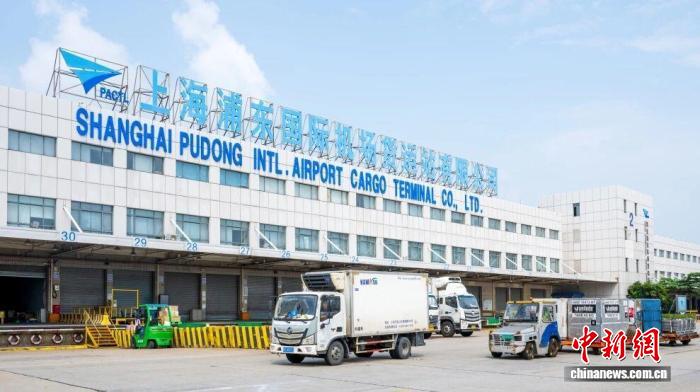
浦东机场货运站获得国际航空运输协会(IATA)航空货物运输全品类认证
Zhong Guo Xin Wen Wang· 2025-12-22 13:41
Core Viewpoint - Shanghai Pudong Airport Cargo Terminal (PACTL) has become the first cargo terminal in China to receive comprehensive certification from the International Air Transport Association (IATA) for the transportation of pharmaceuticals, lithium batteries, perishable goods, and live animals, enhancing Shanghai's status as a multifaceted international air cargo hub [1][3][5] Group 1: Certification Details - PACTL has achieved the IATA Center of Excellence for Independent Validators (CEIV) certification for live animals, which is part of a global standard certification system aimed at improving service quality and safety in air cargo [3] - The certification for pharmaceutical transport requires precise temperature control and traceability throughout the entire transportation process [3] - The lithium battery certification mandates the establishment of standards for classification, packaging, labeling, and emergency management across the entire supply chain [3] Group 2: Operational Standards - The certification for perishable goods necessitates efficient sorting, storage, and the ability to control temperature and humidity throughout the transportation process [3] - The live animal transport certification includes detailed requirements for the transport environment, loading methods, and emergency response [3][5] - Achieving all four specialized certifications indicates that PACTL has developed a comprehensive management system that meets high standards across multiple scenarios and fields, aligning with international standards in operational processes, personnel training, infrastructure, and emergency response [5]


日本赴美航空货物运费持续高位运行
日经中文网· 2025-12-05 08:00
Core Viewpoint - The increase in cargo transported from Southeast Asia and other regions to the United States via Japan is notable, with significant growth in e-commerce shipments from platforms like Temu and SHEIN, impacting freight rates [2][6]. Group 1: Freight Rate Trends - In the second half of 2025, freight rates from Tokyo to the U.S. East Coast are expected to be around 1,020 to 1,220 yen per kilogram, while rates to the U.S. West Coast will be approximately 960 to 1,100 yen per kilogram, maintaining the elevated levels from 2024 [5]. - The freight rates for air cargo from Japan have remained high, with negotiations resulting in agreements to keep rates stable after significant increases in 2024 [2][5]. Group 2: E-commerce and Cargo Dynamics - The surge in shipping volumes from Chinese e-commerce platforms like Temu and SHEIN has driven up freight rates, which have also affected Japan's shipping costs [6]. - Following the U.S. cancellation of the small import tax exemption, there has been a slowdown in e-commerce shipments from China, alongside a general decline in non-e-commerce cargo due to U.S.-China tariff tensions [6][7]. Group 3: Regional Shipping Insights - There is a growing trend of increased cargo volume from Southeast Asia and Taiwan to the U.S., with a shift in sourcing away from mainland China, particularly in sectors like semiconductors and electronic components [7][10]. - The demand for cargo transported via Japan remains robust, supporting freight rates despite a lack of growth in shipments directly from Japan [7][8]. Group 4: Market Sentiment and Future Outlook - A large freight forwarder indicated that initial strong performance of cargo from Asia was used as leverage in negotiations, but ultimately, rates remained unchanged due to market conditions [7]. - The Japan Air Cargo Transport Association reported a continuous decline in Japan's air cargo exports to the U.S. for three consecutive months, indicating a cautious market sentiment [7].

中国国际货运航空股份有限公司
Shang Hai Zheng Quan Bao· 2025-04-29 15:24
Core Viewpoint - China International Cargo Airlines Co., Ltd. (referred to as "the Company") has announced the expected daily related transactions for 2025, which were approved during the 45th meeting of the first board of directors held on April 28, 2025. The transactions involve service provisions, loan services, and real estate leasing with related parties, and the proposals will be submitted for shareholder approval [10][28]. Group 1: Daily Related Transactions Overview - The Company has estimated the upper limit of annual transaction amounts for daily related transactions with relevant related parties for 2025, which includes service provisions and financial services [10][11]. - The board has approved four sub-proposals related to daily transactions with China Aviation Group, Air China, China Aviation Group Finance Co., and Zhejiang Cainiao Supply Chain Management Co. [10][11]. Group 2: Related Parties and Financial Status - China Aviation Group holds 39.40% of the Company's shares and is its actual controller, with total assets of 374.32 billion and a net profit of -2.96 billion for the first half of 2024 [11][12]. - Air China, a subsidiary of China Aviation Group, has total assets of 345.77 billion and a net profit of -0.24 billion for 2024 [11][12]. - China Aviation Group Finance Co. has total assets of 23.92 billion and a net profit of 0.054 billion for 2024 [13]. - Zhejiang Cainiao has total assets of 48.86 billion and a net profit of 1.41 billion for 2024 [13]. Group 3: Transaction Details and Pricing Basis - The Company has established a framework agreement with China Aviation Group for real estate leasing and ground services, effective from January 1, 2025, to December 31, 2027 [15][18]. - Pricing for ground services is determined through a process that includes government pricing, market comparison, and cost-plus pricing [16][19]. - The framework agreement with Air China includes exclusive cargo operations and real estate leasing, also effective from January 1, 2025, to December 31, 2027 [18][19]. Group 4: Impact and Compliance - The related transactions are necessary for the Company's daily operations and are conducted under normal business terms, ensuring fair pricing and compliance with regulations [28][29]. - The independent directors have unanimously agreed to the expected related transactions, confirming that they do not harm the interests of the Company or its shareholders [29][30].