艺术品拍卖服务

Search documents
保利文化(3636.HK):中期营收毛利双增长,古董珍玩成交创历史新高
Ge Long Hui· 2026-01-09 01:20
Core Viewpoint - Poly Culture has demonstrated stable financial performance in the first half of 2019, with significant growth in its theater management and cinema investment segments, while its auction business achieved a historical high in transaction volume despite economic challenges [1][5]. Financial Performance - For the first half of 2019, Poly Culture reported revenue of approximately 1.75 billion RMB, a year-on-year increase of 4.8%, and gross profit rose by 6% to 620 million RMB, with a gross margin of 35.2% [2]. - The net profit attributable to shareholders was 82 million RMB, with basic earnings per share of 0.33 RMB. The company maintained a strong financial position with cash and cash equivalents of approximately 1.214 billion RMB, and total assets covering liabilities amounting to about 4.359 billion RMB [2]. Segment Performance - The main business segments include: 1) Art operation and auction; 2) Performance and theater management; 3) Cinema investment management. The performance of these segments varied, with theater management revenue increasing by 19.6% and cinema investment revenue slightly up by 0.3%, while art auction revenue faced a decline due to economic conditions [3]. - The auction segment achieved a record high in antique and collectible transactions, totaling 1.081 billion RMB, contributing to a total auction transaction volume of 3.652 billion RMB, maintaining its leadership in the global Chinese art auction market [5]. Business Development and Innovation - Poly Culture is expanding its theater management operations, now managing 66 theaters across 58 cities in 21 provinces, with over 120 auditoriums and more than 130,000 seats [6]. - The company is also enhancing its cultural education initiatives and expanding its cinema operations, with new cinemas opened in Jiangxi and Shanghai, generating ticket revenue of 400 million RMB in the first half of 2019 [7]. - The integration of traditional business with digital technology is a key strategy, as evidenced by the partnership with Digital Kingdom, making Poly Culture the largest shareholder with approximately 15.63% of shares [8]. Market Position and Valuation - Despite facing a challenging economic environment, Poly Culture's strong market position provides a safety margin, allowing it to maintain stable performance. The company's stock has seen a decline of nearly 38% since March 2019, reaching a historical low [9]. - As of August 16, 2019, the company's total market capitalization was 1.7 billion RMB, with a price-to-earnings ratio (TTM) of 6.2 and a price-to-book ratio of 0.3, indicating a low valuation [9]. - The company is expected to benefit from a potential market rebound, supported by its solid fundamentals and dual-driven growth strategy combining traditional and digital approaches [10].


一槌定音的双头垄断,苏富比和佳士得如何主导拍卖市场? | 声动早咖啡
声动活泼· 2025-12-19 09:04
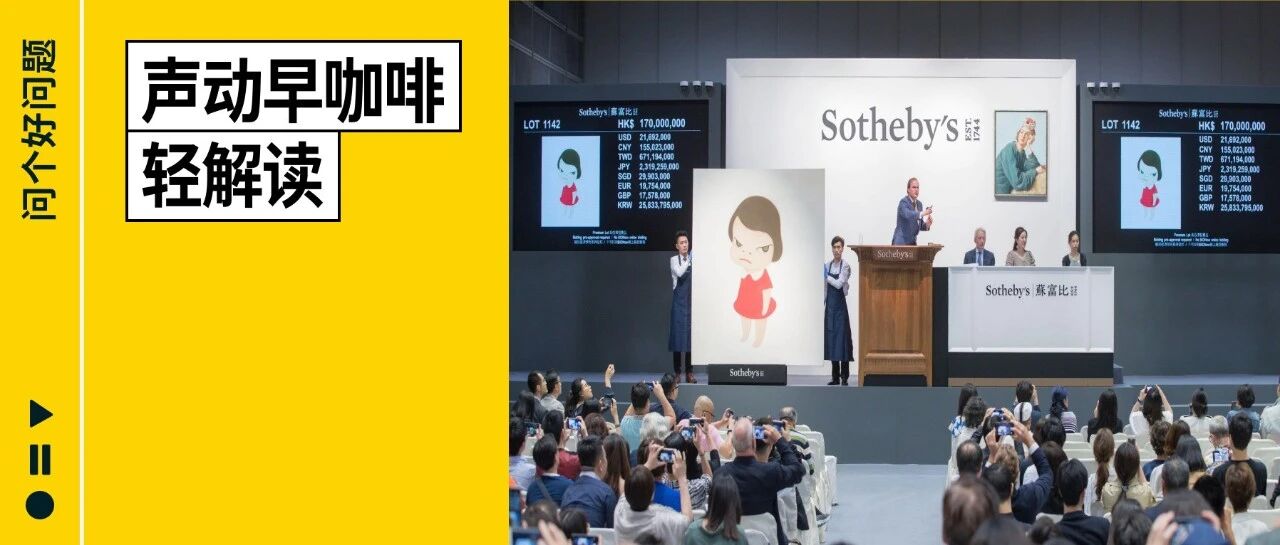
Core Insights - The article discusses the marketing strategies of auction houses, particularly Sotheby's and Christie's, which dominate the global auction market, holding approximately 50% of the total public auction revenue [4][7]. Group 1: Historical Context - Sotheby's was founded in 1744 in London by a bookseller, initially focusing on book auctions, while Christie's was established in 1766, specializing in art and furniture auctions [5]. - The rise of these auction houses can be attributed to changes in British laws in the 1880s that allowed aristocrats to liquidate family assets, leading to an influx of valuable collectibles into the market [5]. Group 2: Market Dynamics - The art market is characterized by low liquidity, with an average market cycle of 30-40 years, and auction items typically come from external factors such as death, divorce, disaster, or debt [6]. - A report from UBS indicates that only about 0.3% of auction items contribute nearly half of the total auction revenue, highlighting the scarcity of top-tier collectibles [7]. Group 3: Competitive Strategies - To attract sellers, Sotheby's and Christie's have reduced seller commissions and introduced guarantees, ensuring sellers receive payment regardless of whether their items sell [6]. - Both auction houses have invested in marketing, transforming auctions into glamorous events and utilizing global tours and advertising to enhance their appeal [8]. Group 4: Client Relationships - The most valuable asset for these auction houses is their client lists, which include potential buyers and past bidders, allowing them to tailor their offerings effectively [9]. - Sotheby's and Christie's have expanded their services to include financial offerings, allowing clients to use art as collateral for loans [11].
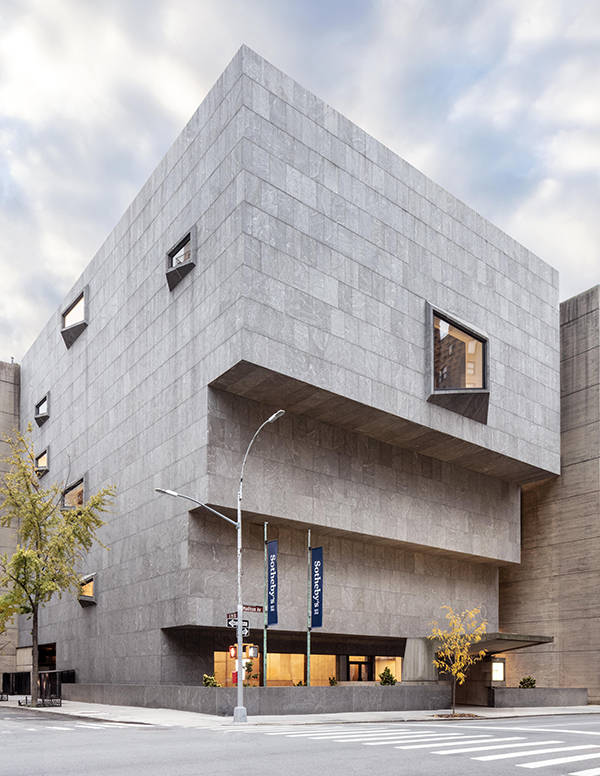
苏富比全球新总部于布鲁尔大楼(Breuer Building)开幕
Sou Hu Cai Jing· 2025-11-10 08:48
Core Insights - Sotheby's has opened its new global headquarters in the iconic Breuer building on Madison Avenue, marking a significant milestone in the company's history and a return to a prestigious location [3][10] - The opening exhibition features notable collections, including The Leonard A. Lauder Collection and works by Jean-Michel Basquiat, highlighting the company's commitment to showcasing exceptional art [3][7] Group 1: New Headquarters - The Breuer building's inauguration symbolizes a new chapter for Sotheby's, emphasizing its architectural beauty and historical significance [3][4] - The building has undergone extensive renovations to enhance its interior spaces while preserving its original design, ensuring it remains a landmark for future generations [5][9] - Herzog & de Meuron collaborated with PBDW Architects to create top-tier gallery spaces that cater to Sotheby's diverse offerings, including flexible auction areas and a new high-end restaurant [4][9] Group 2: Exhibitions and Auctions - The opening season includes major exhibitions featuring works from The Leonard A. Lauder Collection and other significant private collections, free to the public until November 17 [3][7] - A series of high-profile evening auctions will take place from November 18 to 21, showcasing contemporary and modern art [3][10] - The Breuer building's design allows for versatile exhibition spaces, enhancing the visitor experience and accommodating various events [9][10]
从零开始的第一槌:1990 年代中国艺术品拍卖市场建立背后的故事
声动活泼· 2025-05-22 08:31
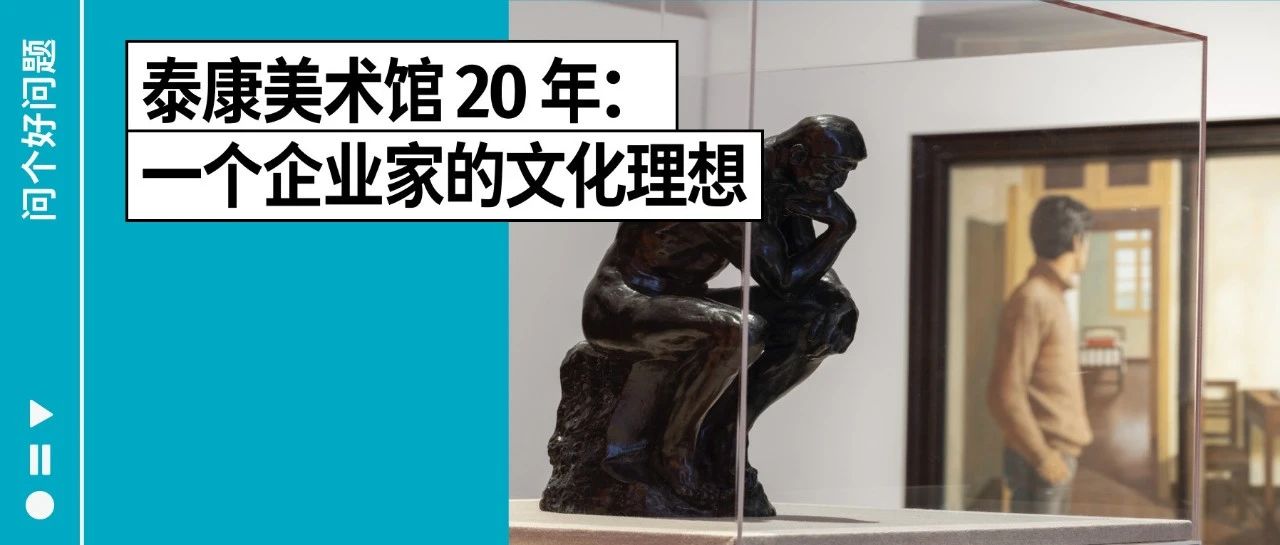
Core Viewpoint - The article discusses the evolution of the Chinese auction industry from the 1990s, highlighting the contributions of Chen Dongsheng, the founder of China Guardian Auctions and Taikang Insurance Group, and the significance of the ongoing exhibition "Unfinished Time" at the Taikang Art Museum, which focuses on contemporary Chinese art from the 1980s to 1990s [1][4]. Group 1: Development of the Auction Industry - Chen Dongsheng founded China Guardian Auctions in 1992 during a time when the auction industry was largely unrecognized and unclear in its future [7]. - The establishment of a complete auction system in China has been a collaborative effort between market participants and the government, with China Guardian playing a pivotal role in this development [9]. - Early challenges included overcoming public skepticism about the auctioning of cultural relics, which was seen as potentially encouraging looting [9]. Group 2: Cultural Heritage and Artifacts - China Guardian has facilitated the return of significant cultural artifacts, such as "The Return of the Outbound Song," which filled a gap in the Palace Museum's collection [10]. - The auction house has also played a role in the return of other important items, including a rare set of Song dynasty books and a manuscript by the first emperor of the Southern Song dynasty [10]. Group 3: Taikang Art Museum - The Taikang Art Museum, founded by Chen Dongsheng, has been dedicated to supporting contemporary art and young artists for over 20 years, providing exhibition opportunities without commercial conditions [11]. - The museum's unique approach is rooted in academic rigor, focusing on building a collection based on art history rather than commercial pressures [11]. Group 4: Art Appreciation and Market Trends - Chen Dongsheng emphasizes the importance of developing a personal aesthetic judgment in art appreciation, noting that understanding art is a gradual process [13]. - The evolution of art from realism to contemporary forms reflects broader societal changes, with artists expressing diverse perspectives that may not align with mainstream views [14].