艾草足浴包

Search documents
同仁堂卷入磷虾油造假风波陷信任危机 老字号失色市值450亿不及云南白药一半
Chang Jiang Shang Bao· 2025-12-17 00:19
Core Viewpoint - The long-established brand Tong Ren Tang (600085.SH) is embroiled in a scandal regarding the authenticity of its Antarctic krill oil product, which has been found to contain no phospholipids despite claims of a 43% content [1][2]. Group 1: Product Scandal - The Shanghai Consumer Protection Commission released test results showing that a product labeled "Beijing Tong Ren Tang 99% High Purity Antarctic Krill Oil" had a phospholipid content of 0, raising suspicions of fraud [1][2]. - The product was sold at prices ranging from 35 to 100 yuan on various e-commerce platforms, with misleading claims about its quality and content [2]. - Tong Ren Tang has ordered the involved company, Anhui Habao Pharmaceutical Co., to cease distribution of the product and has initiated legal action against them for unauthorized use of its brand [3]. Group 2: Historical Issues - Tong Ren Tang has faced multiple product quality issues over the years, including incidents involving excessive nitrite levels, illegal additives, and contamination [5][6]. - The company has been involved in various scandals, such as the "honey incident" in 2018 and the mercury contamination in its Ren Dan product in 2024 [4][5]. Group 3: Financial Performance - The company's revenue and net profit have been declining, with a reported revenue of 133.08 billion yuan and a net profit of 11.78 billion yuan in the first three quarters of 2025, representing year-on-year declines of 3.70% and 12.78%, respectively [8]. - In 2024, the company experienced a slowdown in growth, with revenue of 185.97 billion yuan, a mere 4.12% increase, and a net profit decline of 8.54% [7][8]. - The market performance has also been poor, with the stock price dropping from 64.28 yuan per share in May 2023 to around 33 yuan by December 2025, resulting in a market capitalization of approximately 450 billion yuan, significantly lower than competitors like Yunnan Baiyao and Pian Zai Huang [8].

锻长板补短板 欠发达县域苗更壮
Si Chuan Ri Bao· 2025-12-17 00:19
Core Viewpoint - The article highlights the significant progress made in poverty alleviation and industrial development in underdeveloped counties in Sichuan, driven by state-owned enterprises and targeted support initiatives [1][5]. Group 1: Industrial Development - Sichuan Energy Development Group has expanded the production of mugwort products, achieving a planting area of over 50,000 acres and involving more than 4,000 households, with each household earning an average annual income of 3,000 to 3,500 yuan per acre [2][3]. - The establishment of a smart goose farming facility in Hongjun Tree Village has led to an average income of approximately 150,000 yuan per batch, with plans to develop a full supply chain for goose processing [3]. - The Sichuan Port Investment Group has invested 6 million yuan to build a mushroom cultivation facility, demonstrating a successful transition from pilot to widespread cultivation, with an average annual income increase of 20,000 yuan for participating farmers [4]. Group 2: Educational Support - The article emphasizes the importance of combining educational empowerment with industrial support, as seen in the initiatives by Sichuan Road and Bridge Group, which organized cultural and educational activities for local children [6][7]. - Sichuan Development (Holding) Company has invested 19 million yuan in building a new secondary school, adding 1,650 new student places to address educational shortages in the region [7]. Group 3: Employment and Skills Training - Sichuan Airlines Group has provided training for over 600 local artisans in traditional embroidery, facilitating their transition into modern creative product development [8][9]. - The establishment of a vocational training school by State Grid Sichuan Electric Power Company aims to train 2,000 individuals annually, with the first cohort achieving an average monthly income of over 5,000 yuan [9][10]. - The article notes the integration of agricultural training programs, such as the cultivation of strawberries, to enhance local employment opportunities and agricultural skills [10].
山东邹平:特色产业筑基 文农旅融合发展绘新卷
Zhong Guo Xin Wen Wang· 2025-11-21 06:19
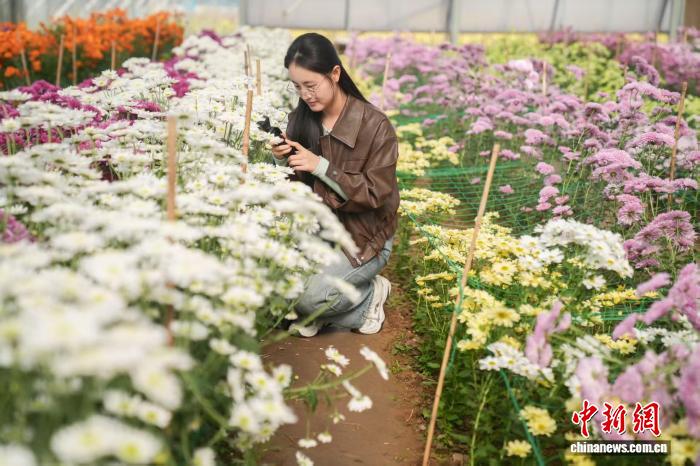
Core Insights - The article highlights the integration of agriculture, culture, and tourism in Zhou Ping, Shandong, showcasing a high-quality rural revitalization path through distinctive industries and cultural tourism [1][5]. Summary by Sections Agricultural Development - The Bafang Farm in Changshan Town has introduced 200 varieties of chrysanthemums, creating a "Chrysanthemum Festival" that has attracted approximately 80,000 visitors this year [2]. - The farm's chrysanthemum planting yields 1,000 pounds per acre, with an economic benefit of around 10,000 RMB per acre [2]. Cultural and Tourism Integration - Qiao Family Village has developed a model combining intangible cultural heritage workshops and unique homestays, generating an annual cultural income of 150,000 RMB [2][3]. - The village has invested 10 million RMB to transform idle old houses into heritage workshops and educational bases, with 80 units currently in use [3]. Industry and Economic Impact - The Ai Cao Industry Park has developed over 20 products from mugwort, increasing the added value by more than ten times [4]. - The park collaborates with local schools to create an educational base, receiving over 3,000 students for hands-on experiences related to mugwort culture [4]. Overall Development Strategy - Zhou Ping is leveraging its rural resources to cultivate distinctive industries through various models such as "Agriculture + Culture and Tourism," "Intangible Heritage + Industry," and "Ecology + Processing" [5].