芥菜饭

Search documents
刨猪宴不能只是个简单的“吃饭项目”
Xin Lang Cai Jing· 2026-01-31 23:42
Core Viewpoint - The article discusses the rising popularity of the "pig slaughter banquet" in various regions of China, particularly highlighting its potential to evolve from a mere culinary experience into a significant cultural tourism attraction that can drive local economic development [1][2]. Group 1: Cultural Significance - The "pig slaughter banquet" is not just a feast but a cultural event that can showcase local traditions and customs, such as the "raising pig" ritual and the "big pig competition," which reflect community values and agricultural heritage [1][2]. - Integrating these intangible cultural heritages into the banquet can provide visitors with a deeper experience that goes beyond just tasting food, allowing them to engage with local customs and traditions [2]. Group 2: Economic Potential - The banquet should be viewed through an industrial chain perspective, linking local products, intangible cultural heritage, and rural landscapes to create a comprehensive tourism experience [2]. - Utilizing local ingredients, such as native black pigs and specialty vegetables, can stimulate local agriculture and enhance the banquet's appeal, as seen in the offerings of "mustard rice" and "pickled vegetable rice" at the "tea king brother's" banquet [2]. - The banquet can serve as a starting point for tourists to explore the region, thereby boosting related sectors such as accommodation, shopping, and sightseeing, contributing to the overall economic growth of the area [2].
江西菜之后,又一地域菜系开始走红
3 6 Ke· 2025-07-31 01:29
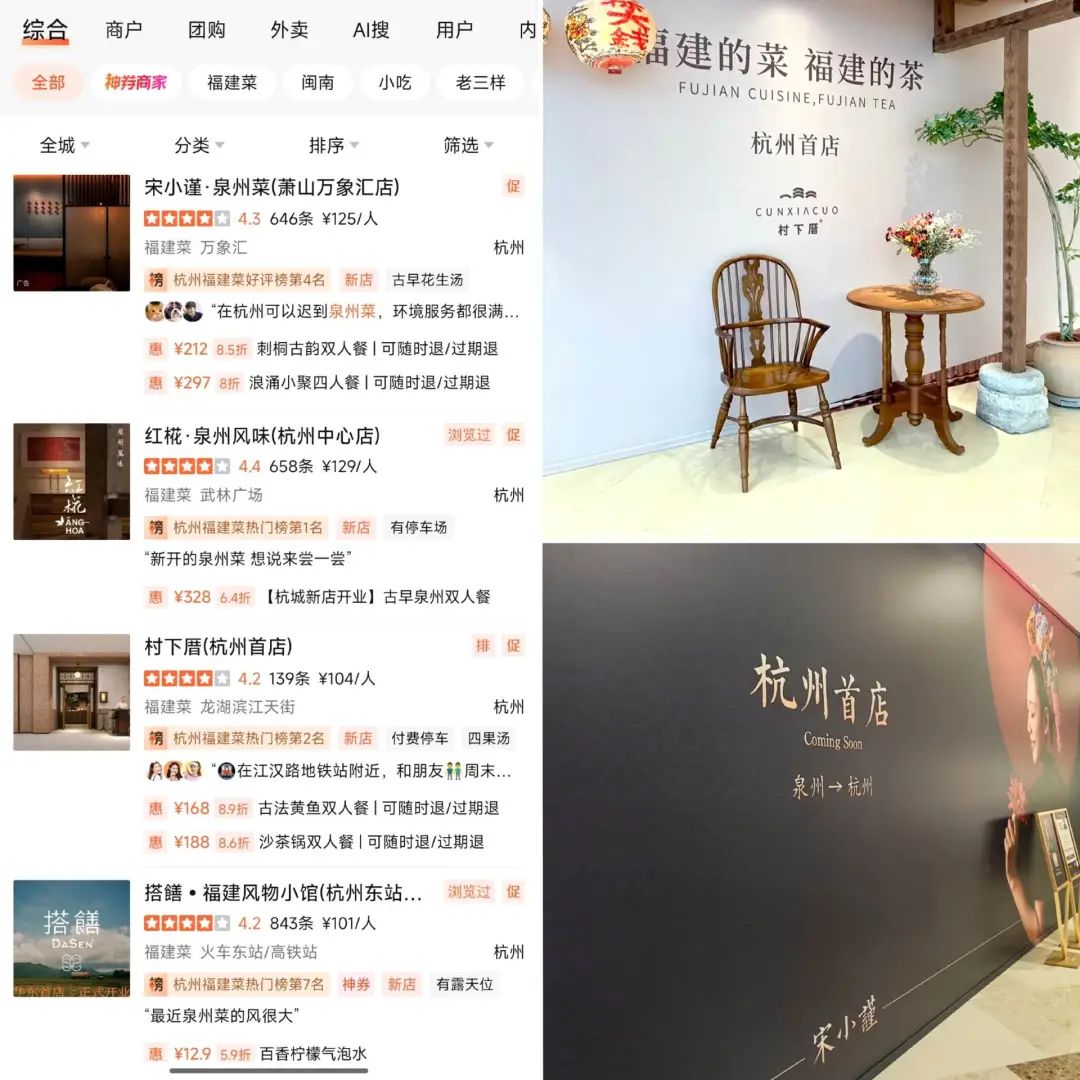
Core Insights - The rise of regional cuisines in China is evident, with Fujian cuisine gaining popularity following the success of Yunnan-Guizhou and Jiangxi dishes [1][8] - New Fujian restaurants are emerging in cities like Hangzhou, indicating a trend towards local culinary exploration [1][3] Group 1: Fujian Cuisine Expansion - The brand Song Xiaojin, founded in 2016, has over 20 locations primarily in Fujian and is now expanding to other provinces [3] - Zhu Fugui Seafood Hotpot, a phenomenon since its 2019 inception in Fuzhou, has opened its first Zhejiang location, showcasing a successful business model [5] - Established Fujian restaurants like Sidaocai and Putian Restaurant are also expanding, with over 40 locations and maintaining a strong market presence [7] Group 2: Market Dynamics - The Chinese regional specialty dining market is projected to grow from 25,236 billion yuan in 2023 to 26,195 billion yuan in 2024, reflecting a 3.8% annual growth rate [8] - Fujian's restaurant industry has shown resilience, with a revenue of 2,554.22 billion yuan in 2022, marking a 6.6% year-on-year increase despite national slowdowns [10] Group 3: Cultural and Consumer Trends - The tourism boom in Quanzhou has significantly boosted the popularity of Fujian cuisine, with tourism revenue reaching 1,002.40 billion yuan in 2023, a 68.9% increase [11] - Consumers are increasingly seeking unique local flavors, with 52% valuing food that reflects local culture, driving interest in Fujian dishes [13][14] Group 4: Challenges and Opportunities - The complexity of scaling Fujian cuisine nationally is highlighted by the high standards for fresh ingredients, which complicates supply chain logistics [17] - Despite challenges, there is potential for growth in the quality-driven dining market, particularly for brands that maintain authenticity while adapting to consumer preferences [17]