葡萄糖氧化酶

Search documents
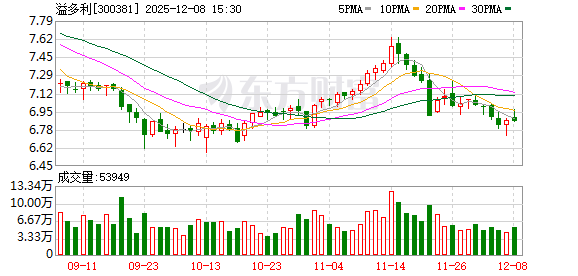
溢多利:公司食品用酶包括耐高温α-淀粉酶等系列产品
Zheng Quan Ri Bao· 2025-12-08 14:14
Core Viewpoint - Yidoli is actively enhancing its product offerings in the food enzyme sector through continuous research and development, aiming to improve strain performance and production processes while expanding its competitive edge in the food industry [2] Group 1: Product Offerings - The company’s food enzymes include high-temperature α-amylase, fungal α-amylase, pullulanase, xylanase, and glucose oxidase, which are widely used in industries such as starch sugar, alcohol, beverages, and baking [2] Group 2: Innovation and Market Demand - The company plans to strengthen application research and development in the food industry to launch new products that meet market demands, thereby further enhancing its product competitiveness [2]


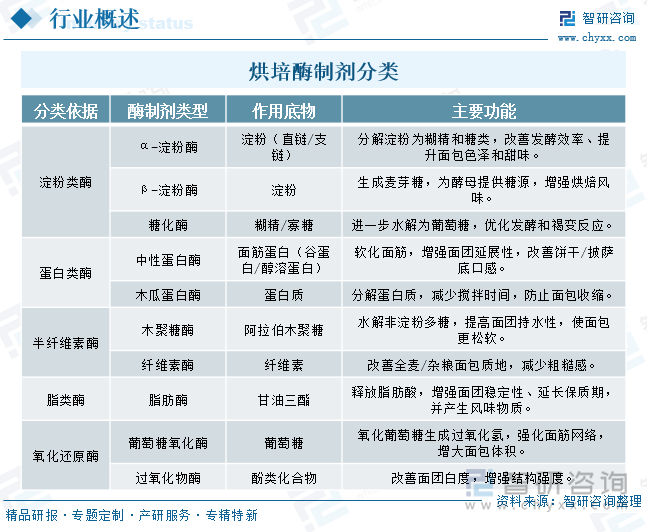
研判2025!中国烘培酶制剂行业产业链全景、发展现状、竞争格局及未来趋势分析:复合酶占比提升,功能性需求驱动行业创新[图]
Chan Ye Xin Xi Wang· 2025-07-10 01:18
Core Insights - The baking enzyme preparation industry in China is experiencing rapid growth driven by the expanding market for baked goods and increasing consumer demand for healthy, functional products, particularly low-sugar and high-fiber options [1][14] - The market size of China's baking enzyme preparation industry is projected to reach approximately 2.15 billion yuan in 2024, with a year-on-year growth of 15%, and is expected to further grow to 2.48 billion yuan by 2025 [14] - The industry is characterized by a complete supply chain, including upstream raw material supply, midstream production, and downstream applications, with significant advancements in technology and product innovation [6][12] Industry Overview - Baking enzyme preparations are natural protein catalysts extracted through biotechnology, aimed at improving the quality, processing performance, and nutritional value of baked goods [2][3] - These enzymes enhance dough extensibility, fermentation efficiency, delay aging, and optimize texture by breaking down components such as starch, protein, or cellulose [2][3] - The main types of baking enzymes include amylases, proteases, xylanases, lipases, and glucose oxidases, sourced from microorganisms or plants, known for their efficiency and safety [2][3] Market Dynamics - The retail market for baked goods in China is expected to reach 611.07 billion yuan in 2024, growing at a rate of 8.8%, with health-oriented and scenario-based products becoming new consumer hotspots [8] - The number of baking stores in China is projected to increase from 285,000 in 2020 to 338,000 by 2025, although the annual growth rate has slowed from 5.6% to 0.6% [10] - The enzyme preparation industry is expected to produce 2.074 million tons in 2024, reflecting a year-on-year growth of 7.5%, with food industry applications maintaining a 42.3% market share [12][14] Competitive Landscape - The baking enzyme preparation industry in China is characterized by a competitive landscape where international giants dominate the high-end market, while domestic companies are rapidly catching up [18][20] - Major international brands like Novozymes and Genencor lead the high-end market, while domestic firms such as Yidoli and Blue Biological are making strides in basic enzyme products and gradually moving into high-end fields [18][20] - The market concentration is increasing, with the East China region accounting for over 60% of the market share, driven by technological advancements and economies of scale [18][20] Development Trends - The industry is evolving towards high-end technology, health sustainability, and global market integration, with innovations in biotechnology driving the development of efficient and stable enzyme preparations [23][24] - There is a growing demand for functional enzyme preparations that cater to health-conscious consumers, with a shift towards low-sensitivity and high-fiber products [24] - The domestic market is expanding, particularly in the eastern regions, while companies are also establishing production facilities in Southeast Asia to leverage local resources and reduce costs [25]


总投资7.75亿,济南百斯杰高性能新型酶制剂的研发及产业化建设项目
合成生物学与绿色生物制造· 2025-06-22 12:00
Project Overview - The project is named "Jinan Baijie High-Performance New Enzyme Preparation R&D and Industrialization Construction Project" [2] - The construction unit is Jinan Baijie Biological Engineering Co., Ltd., located in the Shanghe Chemical Industry Park, Jinan, covering an area of 70,067.81 m² (approximately 105.1 acres) [2] Investment and Construction Details - The total investment for the project is 775.49 million yuan, with phase one investment at 562.24 million yuan and phase two at 213.25 million yuan [3] - Environmental investment for phase one is 41.59 million yuan (7.39% of total investment), and for phase two is 6.21 million yuan (2.91% of total investment), all funded by the company [3] - The construction period for both phases is 21 months each [4] Production Capacity and Facilities - The project includes the construction of a fermentation workshop with a total of 12 fermentation tanks (6 in each phase), and two extraction and blending workshops [4] - The total production capacity for high-performance new enzyme preparations will be 45,000 tons per annum (t/a), with each phase contributing 22,500 t/a [4] Existing Product Situation - The northern fermentation workshop has been out of production for several years, while the southern workshop is operational [6] - The northern workshop has an annual production capacity of 1,500 tons for α-galactosidase, while the southern workshop has capacities of 5,200 t/a for liquid single enzyme products, 3,000 t/a for liquid proteases, and 8,000 t/a for liquid glucose oxidase and liquid fat enzymes, totaling 17,700 t/a for the entire plant [7] Company Background - Jinan Baijie Biological Engineering Co., Ltd. was formerly known as Jinan Nuoneng Biological Engineering Co., Ltd. and is a wholly-owned subsidiary of Kingsoft Bio-Technology (HK01548), established in 2009 [9] - The company specializes in the R&D, production, and sales of biological enzyme preparations, focusing on feed and industrial enzyme preparations, with core products including glucose oxidase, phytase, and compound enzymes [10]