蒸镀OLED

Search documents
并跑→领跑,印刷OLED时代到来?
Guan Cha Zhe Wang· 2025-11-17 13:21
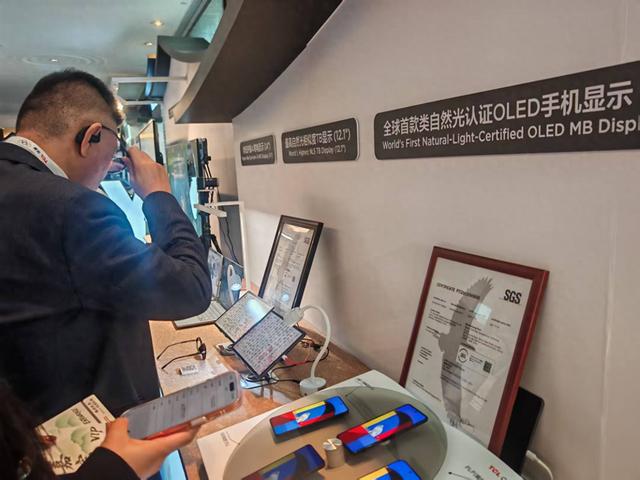
Core Viewpoint - The Chinese display industry has transitioned from catching up to running ahead, with printed OLED technology being a key focus for leading the market [1] Group 1: Technology and Innovation - TCL Technology's CEO highlighted the breakthrough of the world's first small-sized OLED product using high-precision printing technology, achieving a physical resolution of 390 PPI and a visual equivalent of 490 PPI [1] - The traditional evaporation process used by competitors like Samsung and BOE has significant cost and efficiency drawbacks, with equipment costs being approximately double that of printing technology [4][11] - Printed OLED technology offers a material utilization rate of over 90%, significantly reducing raw material costs by nearly 40% compared to evaporation methods [11] Group 2: Market Dynamics - The introduction of printed OLED technology is expected to intensify competition with established players like Samsung and BOE, who have historically dominated the high-end display market [1][4] - TCL's new G8.6 generation printed OLED production line is designed to process approximately 22,500 glass substrates per month, aiming to accelerate the technology's market adoption [12] - The printed OLED technology is anticipated to expand into various high-value display applications, including mobile devices, potentially disrupting the current market share held by traditional OLED manufacturers [12][18] Group 3: Challenges and Considerations - Despite the advantages of printed OLED, challenges remain in achieving comparable power efficiency and yield rates to established evaporation technologies, particularly in high-end applications [15][17] - The industry still prioritizes display quality and stability, where evaporation technology currently holds a significant edge due to its ability to produce uniform and dense film layers [16] - Market entry barriers exist as existing products designed around evaporation screens may require significant redesign to accommodate printed OLED technology, posing a challenge for TCL in gaining traction with manufacturers [18]


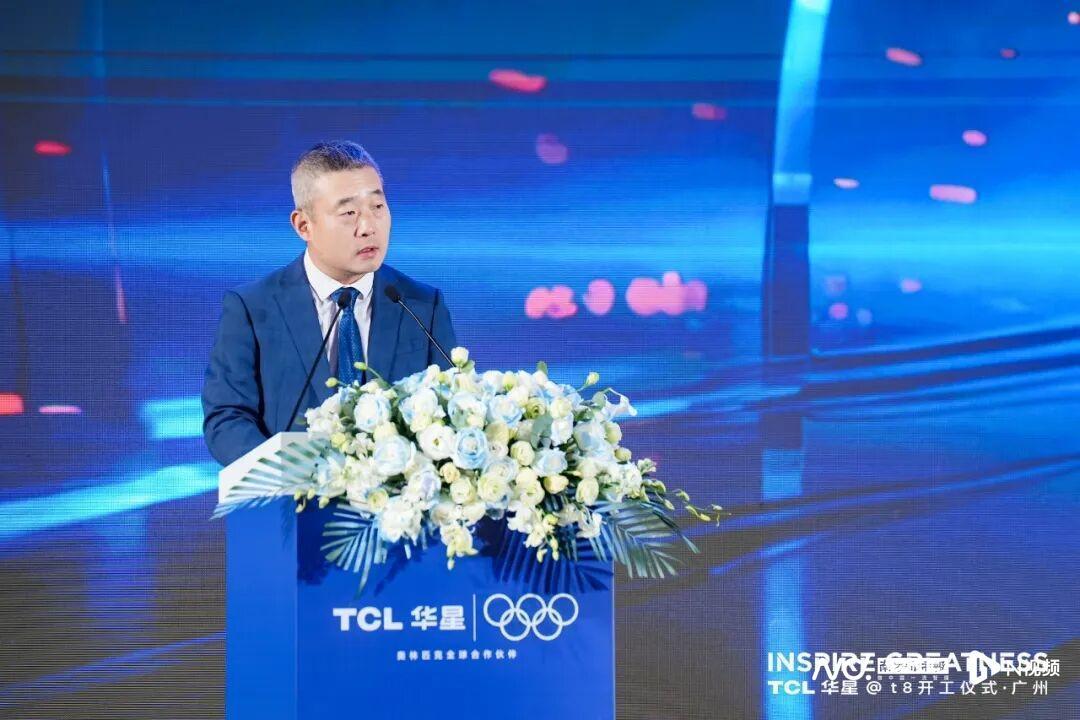
TCL华星295亿产线开工,粤港澳大湾区“强链”迎新落子
Nan Fang Du Shi Bao· 2025-10-23 10:56
Core Insights - TCL Huaxing has launched the T8 project with a total investment of approximately 29.5 billion yuan, marking the world's first mass production G8.6 generation printed OLED production line [1][2] - The T8 project is seen as a critical step in strengthening the semiconductor display industry cluster in the Guangdong-Hong Kong-Macao Greater Bay Area [1][7] Investment and Production Details - The T8 project is designed to process about 22,500 glass substrates measuring 2290mm x 2620mm per month, targeting the mid-size IT market including monitors, laptops, and tablets [2] - The project aims to achieve mass production by the second half of 2027, with a construction period of 24 months [4] Technology and Cost Advantages - The choice of printed OLED technology is based on its unique advantages in cost and display quality, with a material utilization rate exceeding 90%, compared to about 30% for traditional evaporation techniques [2][6] - TCL Huaxing expects a cost advantage of over 15% compared to other OLED technologies once the T8 project is scaled up [2] Competitive Landscape - The global competition in high-generation OLED production lines has intensified, with major players like Samsung Display and BOE investing heavily in G8.6 generation lines, while TCL Huaxing is the only major company betting on the printed route [5] - TCL Huaxing's T8 project is the fourth high-generation OLED line announced in the industry, with the company timing its entry based on its own progress and market demand forecasts [5] Strategic Implications - The T8 project is expected to enhance the collaboration within the Greater Bay Area's semiconductor display industry, leveraging existing production lines in Guangzhou, Shenzhen, and Huizhou [7] - The project aims to achieve a 50% localization rate for equipment in its first phase, addressing previous dependencies on overseas suppliers and enhancing China's capabilities in this field [7]