蓝光LED

Search documents
30+氮化镓GaN企业密集突破
DT新材料· 2026-03-15 16:05
Core Viewpoint - Gallium Nitride (GaN) is a third-generation semiconductor material that has become essential in modern electronics and optoelectronics, significantly impacting fields such as blue light lighting, power conversion, and RF communication since its commercialization in the 1990s [4][7]. Group 1: Definition and Basic Characteristics - GaN is a binary compound semiconductor formed from gallium (Ga) and nitrogen (N), characterized by a wide bandgap of approximately 3.4 eV, which allows stable operation in high-temperature, high-pressure, and high-radiation environments [7]. - The crystal structure of GaN is wurtzite, with a density of about 6.1–6.15 g/cm³ and a melting point exceeding 1600–2500°C, showcasing excellent mechanical stability and resistance to cracking [7]. - GaN exhibits superior electrical properties, including high electron mobility (up to 1500 cm²/(V·s)) and thermal conductivity (up to 2.3 W/(cm·K)), making it suitable for various applications [7][8]. Group 2: Material Preparation Processes - GaN preparation involves bulk single crystal growth and epitaxial film growth, facing challenges such as lattice matching and defect control [9]. - Common methods for bulk single crystal growth include various techniques, while the main industrial method for epitaxial growth is Metal-Organic Chemical Vapor Deposition (MOCVD), which operates at temperatures between 800–1100°C [11]. - Other epitaxial growth techniques include Molecular Beam Epitaxy (MBE) and Hydride Vapor Phase Epitaxy (HVPE), each with specific advantages and challenges related to defect density and growth rates [12][13]. Group 3: Applications and Use Cases - GaN's wide bandgap properties enable its use in optoelectronic devices, power electronics, and RF applications, transitioning from laboratory research to large-scale commercialization [14]. - In optoelectronics, GaN is crucial for LEDs and laser diodes, with significant advancements in blue light LEDs since the 1990s, leading to energy-efficient lighting solutions [15][16]. - In power electronics, GaN devices are known for their high efficiency (>99%) and fast switching speeds, making them ideal for applications in electric vehicles, chargers, and power adapters [18]. - GaN is also pivotal in RF and microwave devices, particularly in 5G base stations and military radar systems, where its high power density and breakdown voltage outperform traditional materials [20][21]. Group 4: Domestic Companies and Recent Developments - Major domestic companies in the GaN sector include Sanan Optoelectronics, which is expanding its GaN device production capacity, and Innoscience, which has achieved significant production milestones [22]. - Other notable companies include Huazhong Microelectronics and Silan Microelectronics, both of which are advancing their GaN technology and production capabilities to meet growing market demands [22][24]. - The industry is witnessing rapid growth, with many companies focusing on enhancing production efficiency and expanding their product offerings in the GaN space [22][24].

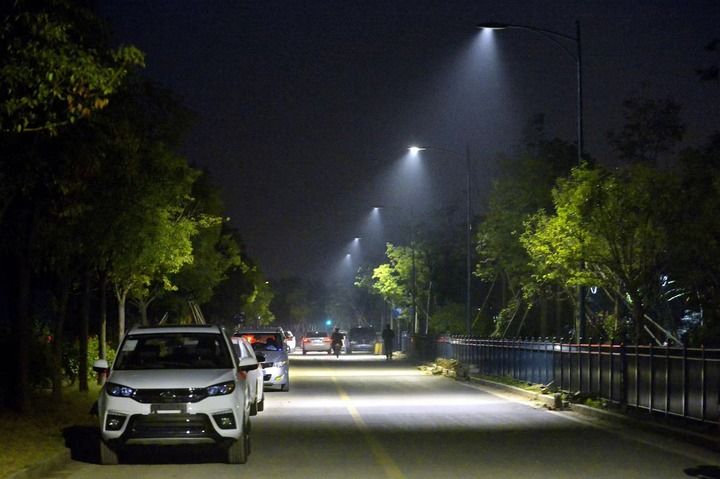
“卷”节能=更节能吗?——沪上节能企业“绿色节能空间”经营记
Xin Hua Wang· 2026-01-09 02:41
Core Viewpoint - The discussion highlights the paradox of energy-saving lighting, emphasizing that merely increasing light efficiency ("卷"光效) can lead to light pollution, which contradicts the goal of energy conservation [2][5]. Group 1: Industry Insights - The LED lighting industry has seen significant advancements, particularly with the introduction of blue LED technology, which has improved light efficiency and energy savings [3][4]. - The focus on "strong light efficiency" has become a dominant evaluation criterion in the industry, leading to a competitive environment that may overlook other important factors [3][4]. - The industry is encouraged to move beyond a singular focus on light efficiency and explore balanced and optimized lighting solutions that promote energy conservation and environmental sustainability [4][5]. Group 2: Technological Developments - The company has pioneered the concept of "adaptive lighting," which emphasizes precise control of light based on environmental needs, moving towards a more efficient and sustainable lighting approach [7][8]. - Innovative technologies such as reflective asymmetric secondary light distribution and intelligent dimming systems are being utilized to enhance energy efficiency while ensuring safety [7][8]. Group 3: Environmental Considerations - The emergence of light pollution as a significant environmental issue necessitates a shift in how lighting is approached, with a focus on reducing unnecessary brightness and improving light quality [12][13]. - Shanghai's initiative to create "light pollution prevention demonstration parks" reflects a broader commitment to addressing light pollution and enhancing urban nighttime environments [10][13].
1200亿灰飞烟灭,半导体鼻祖破产
商业洞察· 2025-07-07 09:21
Core Viewpoint - Wolfspeed, a pioneer in the semiconductor industry, has filed for bankruptcy due to overwhelming debt and inability to adapt to market changes, particularly the rise of Chinese competitors [3][22]. Group 1: Company Background - Wolfspeed was once the largest manufacturer of silicon carbide (SiC) substrates, with a peak market value of $16.5 billion (approximately 120 billion RMB) [3]. - The company originated from Cree Research, founded in 1987, and became a leader in the LED market before transitioning to SiC technology [8][12]. - Wolfspeed's market share in SiC substrates was as high as 80% in the past, but it has significantly declined to 33.7% by 2024 due to increased competition from Chinese firms [16]. Group 2: Financial Struggles - As of March, Wolfspeed had approximately $1.33 billion in cash reserves but faced $6.5 billion in debt, leading to severe liquidity issues [20]. - The company has reported net losses for ten consecutive years, with losses escalating from $280 million in FY 2018 to $864 million in FY 2024 [21]. - In May 2025, Wolfspeed's stock plummeted by 57%, resulting in a market value loss exceeding $1 billion [21]. Group 3: Market Dynamics - The demand for SiC semiconductors surged in sectors like electric vehicles and renewable energy, with over 60% of the demand coming from the EV market [20]. - Despite the high demand, Wolfspeed's expansion efforts did not yield the expected orders, particularly as the EV market faced a slowdown [20]. - The company's strategy of aggressive capacity expansion did not align with market realities, leading to underutilization of its new facilities [22][23]. Group 4: Competitive Landscape - Chinese competitors have leveraged their mature manufacturing capabilities to challenge Wolfspeed, which failed to adequately address the Chinese market's dynamics [3][24]. - Other global players, such as STMicroelectronics and Infineon, have pursued vertical integration and partnerships with Chinese firms, further intensifying competition [17].
1200亿,一个半导体鼻祖破产
芯世相· 2025-05-29 07:03
Core Viewpoint - Wolfspeed, a leading player in the silicon carbide wafer market, is on the verge of bankruptcy due to aggressive expansion strategies, rising competition from Chinese firms, and declining demand from the electric vehicle sector [4][14][15]. Group 1: History of Wolfspeed - Wolfspeed, originally founded as Cree in 1987, became a pioneer in silicon carbide technology, launching the first commercial silicon carbide wafer in 1991 and achieving a market cap of $16.5 billion in 2021 [6][10]. - The company transitioned to focus on third-generation semiconductors, rebranding as Wolfspeed in 2021, which initially led to a surge in stock price and market cap [10][11]. Group 2: Factors Leading to Decline - Wolfspeed's aggressive investment strategy, including over $5 billion in new factories, was misaligned with market demand, particularly as the electric vehicle market's growth slowed [13][14]. - The company's flagship Mohawk Valley factory, which was expected to drive revenue growth, only generated $78 million in the latest fiscal quarter, with a projected capacity utilization of just 25% by the end of 2024 [13][14]. Group 3: Competitive Landscape - Despite holding a 33.7% market share in the global silicon carbide substrate market, Wolfspeed faces increasing competition from Chinese companies like TankeBlue and SICC, which have market shares of 17.3% and 17.1% respectively [15][16]. - Chinese manufacturers have been able to reduce costs significantly, with 6-inch substrates priced at 30% of international levels, further pressuring Wolfspeed's market position [16]. Group 4: Financial Situation - Wolfspeed's debt has reached approximately $6.5 billion, with annual interest payments of about $800 million, while cash reserves stand at only $1.3 billion [14]. - The company's stock has plummeted 85% in 2024, with shares trading at just over $1, indicating a severe decline in investor confidence [14]. Group 5: Industry Implications - The rise of Chinese semiconductor firms represents a significant shift in the global semiconductor landscape, with many investors viewing third-generation semiconductors as a key area for future growth [18]. - China's manufacturing capabilities and market size provide a strong foundation for its semiconductor industry, potentially leading to a dominant position in high-end manufacturing [18].

1200亿,一个半导体鼻祖破产
投资界· 2025-05-24 07:51
Core Viewpoint - Wolfspeed, a leading American silicon carbide wafer manufacturer, is reportedly on the verge of bankruptcy, with its stock plummeting 60% in a single night, highlighting the challenges faced by the company in a competitive market dominated by Chinese counterparts [1][4]. Company History - Founded in 1987 as Cree, Wolfspeed pioneered silicon carbide technology, launching the first commercial silicon carbide wafer in 1991 and becoming a major player in the blue LED market [3][6]. - The company rebranded to Wolfspeed in October 2021, focusing on third-generation semiconductors, and saw its stock reach a peak of $139, with a market cap of $16.5 billion (approximately 120 billion RMB) [6][10]. Market Challenges - The decline in Wolfspeed's fortunes can be attributed to aggressive expansion strategies that overlooked market dynamics, particularly the slower-than-expected electrification of the automotive market in Europe and the U.S. [9][10]. - The company's flagship Mohawk Valley plant, which cost over $5 billion, generated only $7.8 million in revenue in the latest fiscal quarter, with a projected capacity utilization of just 25% by the end of 2024 [10][11]. Financial Situation - Wolfspeed's debt has reached approximately $6.5 billion, with annual interest payments of about $800 million, while cash reserves stand at only $1.3 billion [10][11]. - The company's stock has fallen 33% year-to-date, with an 85% decline projected for 2024, leading to a current share price of just over $1 [10][11]. Competitive Landscape - Despite holding a 33.7% market share in the global silicon carbide substrate market in 2024, Wolfspeed faces increasing competition from Chinese firms like Tankeblue and SICC, which have gained significant market shares of 17.3% and 17.1%, respectively [13][14]. - Chinese manufacturers have been able to reduce costs significantly, with 6-inch substrate prices dropping to 30% of international levels, further pressuring Wolfspeed's market position [13][14]. Industry Trends - The rise of Chinese companies in the third-generation semiconductor space reflects a broader trend of China's increasing dominance in advanced manufacturing, supported by a robust domestic market and a shift from a "demographic dividend" to an "engineer dividend" [15].