蔬菜种苗

Search documents
平凉:“大棚经济”撑起冬春“双增收”
Xin Lang Cai Jing· 2026-01-16 09:52
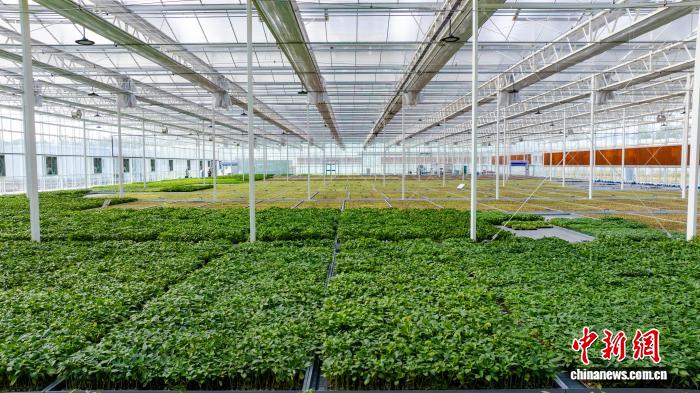
Core Viewpoint - The greenhouse economy is significantly contributing to the dual increase in income for local farmers during the winter and spring seasons, enhancing both vegetable supply for urban areas and income for rural households [1]. Group 1: Greenhouse Economy Impact - Greenhouses serve as a crucial support for urban vegetable supply, enriching local diets and acting as a tool for income generation for farmers [1]. - The winter and spring vegetable planting has become a win-win industry, ensuring a full "vegetable basket" for citizens while filling farmers' "money bags" [1]. Group 2: Seedling Cultivation in Kongtong District - In Kongtong District, eight intensive seedling bases are operational, ensuring a robust foundation for next year's vegetable yield [4]. - The district has invested in modern facilities, achieving an annual seedling capacity exceeding 100 million, meeting the needs of over 80,000 acres of vegetable cultivation [5]. - Advanced techniques such as soil-free seedling cultivation and grafting are being promoted to enhance seedling quality, addressing traditional challenges in seedling production [5]. Group 3: Agricultural Practices in Huating City - Huating City has adopted facility vegetable planting as a key strategy for rural industrial revitalization, focusing on short-growth, high-economic benefit crops like spinach and coriander [9]. - The government is facilitating market connections, ensuring smooth distribution channels from farm to table, which helps farmers feel secure in their production and sales [9]. - The innovative "company + base + farmer" model is reducing market risks for farmers while providing local employment opportunities [9]. Group 4: Overall Agricultural Development - The integration of technology and policy support in Huating City is leading to increased vegetable yield and quality, contributing to year-round supply [9]. - The establishment of specialized vegetable brands is enhancing the visibility of agricultural products, making them a hallmark of rural revitalization [10].

上海援建工厂化育苗基地落地禄劝县
Xin Lang Cai Jing· 2026-01-02 22:40
Core Viewpoint - The establishment of the factory-based seedling cultivation base in Luquan County marks a significant advancement in the standardized development of the seedling industry in the region, ensuring a stable supply of quality seedlings for traditional Chinese medicine and vegetable cultivation [1] Group 1: Project Overview - The factory-based seedling cultivation base was officially launched in Maoshan Town, operated by Yunnan Jufan Mei Seedling Co., Ltd [1] - The project commenced construction in July 2025 with a total investment of 12.66 million yuan [1] - The facility spans 150 acres and includes smart control greenhouses, a 1,600 square meter professional cold chain storage, an integrated water and fertilizer control system, and an automatic seedling sowing line [1] Group 2: Production Capacity - The annual comprehensive seedling production capacity of the factory is expected to reach 500 million seedlings [1] Group 3: Industry Impact - The operation of the factory-based seedling base fills the gap in large-scale local cultivation of quality seedlings for traditional Chinese medicine in Luquan County [1] - It ensures a stable supply of seedlings necessary for the cultivation of traditional Chinese medicine, providing solid support for the large-scale and standardized planting of the industry [1]
年出种苗500万株 山西高平育苗进入“智能时代”
Zhong Guo Xin Wen Wang· 2025-10-23 12:40
Core Viewpoint - The establishment of an intelligent seedling greenhouse in Gaoping City, Shanxi, marks a significant advancement in modern agricultural facilities, enabling the production of 5 million seedlings annually and enhancing operational efficiency through automation and smart technology [1][5]. Group 1: Project Overview - The Wuguifeng vegetable industry project covers an area of 531 acres, featuring a 5,000 square meter intelligent seedling greenhouse equipped with a water and fertilizer integration workshop [3]. - The intelligent greenhouse utilizes a smart control system for precise management of water and nutrients, along with IoT sensors for real-time monitoring of temperature, humidity, and light [3]. Group 2: Operational Efficiency - The intelligent seedling greenhouse requires only 2 to 3 personnel to manage the entire process of sowing, regulation, storage, and retrieval, significantly reducing labor needs compared to traditional methods that required over ten workers [2][4]. - Each seedbed in the greenhouse can cultivate over 4,000 seedlings, with a total of more than 260 seedbeds available, allowing for the production of approximately 5 million seedlings per year [5]. Group 3: Technological Advancements - The greenhouse is equipped with advanced systems such as automated sowing lines, fully automated logistics seedbed systems, and tidal irrigation systems, which contribute to the intelligent and automated operation of the entire seedling production process [3].