西红柿

Search documents
未知机构:伊朗禁止出口所有食品和农产品据新华社2026年3月3日报道-20260304
未知机构· 2026-03-04 02:45
Summary of Conference Call Notes Industry Overview - **Iran's Export Ban on Food and Agricultural Products**: Iran has temporarily banned the export of all food and agricultural products to ensure the availability of essential goods for its citizens until further notice [1] - **Global Supply Position of Iranian Agricultural Products**: - **Saffron**: Accounts for over 90% of global production and 80% of global trade, nearly monopolizing the supply [1] - **Pistachios**: Represents approximately 35% of global production and 7% of global trade [1] - **Dates**: Contributes about 15-20% of global production and 21.5% of global trade, ranking as the top exporter [1] - **Raisins**: Accounts for 20-27% of global production and 11.3% of global trade, ranking third globally [1] - **Tomatoes**: Represents about 3% of global production and 3% of global trade [1] Company Insights - **Shouxiangu (603896)**: The only listed company in China that has achieved industrialized and standardized cultivation of saffron. The export ban from Iran may lead to a direct increase in saffron prices due to China's reliance on imports, which exceeds 90% [2] - **Langyuan Co. (300175)**: A core enterprise in China's raisin processing and export sector. The company’s main products include apples, raisins, and pine nuts, with raisins sourced primarily from the Turpan region of Xinjiang. It ranks first among domestic companies in raisin exports. The export restrictions from Iran, the third-largest raisin exporter, may lead to a direct increase in international raisin prices [2]
山东蒙阴:春节过后,蔬菜价格以降为主
Zhong Guo Fa Zhan Wang· 2026-02-27 03:28
Core Viewpoint - The vegetable prices in Mengyin County, Shandong Province, have predominantly decreased due to the end of holiday factors and increased market supply following favorable weather conditions [1] Price Changes - Among the 17 monitored vegetable varieties, 7 saw price increases while 10 experienced price declines. Specific prices include: - Oilseed rape: 2 CNY/kg - White radish: 1.3 CNY/kg - Carrot: 2.5 CNY/kg - Potato: 2 CNY/kg - Green onion: 2 CNY/kg - Garlic: 5 CNY/kg - Ginger: 5 CNY/kg - Celery: 2.5 CNY/kg (down 16.67%) - Cabbage: 1.8 CNY/kg (down 28%) - Cucumber: 3 CNY/kg (down 33.33%) - Eggplant: 3.5 CNY/kg (down 12.5%) - Tomato: 4 CNY/kg (down 20%) - Green chili: 5.5 CNY/kg (down 8.33%) - Cabbage: 2 CNY/kg (down 20%) - Kidney bean: 6 CNY/kg (down 7.69%) - Garlic sprout: 6 CNY/kg (down 20%) - Leek: 4 CNY/kg (down 20%) [1] Market Dynamics - The primary reasons for the decline in vegetable prices post-Spring Festival are: - The reduction in market demand as holiday factors dissipate - Favorable weather conditions leading to increased vegetable growth and supply [1]
宿州埇桥区:埇桥大地 年后春种忙
Xin Lang Cai Jing· 2026-02-25 16:55
Core Viewpoint - The article highlights the agricultural activities in Suzhou Yongqiao District, where farmers are actively engaged in spring planting, particularly focusing on crops like watermelons, beans, peppers, tomatoes, and potatoes to ensure a good harvest for the upcoming season [2] Group 1 - Farmers in Suzhou Yongqiao District are beginning their spring planting activities immediately after the Spring Festival [2] - The focus of the planting includes early spring vegetables and crops such as watermelons, beans, peppers, and tomatoes [2] - The local agricultural community is motivated by the saying "A year's plan starts with spring," indicating the importance of timely planting for a successful harvest [2]

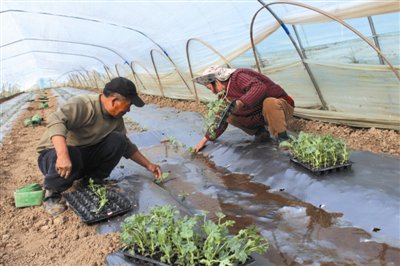
暖棚盈硕果 振兴启新程
Xin Lang Cai Jing· 2026-02-24 18:20
Core Insights - The development of facility agriculture in the region is significantly enhancing local market supply and providing substantial income for farmers, contributing to a more stable food supply and increased financial returns for the community [2][3]. Group 1: Facility Agriculture Development - The region has 5,753 facility greenhouses covering an area of 12,000 acres, representing a year-on-year growth of 8.7% [3]. - The introduction of advanced agricultural techniques, such as intelligent temperature control and integrated water and fertilizer drip irrigation, is improving crop growth conditions and yields [1]. - The establishment of greenhouses allows for year-round production and supply of agricultural products, enhancing market competitiveness [2][3]. Group 2: Economic Impact on Farmers - Farmers are experiencing increased orders and sales, with one farmer reporting the cultivation of 2 million seedlings and stable daily orders of around 100,000 seedlings [1]. - The introduction of high-efficiency crop varieties, such as ginseng fruit, has led to a surge in demand, with customers frequently visiting for harvesting [2]. - The integration of leisure activities, such as pick-your-own fruit experiences, is creating new income streams for farmers and attracting urban visitors [2].
济宁市兖州区:2026年春节期间市场价格总体稳定
Zhong Guo Fa Zhan Wang· 2026-02-24 06:32
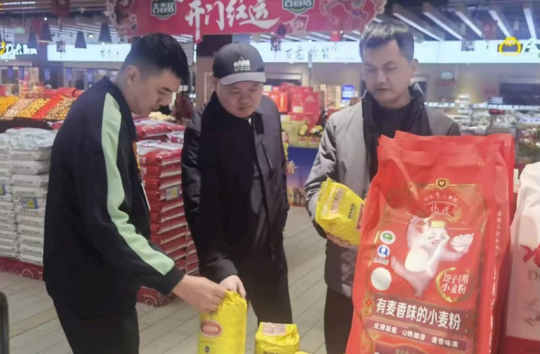
Core Viewpoint - The consumer goods market in Yanzhou District, Jining City, Shandong Province, is well-supplied and prices are generally stable during the Spring Festival of 2026, with a mixed trend in price changes compared to the previous year [1] Group 1: Price Stability in Grains and Oils - Prices for flour (special grade) and rice remain stable at 2.10 yuan per jin and 2.80 yuan per jin, respectively, showing no change compared to the previous year [3] - Prices for soybean oil (Golden Dragon Fish) and peanut oil (Luhua) are also stable at 65.00 yuan for 5 liters and 156.00 yuan for 5 liters, respectively, with no change year-on-year [3] Group 2: Meat and Egg Price Changes - Prices for various pork cuts, including lean pork and belly pork, have decreased significantly, with reductions of 21.88% and 19.23%, respectively [4] - Chicken egg prices have dropped by 14.00% to 4.30 yuan per jin, while the price of white-cut chicken has increased by 8.33% to 6.50 yuan per jin [4] Group 3: Fish Price Trends - The price of frozen hairtail fish has decreased by 23.08% to 10.00 yuan per jin, while prices for crucian carp remain stable at 8.50 yuan per jin [6] - Prices for carp, mackerel, and shrimp have also seen declines of 9.64%, 23.08%, and 8.00%, respectively [6] Group 4: Vegetable Price Fluctuations - The average price of 17 monitored vegetable varieties has decreased by 6.35% to 3.39 yuan per jin, with notable declines in prices for rapeseed (down 25.00%) and garlic (down 35.71%) [7] - Some vegetables, such as cabbage and tomatoes, have seen significant price increases of 60.00% and 42.86%, respectively [7] Group 5: Mixed Trends in Fruit Prices - Prices for apples and pears remain stable, while banana prices have increased by 34.62% to 3.50 yuan per jin [8] - Prices for watermelon and tangerines have decreased significantly, by 33.33% and 30.00%, respectively [8]
山西太原刘家堡:古村年味浓
Jing Ji Ri Bao· 2026-02-23 02:11
Core Viewpoint - Liujiabao Village has transformed from a place with idle resources into a vibrant community by revitalizing its cultural heritage, agricultural practices, and tourism, leading to economic growth and improved livelihoods for its residents [1][4]. Group 1: Cultural and Economic Revitalization - The village boasts over 100 intangible cultural heritage projects, more than 100 workshops, 60 types of cultural products, 30 types of local cuisine, and over 10 guesthouses, showcasing a diverse cultural landscape [1]. - The local government has effectively utilized idle land, housing, and labor, turning them into profitable resources, with agriculture as the foundation, culture as the essence, and tourism as the pathway [1][4]. - Young people in the village, like Guo Panyi, are now able to earn substantial incomes (around 70,000 to 80,000 yuan annually) through traditional crafts such as lion dancing, which were previously undervalued [2]. Group 2: Employment and Community Development - Residents like Wang Fang have found stable employment opportunities close to home, allowing them to balance work and family life while earning a steady income [2][3]. - Entrepreneurs such as Guo Ximei have leveraged the village's cultural environment to expand their businesses, with products now reaching international markets, thus contributing to local economic growth [3]. - The integration of historical culture, intangible heritage, agriculture, and tourism has created a cohesive development model that supports both social and economic benefits for the community [3][4]. Group 3: Agricultural Initiatives - The village has implemented large-scale agricultural projects, including a tomato industry park, a pear industry park, and a butterfly orchid base, focusing on professional and sustainable agricultural practices [3]. - The local government emphasizes the importance of combining agriculture with cultural and tourism initiatives, creating a comprehensive development strategy that enhances the quality of life for residents [4].
新春走基层丨山西太原刘家堡:古村年味浓
Jing Ji Ri Bao· 2026-02-23 00:05
Core Insights - Liujiabao Village has transformed from a place with idle resources into a vibrant community by revitalizing its land, labor, and cultural heritage, leading to economic growth and community engagement [1][4] Group 1: Cultural and Economic Revitalization - The village boasts over 100 intangible cultural heritage projects, more than 100 workshops, 60 types of cultural products, 30 types of local cuisine, and over 10 guesthouses, showcasing a diverse cultural landscape [1] - The local government has effectively utilized idle land and resources, turning them into profitable ventures, with agriculture as the foundation, culture as the essence, and tourism as the pathway [1][4] - Young artisans like Guo Panyi are now able to earn substantial incomes, with lion dance performances generating annual earnings of 70,000 to 80,000 yuan, reflecting a shift in perception towards traditional crafts as viable sources of income [2] Group 2: Employment and Community Impact - Local artisans, such as Wang Fang, have found stable employment opportunities close to home, allowing them to balance work and family life while earning a steady income [3] - Entrepreneurs like Guo Ximei have leveraged the village's cultural environment to expand their businesses, with products reaching international markets, thus contributing to the local economy [3] - The integration of agriculture, culture, and tourism has created a sustainable model for community development, enhancing both social and economic benefits for villagers [3][4]
古村年味浓
Xin Lang Cai Jing· 2026-02-22 23:06
Core Insights - Liujiabao Village has transformed from a place with idle resources into a vibrant community by revitalizing its land, culture, and labor, leading to economic growth and community engagement [1][4] Group 1: Cultural and Economic Revitalization - The village boasts over 100 intangible cultural heritage projects, more than 100 workshops, 60 types of cultural products, 30 varieties of local cuisine, and over 10 guesthouses, showcasing a diverse cultural landscape [1] - The local government has effectively utilized idle land and resources, turning them into profitable ventures, with agriculture as the foundation, culture as the essence, and tourism as the pathway [1][4] - Young people in the village, like Guo Panyi, are now able to earn a living through traditional crafts such as lion dancing, which was previously considered unprofitable [2] Group 2: Employment and Community Development - Residents like Wang Fang have found stable employment opportunities close to home, allowing them to balance work and family life while earning a steady income [3] - Entrepreneurs such as Guo Ximei have leveraged the village's cultural environment to expand their businesses, with products now reaching international markets [3] - The integration of agriculture, culture, and tourism has created a sustainable model for community development, enhancing both social and economic benefits for the villagers [3][4]
新春走基层 |江苏扬州:“守”得丰收迎新春 “柿”事如意笑颜开
Xin Lang Cai Jing· 2026-02-22 12:47
Core Viewpoint - The agricultural sector in Yangzhou is experiencing a significant increase in tomato production during the Spring Festival, contributing to a stable supply of vegetables for the local market [1][2]. Group 1: Production and Supply - The tomato harvest in Yangzhou's Shatou Town is abundant, with farmers actively engaged in picking ripe tomatoes to meet market demand during the festive season [1]. - Daily harvests of approximately 6,000 pounds of tomatoes are reported, with farmers utilizing specific picking techniques to maintain quality [1]. - The warmer winter temperatures have resulted in a higher yield of tomatoes, with production up by at least 20% compared to the previous year [2]. Group 2: Market Dynamics - The price of tomatoes has increased by over 2 yuan per pound compared to previous years, indicating a favorable market condition for farmers [2]. - The city maintains a stable vegetable planting area of 1 million acres, with an annual production exceeding 2.5 million tons, ensuring a robust supply chain [2]. - The local agricultural authority is enhancing production scheduling and quality supervision to ensure a steady supply of seasonal vegetables during the Spring Festival [2].
突发刷屏!白宫急宣:10%全球关税24日生效,为期150天,这些商品直接免交
Sou Hu Cai Jing· 2026-02-21 16:02
Group 1 - The U.S. government announced a temporary 10% tariff on all imported goods for 150 days, effective from February 24, following a Supreme Court ruling that deemed previous tariffs illegal [2][3] - The new tariff policy is based on the Trade Act of 1974, citing the need to address international payment issues, and is seen as a continuation of previous tariff strategies under a different legal framework [3][4] - The Supreme Court's ruling has left unresolved issues regarding the refund of approximately $170 billion in tariffs already paid by U.S. companies, leading to potential long-term legal battles [2][3] Group 2 - A long exemption list has been published, indicating that goods essential to the U.S. economy, such as certain energy resources, agricultural products, and pharmaceuticals, will not be subject to the new tariff [4][5][6] - Specific categories exempt from the tariff include energy and critical resources, essential daily consumer goods, transportation vehicles, and certain special items [5][6][7] Group 3 - The new tariff is expected to significantly impact U.S. businesses and consumers, with over 1,500 companies already filing lawsuits for tariff refunds, creating uncertainty in cash flow and operational costs [7][8] - Reports indicate that U.S. medium-sized enterprises have seen their monthly tariff expenses triple since early 2025, with tariffs now accounting for 15% of their international expenditures [8][9] - The Federal Reserve has expressed concerns about the economic implications of the new tariffs, particularly regarding inflation and the potential for trade retaliation from other countries [9][10] Group 4 - The global trade landscape is likely to be affected, with countries like Canada and Japan already responding with their own tariffs or restrictions on U.S. imports, indicating a shift in international trade dynamics [10][11] - Chinese exporters may face challenges as the 10% tariff applies globally, impacting various goods unless they fall under the exemption list, which could lead to reduced orders and profit margins [10][11] Group 5 - The temporary nature of the tariff raises questions about its long-term effectiveness in addressing trade deficits and economic issues, with many analysts viewing it as a political maneuver rather than a sustainable solution [11][12] - Future uncertainties include the potential extension of the tariff after 150 days, the resolution of refund issues, and the response of other nations to U.S. trade policies [11][12]