
藏黄精

Search documents
林芝逾80种特色产品亮相广州引关注
Nan Fang Du Shi Bao· 2025-11-30 10:21
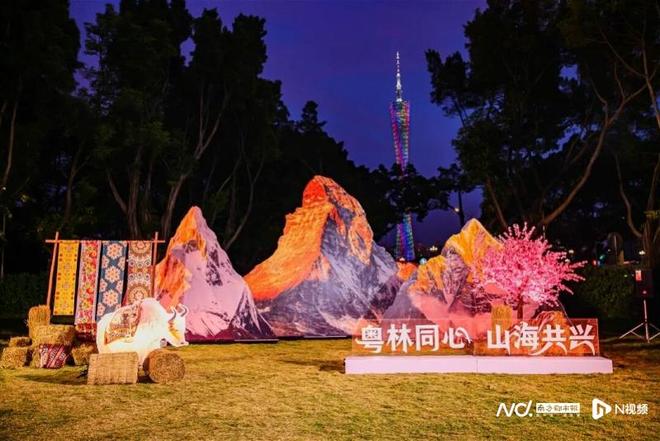
Group 1 - The event "Yuelin Tongxin · Shanhai Gongxing" 2025 Linzhi Economic Development Zone Investment Promotion Conference was held in Guangzhou, Guangdong Province [1] - Four representatives from investment enterprises in Linzhi shared their entrepreneurial stories, highlighting unique products such as "Linzhi Beer" and "Motu Tea" [3] - The event featured a dual venue format with an outdoor section that attracted many citizens, showcasing over 80 specialty products from more than 10 enterprises in Linzhi [3] Group 2 - The event was co-hosted by the People's Government of Linzhi City, Tibet Autonomous Region, and the 11th batch of Guangdong aid team to Tibet, with the Linzhi Economic Development Zone Management Committee as the organizer [5] - Four investment projects were signed during the event, with a total signing amount of 605 million yuan, covering clean energy, green industry, and highland specialty agriculture and animal husbandry [5]

西藏林芝经开区赴广州招商引资 项目签约额逾6亿元
Zhong Guo Xin Wen Wang· 2025-11-27 15:23
Core Viewpoint - The "Yuelin Tongxin · Shanhai Gongxing" 2025 Linzhi Economic Development Zone investment promotion conference was held in Guangzhou, resulting in four investment projects with a total signed amount of 605 million yuan, focusing on clean energy, green industry, and highland特色 agricultural and animal husbandry industries [1] Group 1: Investment and Economic Development - The Linzhi Economic Development Zone is the only economic development zone in Linzhi City, serving as the core platform for local industrial development and investment attraction [1] - The zone is accelerating the construction of a spatial development pattern characterized by "one axis, two cores, and four bases," with a focus on developing clean energy and highland biological industries as the two leading sectors [1] Group 2: Industry Focus - The development strategy includes the collaborative promotion of four supporting industries: green industry, traditional Chinese medicine, modern services, and commercial logistics, forming a "2+4" modern industrial system [1] - The event featured representatives from four enterprises sharing their entrepreneurial stories in Linzhi, highlighting the local business environment [1] Group 3: Exhibition and Community Engagement - The conference utilized an innovative "main venue + outdoor sub-venue" dual venue model, attracting significant public interest with an outdoor exhibition showcasing over 80 unique products from more than 10 enterprises in Linzhi [1] - Featured products included the "highland ginseng" known as Tibetan Huangjing, unique white meat Ganoderma, and Matsutake mushrooms, emphasizing the region's rich natural resources [1]
西藏加快推进医药产业高质量发展
Zhong Guo Jing Ji Wang· 2025-11-26 06:44
Core Insights - The Tibet Autonomous Region is focusing on high-quality development of the pharmaceutical industry and drug safety by 2025, with ongoing revisions to the "95 National Standard for Tibetan Medicine" and submission of quality standard drafts for various products [1][2] Group 1: Industry Development - The Tibet Drug Administration has processed 9,511 approval items and issued over 2,700 electronic certificates, achieving a 100% completion rate for online administrative licensing [2] - There are currently 13 new drug varieties under research in the region, indicating a strong development momentum in Tibetan medicine [2] - The production value of Tibetan medical devices has reached over 10 million yuan, contributing to the innovation and development of Tibetan medicine [2] Group 2: Regulatory and Supportive Measures - The establishment of a one-on-one service guidance system aims to reduce risks and uncertainties for enterprises during market entry [2] - New policies have been introduced to support investment and promote high-quality development in the pharmaceutical industry, including the acceptance of incomplete application materials [2] - The approval of three Class 1 innovative drugs from Haikang Pharmaceutical Group marks a significant breakthrough for innovative drugs in Tibet [2] Group 3: Growth Metrics - Compared to 2020, Tibet has seen an increase of 35 new drug production enterprises and 18 wholesale enterprises, along with 44 new drug varieties and 50 approved numbers [3] - The production value of pharmaceuticals in 2024 is projected to increase by 3 billion yuan compared to 2020, with Tibetan medicine production valued at 3.4 billion yuan [3]
西藏1600余个首方剂信息录入“中国藏药资源库”
Zhong Guo Xin Wen Wang· 2025-11-25 11:35
Core Points - The Tibet Autonomous Region has successfully entered 1,613 first-class prescription information into the "Chinese Tibetan Medicine Resource Database," laying a solid foundation for the protection of Tibetan medicine resources [1][2] - The Tibet Drug Administration is advancing high-quality development in the industry by revising the "95 Tibetan Medicine Standards" and has submitted quality standard revision drafts for 14 varieties to the National Medical Products Administration [1][2] - A total of 80 varieties have been submitted for approval, with 11 varieties already approved, and 44 varieties of standards research have been completed under the "Second Batch of Tibetan Medicine Standards Three-Year Action Plan" [1][2] - The region is actively promoting the development and utilization of Tibetan medicinal materials, having published the first batch of 9 processing varieties and guidelines [1][2] - The Tibet Drug Administration has also conducted the 2025 Tibetan Medicine Practitioner Qualification Examination, with 1,331 participants, receiving widespread recognition [1][2] - The development of the second phase of the smart drug supervision platform has been completed, enhancing the level of drug regulation and achieving seamless integration with national and regional public service systems [2] - The administration has developed technical standards for Tibetan medical devices, leading to the clinical use of five specialized medical devices, which have received positive feedback from Tibetan medical institutions and patients [2]