
蛙

Search documents
年夜饭放冰箱连吃好几天,老人突然头晕抽搐!紧急进ICU
Xin Lang Cai Jing· 2026-02-26 04:14
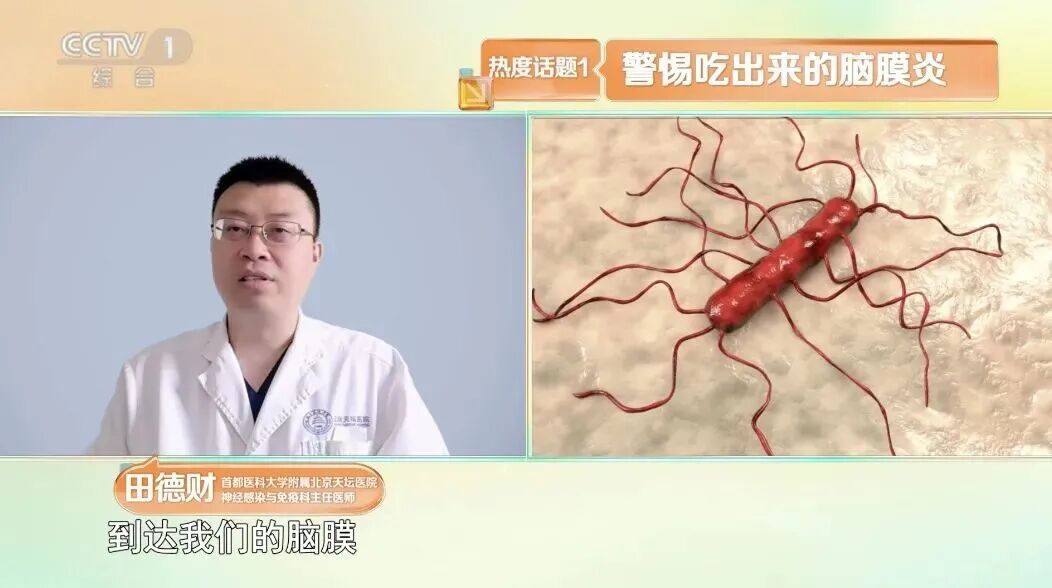
Core Viewpoint - The article highlights the risks associated with consuming leftover food stored in the refrigerator, particularly focusing on Listeria monocytogenes, which can lead to severe health issues such as meningitis, especially in vulnerable populations like the elderly and pregnant women [1][2]. Group 1: Health Risks - Listeria monocytogenes can survive and grow in cold environments, including refrigeration and freezing, making it a significant food safety concern [2][4]. - The infection can lead to severe conditions such as meningitis and sepsis, with a mortality rate ranging from 20% to 30% for affected individuals [2][4]. - Vulnerable groups, including the elderly, pregnant women, and immunocompromised individuals, are at a much higher risk, with pregnant women facing a risk 13 to 100 times greater than the general population [5][6]. Group 2: Food Safety Guidelines - Certain foods are particularly prone to Listeria contamination, including long-stored leftovers, unpasteurized dairy products, and undercooked meats [7]. - It is crucial to separate raw and cooked foods, thoroughly reheat leftovers, and regularly clean the refrigerator to minimize contamination risks [9]. - High-risk individuals should avoid unpasteurized dairy products and undercooked foods to prevent infection [9][10]. Group 3: Symptoms and Medical Attention - Symptoms of Listeria infection can range from mild flu-like symptoms to severe neurological issues, necessitating immediate medical attention if severe symptoms occur [10][11]. - Healthy adults may experience mild symptoms, but the infection can be life-threatening for vulnerable populations, emphasizing the need for careful dietary practices [11].

研判2025!中国稻渔综合种养行业发展现状、种养模式及未来趋势分析:养殖规模持续扩大,产业发展向高质量迈进[图]
Chan Ye Xin Xi Wang· 2025-09-25 01:20
Core Insights - The integrated rice-fish farming model utilizes ecological principles such as mutual benefits and resource complementarity to enhance rice paddy ecosystems, allowing for the simultaneous cultivation of rice and aquaculture, thereby increasing economic benefits and improving product quality and safety [1][2][4] Summary by Categories Overview of Integrated Rice-Fish Farming - Integrated rice-fish farming is a modern ecological circular agriculture model aimed at stabilizing rice production and promoting fishery development, building on traditional rice paddy aquaculture practices [2][4] Scale and Growth - Since the 14th Five-Year Plan, the integrated rice-fish farming industry has seen significant growth, with the farming area expanding steadily and production levels increasing [4][5] - In 2024, the total area for integrated rice-fish farming is projected to reach 46.05 million acres, a year-on-year increase of 2.6% [4][5] - The production of rice is expected to be approximately 23 million tons, while aquatic products are projected at 4.4336 million tons, representing increases of 500,000 tons and 267,100 tons respectively compared to 2023 [5] Regional Distribution - The integrated rice-fish farming is predominantly concentrated in major rice-producing regions such as Hubei, Anhui, and Sichuan [7][8] - Hubei province leads with an area of 8.847 million acres, followed by Anhui with 8.076 million acres [8] Farming Models - The most prevalent model is the rice-shrimp model, covering about 26 million acres, which accounts for 56.46% of the total integrated rice-fish farming area [10] - The rice-fish model is the second largest, with nearly 14 million acres, representing 30% of the total area [10] - The rice-crab model follows with approximately 3 million acres, making up 6.51% of the total area [10] Future Trends - The integrated rice-fish farming sector is expected to continue expanding, transitioning from rapid growth to a focus on high-quality development [12] - Innovations in technology and farming practices are anticipated, with an emphasis on local adaptation and diversification [12] - The integration of various agricultural sectors, including production, processing, and marketing, is expected to deepen, leading to a more comprehensive industry chain [12]
