年夜饭

Search documents
2026春节餐饮消费者洞察
库润数据· 2026-03-06 02:20
Investment Rating - The report does not explicitly provide an investment rating for the industry Core Insights - The report analyzes the changing dynamics of Chinese dining consumption during the Spring Festival, particularly focusing on family reunion dinners and consumer preferences [2] Summary by Sections Trend 1: De-ritualization of Reunion Dinners - The format of reunion dinners is becoming more diverse, with 25.3% of families relying entirely on dining out or takeout during the Spring Festival, while 55.6% opt for a mixed approach of home cooking and dining out [6][7] Trend 2: Miniaturization of Dining Tables - 48.2% of consumers reported that their reunion dinner consisted of small gatherings of 4-6 people, indicating a shift from traditional large family gatherings to more intimate settings [11][12] Trend 3: Need for Both Online and Offline Reservation Methods - 78.9% of families booked their reunion dinners at least one week in advance, with 16.6% booking a month ahead. The most common reservation methods included phone calls (33.5%) and in-person visits to restaurants (30.3%) [16][17] Trend 4: Rationalization of Consumption - 59.4% of consumers noted that the price of reunion dinners increased by 10%-30% compared to regular dining, but 78.9% are willing to accept price increases of up to 20% if quality is maintained [25][26] Trend 5: Return to Authentic Flavors - 35.6% of families chose home-style restaurants or local specialty eateries for their reunion dinners, with a preference for traditional dishes such as fish, chicken, and seafood. 51.8% favored local specialty dishes, while 40.8% preferred innovative fusion cuisines [29][30]
年夜饭放冰箱连吃好几天,老人突然头晕抽搐!紧急进ICU
Xin Lang Cai Jing· 2026-02-26 04:14
Core Viewpoint - The article highlights the risks associated with consuming leftover food stored in the refrigerator, particularly focusing on Listeria monocytogenes, which can lead to severe health issues such as meningitis, especially in vulnerable populations like the elderly and pregnant women [1][2]. Group 1: Health Risks - Listeria monocytogenes can survive and grow in cold environments, including refrigeration and freezing, making it a significant food safety concern [2][4]. - The infection can lead to severe conditions such as meningitis and sepsis, with a mortality rate ranging from 20% to 30% for affected individuals [2][4]. - Vulnerable groups, including the elderly, pregnant women, and immunocompromised individuals, are at a much higher risk, with pregnant women facing a risk 13 to 100 times greater than the general population [5][6]. Group 2: Food Safety Guidelines - Certain foods are particularly prone to Listeria contamination, including long-stored leftovers, unpasteurized dairy products, and undercooked meats [7]. - It is crucial to separate raw and cooked foods, thoroughly reheat leftovers, and regularly clean the refrigerator to minimize contamination risks [9]. - High-risk individuals should avoid unpasteurized dairy products and undercooked foods to prevent infection [9][10]. Group 3: Symptoms and Medical Attention - Symptoms of Listeria infection can range from mild flu-like symptoms to severe neurological issues, necessitating immediate medical attention if severe symptoms occur [10][11]. - Healthy adults may experience mild symptoms, but the infection can be life-threatening for vulnerable populations, emphasizing the need for careful dietary practices [11].


KTV、年夜饭频现“霸王条款”,这份节后维权指南请收好
Xin Lang Cai Jing· 2026-02-26 01:59
Core Insights - The article highlights the surge in consumer complaints following the Chinese New Year holiday, particularly in sectors such as dining, entertainment, and online shopping, indicating that post-holiday disputes are on the rise [1][7]. Consumer Complaints in Various Scenarios - Scenario 1: A consumer faced a price increase of over 30% for a pre-booked New Year's dinner, along with unexpected charges, illustrating deceptive practices in the restaurant industry [2][8]. - Scenario 2: Many consumers experienced issues with KTV and cinema vouchers, where businesses refused to honor them during the holiday period despite no prior notification, raising questions about consumer rights [2][8]. - Scenario 3: Online shopping complaints surged, with nearly 90% of complaints in cities like Shanghai and Guangzhou related to issues such as product quality, delayed shipping, and unfulfilled promotional promises [3][9]. Consumer Rights and Complaint Channels - Consumers are encouraged to utilize various complaint channels, including the official hotline 12315 and platforms like Black Cat Complaints, which provide a neutral space for addressing grievances [4][10]. - The Black Cat platform allows for easy online complaints, offering a user-friendly interface that reduces the time burden on busy consumers [5][12]. - The platform features a visual progress tracker for complaints, enhancing transparency and keeping consumers informed about the status of their issues [12][13]. - Public oversight through platforms like Black Cat can pressure businesses to respond promptly, as poor performance can affect their reputation [12][13]. - Collective complaints can be initiated for widespread issues, increasing visibility and urgency for businesses to address common grievances [6][12].
马年春节长三角假日消费维权畅通有序 良好消费环境持续营造
Xin Lang Cai Jing· 2026-02-24 13:11
Core Viewpoint - The Shanghai Municipal Market Supervision Administration reported a total of 66,715 complaints during the 2026 Spring Festival holiday, with a significant focus on online consumption and various consumer issues [1][2]. Group 1: Complaint Statistics - A total of 66,715 complaints were received across the Yangtze River Delta region during the holiday, with online consumption complaints accounting for 77% and offline for 23% [1]. - In Shanghai alone, there were 16,863 consumer complaints, 4,978 reports, and 69,462 inquiries answered [1]. Group 2: Consumer Demand Characteristics - Overall consumer demand remained stable, with a focus on source governance and multi-channel resolution of disputes [2]. - Online consumption complaints made up 89.8% of the total, primarily related to e-commerce and live-streaming sales, with issues such as quality defects and delivery delays [2]. - Complaints related to traditional New Year's Eve dinner services remained stable at 36 cases, focusing on delivery delays and product quality [2]. - There was an increase in complaints related to green consumption, totaling 488, with a significant portion concerning shared consumption [2]. - Complaints regarding smart consumer products rose to 163, highlighting issues with product quality and after-sales service [2].
春节消费韧性凸显 下沉市场成增长新引擎
Xin Hua Cai Jing· 2026-02-24 07:28
Group 1 - The domestic consumption market showed strong resilience during the 2026 Spring Festival holiday, driven by the holiday economy, with lower-tier markets becoming a structural highlight [1][3] - National key retail and catering enterprises reported an average daily sales increase of 8.6% compared to the same period in 2025 during the first four days of the holiday [1] - The sales of upgraded products surged, with smart wearable device sales increasing by 19.7% in the first three days of the holiday, including a 250% increase in smart glasses and a 48.6% increase in smart blood glucose meters [1] Group 2 - Restaurant reservations for New Year's Eve and Spring Festival gatherings were booming, with a 60% increase in search volume for must-try restaurants during the holiday period [2] - Haidilao reported serving over 14 million customers across its nationwide stores during the nine-day holiday, with significant demand from lower-tier cities [2] - New-style tea beverage consumption also saw explosive growth, with some lesser-known destinations experiencing sales increases of up to 4500% [2] Group 3 - The trend of returning home for the New Year created new consumption scenarios, with many young people opting to stay in hotels in their hometowns, leading to a nearly 20% year-on-year increase in hotel night stays in third to fifth-tier cities [3] - In popular return-home cities like Zhoukou, hotel order volume saw a staggering 77% year-on-year increase, indicating an upgrade trend in accommodation consumption in lower-tier markets [3] - The 2026 Spring Festival holiday highlighted the recovery of first-tier city business districts while lower-tier cities and county markets emerged as new engines for driving domestic demand due to population return and upgraded consumption habits [3]
年夜饭里的新趋势:从家庭厨房到多元体验的变迁
Zheng Quan Ri Bao Wang· 2026-02-23 13:27
Core Insights - The transformation of the traditional Chinese New Year dinner reflects a significant change in consumer behavior and cultural perceptions surrounding the holiday [1][6][7] Group 1: Changing Dining Experiences - The concept of "tourism + New Year dinner" is gaining popularity, with consumers opting for unique dining experiences in scenic locations rather than traditional home-cooked meals [2][5] - Data from the Chongqing Municipal Culture and Tourism Commission indicates that over 14.9 million tourists visited Chongqing during the first four days of the Spring Festival in 2026, showcasing the rise in travel during this period [5] Group 2: Emotional and Cultural Connections - Consumers now view the essence of the New Year dinner as emotional connection, allowing for diverse formats that enhance the experience [6][7] - Interactive activities, such as historical role-playing games, are being embraced, fostering intergenerational engagement and a deeper appreciation of cultural heritage [6][7] Group 3: Market Innovations - Supermarkets and e-commerce platforms are innovating by offering high-end pre-prepared dishes and themed meal kits, catering to younger consumers who seek convenience and quality [7] - The shift in dining preferences illustrates a balance between the need for traditional rituals among older generations and the desire for convenience and personalization among younger consumers [7]
海东:筑牢春节价格与质量“双防线”
Xin Lang Cai Jing· 2026-02-20 17:35
Core Viewpoint - The article highlights the proactive measures taken by Haidong City to ensure a stable and orderly market during the upcoming Spring Festival, focusing on price and quality control in the year-end goods market [1] Group 1: Market Supervision and Quality Control - Haidong City has organized a market supervision inspection to safeguard price and quality during the Spring Festival, ensuring a smooth market operation [1] - The inspection targets key categories such as New Year's Eve dinners, dairy products, meat and meat products, cooking oil, vegetables, seafood, and supermarket-made foods [1] - The city has completed 120 batches of food and agricultural product supervision sampling, with 41 batches of agricultural products and 80 batches of pre-packaged foods tested, finding no non-compliant foods [1] Group 2: Price Monitoring and Consumer Guidance - A total of 19 price monitoring points have been established across six districts in Haidong City to dynamically monitor prices of essential goods like grains, oils, meat, eggs, and vegetables [1] - The city has conducted inspections at 10 supermarkets, addressing over 16 pricing issues [1] - Efforts are made to guide operators towards honest business practices and encourage rational consumer behavior, enhancing awareness of legal rights to ensure price stability during the festival [1]
江西永修:新春消费“开门红”
Xin Lang Cai Jing· 2026-02-20 11:25
Core Insights - The article highlights the vibrant consumer market in Yongxiu County during the Spring Festival, driven by key sectors such as retail, tourism, and dining, contributing to a strong economic start for the first quarter [1] Group 1: Retail and Consumer Experience - Yongxiu Xinwan Tiandi, a core commercial landmark, utilized its 60,000 square meters of diverse offerings to create a unique shopping experience during the Spring Festival, attracting over 230,000 visitors and generating sales exceeding 7 million yuan in the first four days of the holiday [3] - The local chain supermarket, Yongxiu Juhui, ensured a stable supply of essential goods, including grains, meats, and festive gift boxes, maintaining affordable prices to support the community's needs during the holiday [3] Group 2: Tourism and Cultural Activities - Yongxiu County capitalized on the distribution of 600,000 yuan in tourism consumption vouchers to promote activities such as birdwatching events and cultural performances, enhancing visitor engagement at key attractions like Lion Mountain and Dahu Pond [5] - The county's tourism strategy successfully created a positive cycle of attracting visitors, encouraging them to stay, and boosting local dining, accommodation, and retail sectors [5] Group 3: Dining and Community Engagement - Local restaurants, such as Ganjing Mingzao, focused on traditional reunion dinners, offering local specialties to evoke a sense of nostalgia and attract customers during the festive season [7] - The dining establishments promoted civilized dining practices and improved service quality, enhancing the overall dining experience for residents and visitors alike [8]
今年春节,中产大孝子拯救城市酒店
36氪· 2026-02-19 13:05
Core Viewpoint - The article discusses the emerging trend of "reverse Spring Festival travel," where parents travel to their children's cities for the holiday instead of the traditional return to their hometowns, highlighting a shift in family dynamics and consumer behavior during the festive season [17][20][49]. Group 1: Reverse Spring Festival Travel - The trend of parents visiting their children in urban areas during the Spring Festival has become increasingly popular, with a reported 84% year-on-year increase in ticket bookings for reverse travel [17]. - The cost of tickets for reverse travel is generally 30%-50% lower than traditional return tickets, making it a more economical choice for families [18]. - This shift is changing the definition of family reunions, as urban hotels are becoming preferred venues for celebrations, providing a comfortable and convenient alternative to cramped family homes [19][21][25]. Group 2: Hotel Industry Response - Hotels are adapting to this new demand by offering family-oriented packages and services, such as special dining options and room configurations that cater to larger family groups [28][43]. - The trend has led to a significant increase in bookings for family suites, with many guests requesting additional amenities like extra beds or connecting rooms [26]. - Hotels are also creating unique local experiences for families, such as guided tours and cultural activities, to enhance the stay for visiting parents [45]. Group 3: Social Dynamics and Emotional Aspects - The hotel environment is facilitating social interactions among parents from different regions, allowing them to share experiences and form connections, which serves as emotional support for those visiting unfamiliar cities [46]. - The article raises questions about the potential emotional impact on parents who may feel a sense of loss when returning to their hometowns after experiencing the comforts of hotel living [48]. - This trend reflects a broader societal shift in how families express care and maintain connections, moving away from traditional practices towards more modern, service-oriented solutions [50][51].

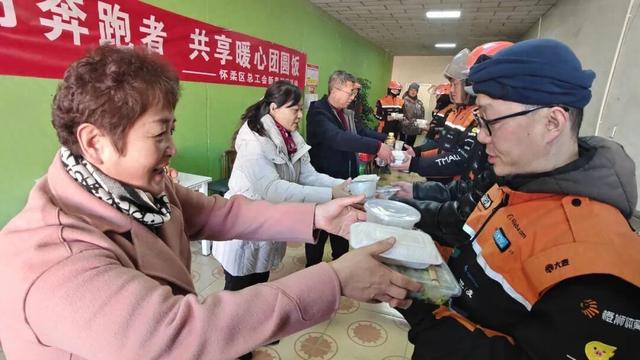
能带回家的年夜饭为外卖骑手添温暖
Xin Lang Cai Jing· 2026-02-19 04:33
Group 1 - The district labor union provided over 160 special New Year's Eve meals to delivery riders working during the Spring Festival, marking the first time such an initiative was implemented [3] - The meals were designed for portability, allowing riders to enjoy them on-site or take them home, symbolizing care and appreciation for their hard work [3][8] - Riders expressed happiness and gratitude for the meals, highlighting the importance of feeling remembered and valued while working during the holiday [8] Group 2 - One rider, who has been working on New Year's Eve for three consecutive years, shared his intention to bring the meal home to his girlfriend, also a delivery rider, emphasizing the personal sacrifices made during the holiday [5][6] - The operational changes this year required riders to work in shifts, preventing them from having a traditional reunion dinner with their families [6] - The head of the delivery station noted that the meals represented more than just food; they conveyed a sense of community and support for the riders [8]