
血脂检查

Search documents
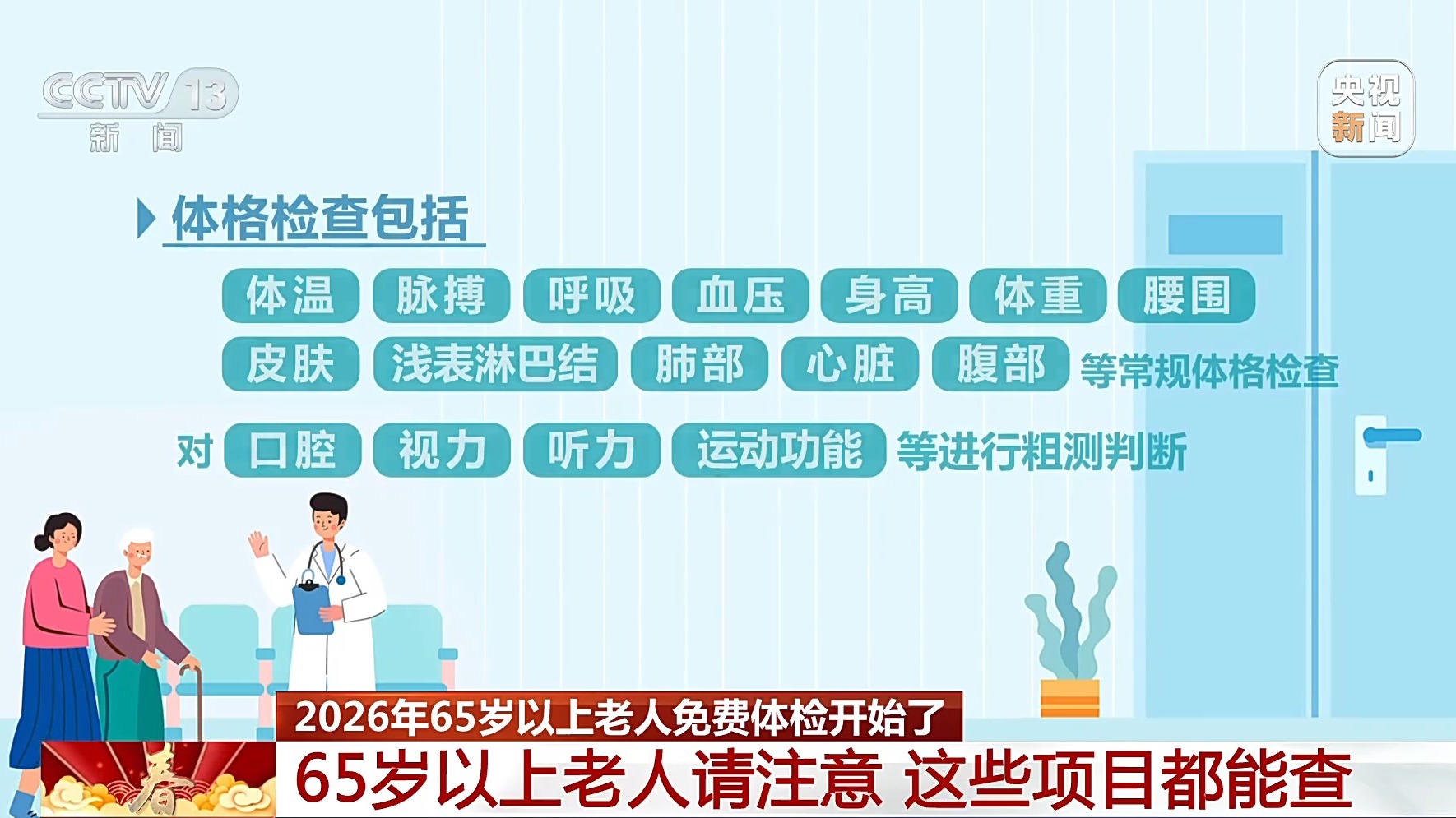
65岁以上老人免费体检启动 一文了解检查项目和注意事项
Yang Shi Xin Wen· 2026-02-15 00:39
Core Viewpoint - The free health check program for individuals aged 65 and above has commenced in 2026, funded by the national treasury, and has been implemented since 2009 [1] Group 1: Health Check Details - The physical examination includes standard checks such as temperature, pulse, respiration, blood pressure, height, weight, waist circumference, skin, superficial lymph nodes, lungs, heart, and abdomen, along with basic assessments of oral health, vision, hearing, and mobility [3] - Auxiliary examinations consist of routine blood tests, urine tests, liver function, kidney function, fasting blood glucose, blood lipids, electrocardiograms, and abdominal ultrasound (liver, gallbladder, pancreas, spleen). Starting in 2025, chest X-ray and glycated hemoglobin tests will be added [5] Group 2: Recommendations for Elderly Health Checks - It is advised that elderly individuals focus on cardiovascular checks, including carotid ultrasound and cardiac ultrasound, with additional tests like 24-hour Holter monitoring and coronary CT as needed [10] - Cancer screenings should include chest CT, abdominal ultrasound, and gastrointestinal endoscopy, with serum tumor marker tests as references. Women should pay attention to thyroid, breast, ovarian, and cervical cancer screenings, while men should focus on thyroid and prostate screenings [12] - Bone density tests are recommended for men over 50 and women over 45 [12] Group 3: Additional Health Considerations - Other tests may include Helicobacter pylori detection and fundus examination. A comprehensive geriatric assessment should also be conducted, evaluating physical condition, functional status, mental health, and social environment [15] - Certain medications may affect blood test results, such as antibiotics and proton pump inhibitors, and it is recommended to pause these medications before the health check if not necessary [17]

朝“问”健康丨30岁以后体检有哪些“必查项”?专家教你避开这些误区
Yang Shi Xin Wen· 2025-09-27 02:13
Core Insights - Different age groups require tailored health check-up items to effectively monitor health risks and conditions [1] Group 1: Health Check-up Recommendations by Age - For individuals aged 30-40, the focus should be on monitoring blood pressure, blood sugar, and blood lipids due to lifestyle factors leading to obesity [3][4] - Women in this age group should prioritize gynecological and breast examinations, while men should start prostate checks after age 35 [6][7] - For those aged 40-50, cardiovascular diseases and cancer risks increase, necessitating heart-related tests and cancer screenings [6][7] - Individuals over 50 should begin screening for bone density and metabolic levels, as well as gastrointestinal diseases and cardiovascular conditions [9][11] Group 2: Common Misconceptions about Health Check-ups - It is a misconception that more expensive tests yield better results; the focus should be on tests that are appropriate for individual health needs [13][15] - Waiting until experiencing discomfort before getting a check-up is incorrect; regular check-ups are essential for early disease detection [15][17] - Post-check-up, it is crucial to thoroughly review the report and seek further medical advice for any significant findings [17][19]

朝“问”健康丨体检前必看 不同年龄段“必查项”有哪些?
Yang Shi Xin Wen· 2025-09-27 01:48
Core Points - Different age groups have distinct health check priorities, emphasizing the need for tailored medical examinations based on age Group 1: Health Check Focus by Age Group - For individuals aged 30-40, the focus should be on monitoring blood pressure, blood sugar, and blood lipid levels due to lifestyle factors that may lead to obesity [1][2] - Women in this age group should prioritize gynecological and breast examinations [3] - Men over 35 should include prostate checks every 1-2 years [4] Group 2: Health Check Focus for Ages 40-50 - The 40-50 age group is considered a "high-risk" period for health, with increased risks for cardiovascular diseases and cancer [5] - Essential tests include cardiac ultrasound and electrocardiograms [6] - Lung CT scans are recommended for lung cancer screening, while women should focus on breast and gynecological health [7] - Men should pay attention to gastrointestinal diseases and consider endoscopy for cancer screening [8] Group 3: Health Check Focus for Ages 50 and Above - Individuals over 50 should prioritize bone density and vascular health checks due to declining bodily functions [10] - Screening for bone density and metabolic levels is advised [11] - Regular gastrointestinal examinations are crucial to monitor for conditions like atrophic gastritis and polyps [12] - Cardiovascular health screenings, including carotid ultrasound and cardiac tests, are also important [13] - Eye examinations should not be overlooked [14]
30岁以后体检有哪些“必查项”?
Yang Shi Wang· 2025-09-27 01:32
Group 1 - The core focus of health check-ups varies by age group, with specific tests recommended for different age ranges [1][5][9] - For individuals aged 30-40, monitoring blood pressure, blood sugar, and blood lipids is crucial, with recommendations for semi-annual checks [2][3] - Women in this age group should prioritize gynecological and breast examinations, while men should begin prostate checks after 35 [4][6] Group 2 - For the 40-50 age group, cardiovascular health and cancer screenings become critical, as this period is identified as a "high-risk" health phase [5][6] - Recommended tests include cardiac ultrasounds, ECGs, and lung CT scans to screen for lung cancer, alongside breast and cervical cancer screenings for women [6][7] - Individuals with a family history of tumors should undergo early screenings [8] Group 3 - For those aged 50 and above, bone density and vascular health are emphasized, with a focus on osteoporosis and gastrointestinal diseases [9][10] - Regular screenings for bone density and gastrointestinal issues, including gastroscopy, are advised, along with cardiovascular health checks [10] - Eye examinations are also recommended for this age group [10] Group 4 - Common misconceptions about health check-ups include the belief that more expensive tests yield better results, which is not necessarily true [11][12][13] - It is incorrect to wait until feeling unwell to seek check-ups, as early detection is key to effective intervention [13] - Post-examination, individuals should carefully review their reports and seek further medical advice for any significant findings [13]