西藏藏红花

Search documents
京东消费观察看“流动的年货”:异地年货订单同比增长近2倍,合肥、济南、东莞等地收到更多外省包裹
Zhong Jin Zai Xian· 2026-02-11 09:22
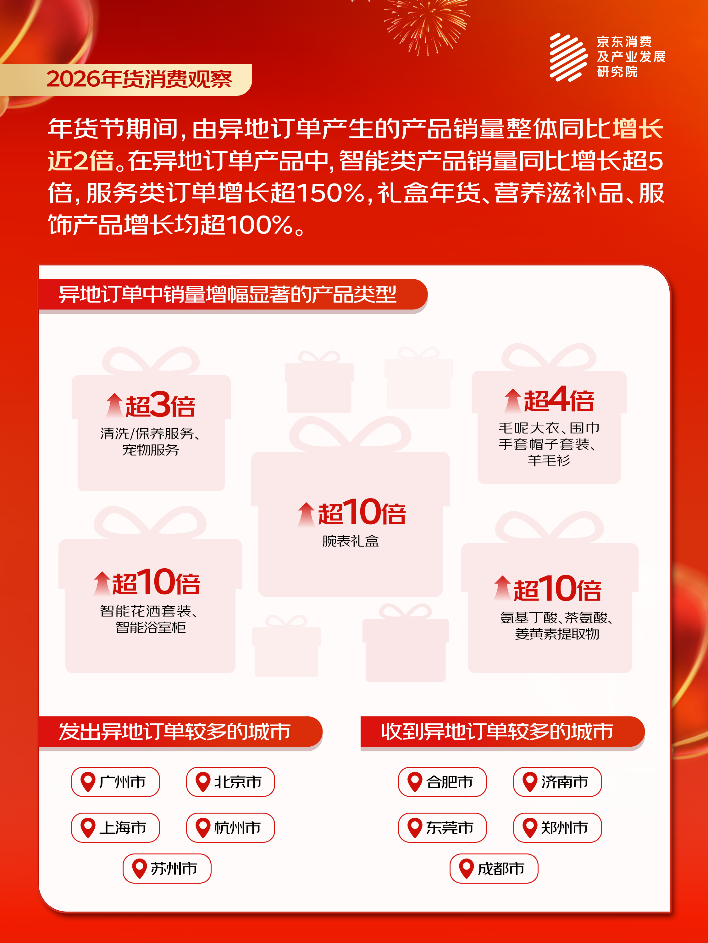
Core Insights - The article highlights the significant increase in cross-regional orders for traditional Chinese New Year goods, with overall sales growth of nearly 200% since the start of the festival season [4][6] - The trend reflects a shift in consumer behavior, where younger generations are sending not only traditional foods but also modern products and services to their families, indicating a blend of cultural heritage and contemporary lifestyle [2][8] Group 1: Cross-Regional Order Trends - Cross-regional orders have seen a nearly 200% increase in product sales, with specific regions like Tibet, Xinjiang, and Yunnan experiencing over 300% growth in order volume [4][6] - Major cities such as Guangzhou, Beijing, and Shanghai are the primary sources of these orders, while cities like Hefei, Jinan, and Zhengzhou are the main recipients [6][9] Group 2: Product Categories and Consumer Preferences - The diversity of products in cross-regional orders has expanded from traditional foods to include smart products and health supplements, with smart toilets and watch gift boxes seeing sales growth exceeding 1000% [2][8] - Local specialties have also gained traction, with overall sales growth of over 140%, particularly in Zhejiang, which saw a 571% increase [9][12] Group 3: Consumer Motivations and Cultural Significance - Consumers prioritize unique flavors and authenticity when selecting local specialties, with 56.6% emphasizing the importance of "authentic taste" [3][11] - The emotional connection to traditional foods and the desire to share these experiences with family are significant motivators for purchasing [15]


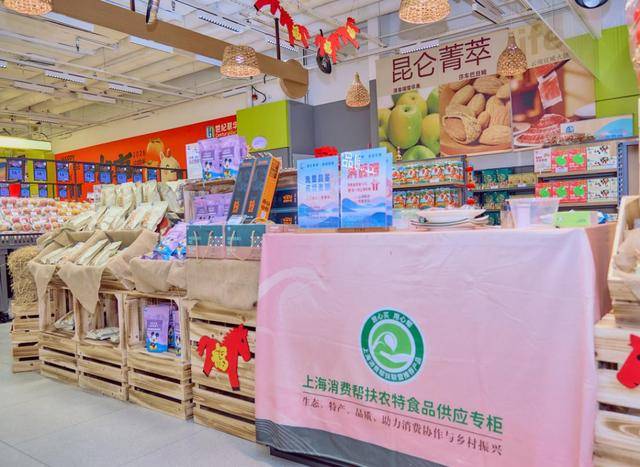
“昆仑有礼·山海有信”联华年货节启幕,60多款特色产品带着福利来上海
Sou Hu Cai Jing· 2026-02-01 15:27
Core Viewpoint - The "Kunlun Youli · Shanhai Youxin" Lianhua New Year Goods Festival and the launch of the "Kunlun Jingcui" market platform aim to introduce high-quality specialty products from regions like Xinjiang, Tibet, Qinghai, and Yunnan into the mainstream consumer market in Shanghai, showcasing a collaborative effort to promote regional development and consumer engagement [1][11]. Group 1: Event Overview - The event commenced on January 30 and will run until March 4, featuring a three-phase offline interaction designed to create emotional resonance with consumers [5]. - The festival includes a variety of products, such as Xinjiang Zepu apples and Tibetan saffron, emphasizing quality and innovation in product offerings [3][5]. Group 2: Product Offerings - The festival showcases over 60 products from nearly 20 brands, utilizing a three-tier empowerment model to enhance product value from origin to market [1][3]. - Innovative products include upgraded packaging for Zepu organic dates and collaborations with well-known brands like Disney, indicating a shift from traditional specialties to branded products [3]. Group 3: Marketing and Promotion - A comprehensive online and offline marketing network has been established, featuring promotions such as gift offerings and loyalty points [7]. - The "Qingxun Plan" serves as a core support mechanism, facilitating market entry for products with low-risk trial opportunities and one-on-one coaching for local producers [7]. Group 4: Collaborative Efforts - Various channel representatives have united to promote the "Kunlun Jingcui" platform, leveraging real sales data to enhance product credibility and expand market reach [9]. - The initiative is supported by multiple government and business entities, marking a significant shift from policy-driven assistance to market-driven collaboration [11].