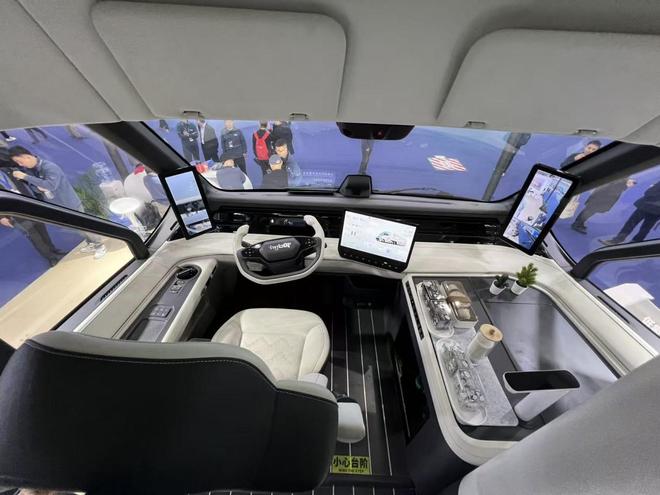
解放J6L纯电饲料运输车

Search documents
中国商用车迈向拐点:多元路线竞技、结构重塑、出海格局重构
Guan Cha Zhe Wang· 2025-11-12 09:28
Core Insights - Chinese commercial vehicles are accelerating their global presence and reshaping the global commercial vehicle industry rules [1][47] Group 1: Industry Trends - The 2025 China International Commercial Vehicle Show (CCVS) highlights the industry's shift towards "high-end, intelligent, and green" vehicles, showcasing advancements across the entire commercial vehicle supply chain [3][22] - The number of new energy vehicles (NEVs) at the exhibition has surpassed that of traditional fuel vehicles for the first time, indicating a market-driven transition in the commercial vehicle sector [3][22] - The market is witnessing a diversification of energy sources, with electric, hydrogen, and hybrid vehicles coexisting due to the complex usage scenarios and cost sensitivity of commercial vehicles [4][21] Group 2: Technological Innovations - Major manufacturers like FAW Jiefang, Dongfeng, and BYD are showcasing their electric models, with FAW Jiefang presenting five electric models, including the J6L tractor [8][10] - Dongfeng is introducing Huawei's megawatt supercharging technology to enhance charging efficiency for its heavy-duty trucks [12] - The exhibition features advancements in hybrid systems, such as FAW Jiefang's "H Power Domain" which improves fuel efficiency by 30% [16][28] Group 3: Market Dynamics - In October, the domestic sales of new energy commercial vehicles accounted for 30.9% of total commercial vehicle sales, reflecting a growing market presence [22] - The entry of new players in the NEV sector has spurred technological innovation, with over 20 new electric vehicle manufacturers established since 2020 [22][24] - The demand for electric commercial vehicles in Europe is rising, providing opportunities for Chinese manufacturers to leverage their advantages in the new energy supply chain [39][41] Group 4: Global Expansion Challenges - Despite significant growth in exports, Chinese commercial vehicles face challenges such as technological homogeneity and user concerns regarding support systems [42][44] - The industry is urged to shift from price competition to value competition, focusing on quality and compliance in overseas markets [44][45] - Companies are adopting strategies for global expansion, including localized production and tailored product offerings for different regions [45][47]