设计师灯具

Search documents
奢侈品消费理性回归,“双十一”展现三大新趋势
Huan Qiu Wang· 2025-11-11 02:09
Core Insights - Luxury goods consumption in China is showing a rebound during this year's "Double Eleven" despite a challenging overall consumption environment, indicating a shift towards rational and diversified consumer behavior [1][2] - The demand for luxury goods has become distinctly segmented into three main consumer groups: the "tasting tribe" seeking new products, the "experiential faction" valuing personalized aesthetics, and the "rational faction" focused on high cost-performance [1][2] Group 1: Market Trends - Major e-commerce platforms report significant growth in luxury goods sales, with Tmall's luxury brand transactions achieving double-digit year-on-year growth during "Double Eleven" [1] - Bain & Company forecasts a general decline in luxury brand performance by mid-2025, yet highlights the resilience of Chinese consumer demand for luxury products [1] Group 2: Consumer Behavior - Modern consumers are increasingly willing to pay for experiences that provide emotional value, leading to a preference for discount channels over full-price stores for entry-level luxury goods [2] - The interaction between brands and younger consumers, particularly Millennials and Generation Z, has fundamentally changed, with a focus on style and emotional resonance rather than brand logos [2] Group 3: Product Categories - There has been rapid growth in categories such as ice sports and high-end home goods during "Double Eleven," with designer lighting, premium tableware, and home fragrances leading the charge [2] - The luxury goods market is evolving from a status symbol to emphasize practicality, cost-effectiveness, and emotional value [2]
双十一奢侈品消费观察:情绪价值、高性价比、增值服务成消费主流
2 1 Shi Ji Jing Ji Bao Dao· 2025-11-10 06:26
Core Insights - The luxury goods market is experiencing a downturn, with Bain & Company predicting a decline in global luxury sales by 2% to 5% by mid-2025, marking the first significant slowdown since 2009 [5] - Despite the overall market decline, luxury goods have gained renewed consumer interest during the Double Eleven shopping festival, with significant year-on-year growth reported by various e-commerce platforms [4][6] Market Trends - The luxury market in China and the U.S. has shown a downward trend, influenced by macroeconomic factors and changing consumer behaviors, particularly among younger consumers who are becoming more rational in their spending [5][8] - The demand for luxury goods is diversifying, with consumers increasingly valuing newness, personalized experiences, and high cost-performance ratios, leading to a reshaping of the luxury consumption landscape [5][8] E-commerce Performance - Tmall reported double-digit growth in luxury brand sales during the Double Eleven event, with over 200 major brands launching exclusive seasonal products [6] - JD.com noted a significant increase in sales for luxury down jackets and jewelry, with some categories experiencing growth of 1.5 times year-on-year [6] - Vipshop has also seen over 30% year-on-year growth in luxury goods sales, driven by the appeal of discounted luxury items [6][3] Consumer Behavior - The perception of luxury is shifting from brand-centric to value-oriented, with consumers prioritizing emotional value and experiences over mere brand prestige [8][10] - The rise of discount luxury shopping channels is notable, as consumers seek entry-level luxury products at competitive prices [8][9] Industry Innovations - The introduction of independent authentication services by China Inspection and Quarantine (CIQ) on e-commerce platforms aims to enhance consumer confidence in discounted luxury goods [9] - The luxury market is increasingly influenced by younger generations, who prioritize style and personal resonance with brands over traditional brand loyalty [10]


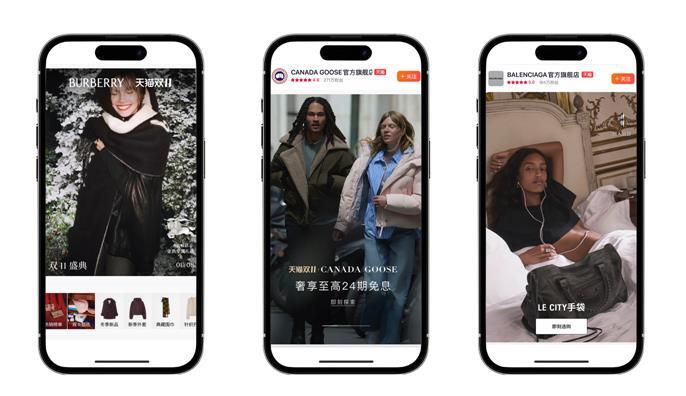
抓住持续增长机会,全力上新的奢侈品牌在天猫双11获双位数增长
Zhong Guo Jing Ji Wang· 2025-11-05 06:25
Core Insights - Luxury brands are experiencing significant growth during this year's Double 11 shopping festival, with overall sales increasing by double digits year-on-year on Tmall [1] - The shift in luxury consumption is towards lifestyle and quality enhancement, with a notable rise in demand for winter sports gear and high-end home goods [3][5] Group 1: Sales Performance - Tmall's first cycle data shows that luxury brands like Balenciaga, Burberry, and Moncler achieved high double-digit growth in sales [1] - The luxury segment for winter sports equipment saw over 80% year-on-year growth since October, driven by brands like Balenciaga and Zegna [3] - High-end home goods are emerging as a new growth area, with brands like Wedgwood and HAY also reporting double-digit sales increases [3] Group 2: Consumer Trends - Millennials and Gen Z are becoming the main consumers of luxury goods, seeking brands that resonate with their personal aesthetics rather than just logos [5] - Coach experienced a three-digit percentage increase in sales on Tmall's Double 11 opening day, attributed to its unique product lines appealing to younger consumers [5] - The introduction of new products is a key driver for growth, with over 200 luxury brands launching more than 10,000 exclusive items during this year's event [5]