
诗

Search documents
忽与一樽酒 宇宙一何悠——再解陶渊明《饮酒》
Xin Lang Cai Jing· 2026-01-15 20:25
Group 1 - The core idea of the articles revolves around the philosophical reflections of Tao Yuanming, emphasizing the concepts of "truth" and "nature" as central to his poetry and life philosophy [1][12][20] - Tao Yuanming's poetry often expresses a deep awareness of the fleeting nature of life and the inevitability of death, contrasting the transient human experience with the vastness of the universe [8][9][11] - The notion of "naturalness" is highlighted, where Tao Yuanming advocates for a life aligned with nature, rejecting societal norms and the pursuit of fame [15][20][28] Group 2 - The articles discuss the influence of Zhuangzi's philosophy on Tao Yuanming, particularly the idea of embracing the natural flow of life and death without fear [1][12][14] - Tao Yuanming's use of wine in his poetry symbolizes a deeper connection to life and a means of transcending societal constraints, reflecting his desire for freedom and authenticity [24][25][31] - The imagery of nature, such as mountains and birds, serves as a backdrop for Tao Yuanming's exploration of inner peace and the joy found in simplicity [28][29][30]

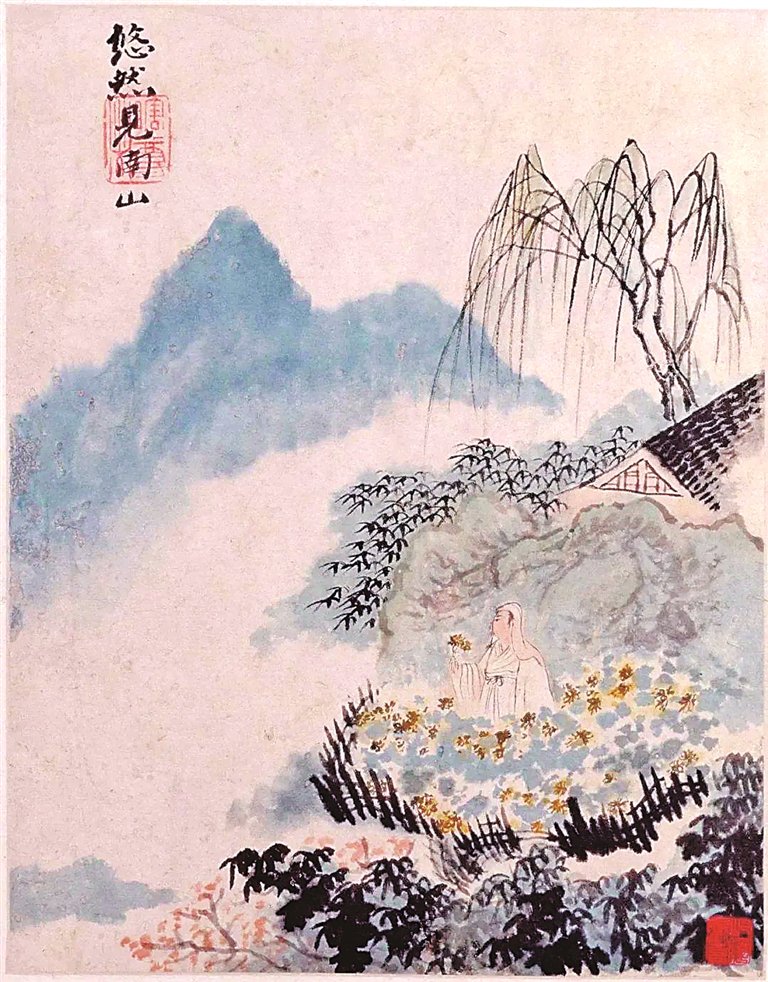
古诗中的德性之美(文思)
Ren Min Ri Bao· 2025-12-14 22:49
Group 1 - The core idea emphasizes the importance of moral character in poetry, as it is seen as a vital path for cultivating virtue in Chinese tradition [1][4] - Confucius highlighted the political and educational functions of poetry, asserting that it can inspire, observe, and influence social norms and familial duties [1][4] - The integration of poetry and moral values has been a unique tradition in Chinese poetics, with historical figures like Han Yu and Wang Anshi reinforcing the connection between poetry and ethics [1][4] Group 2 - Poetry serves as a medium for expressing individual emotions while connecting them to broader moral concerns, exemplified by poets like Qu Yuan, whose patriotic sentiments resonate through his works [2][3] - The pursuit of moral integrity is depicted as a fundamental aspect of a poet's identity, with historical references to the idea that moral character transcends life itself [3] - The tradition of poetry as a means of moral education has been long-standing in China, with scholars believing that poetry can cultivate virtues and refine one's character [4]