
诗路高铁

Search documents
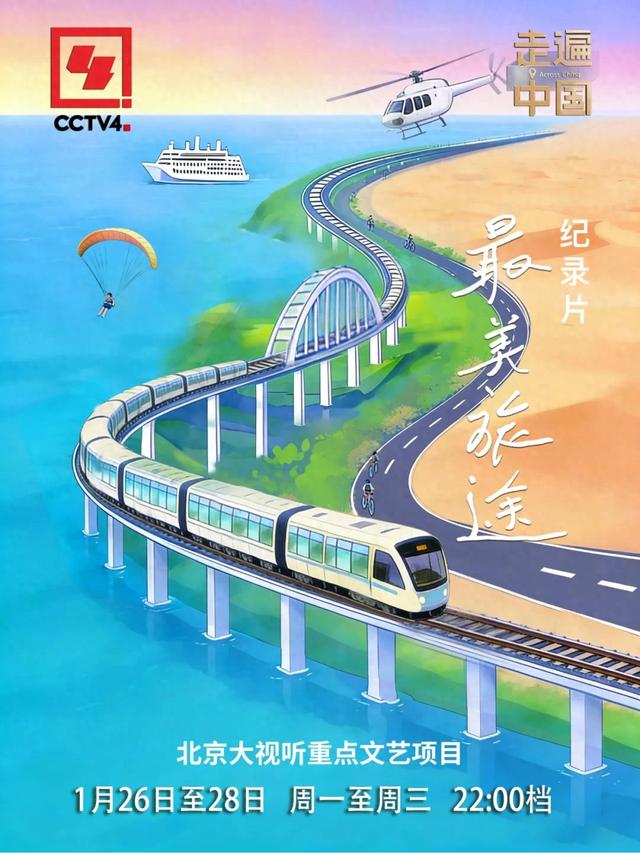
《最美旅途2026》:用纪实视听勾勒交通文旅的融合图景
Xin Lang Cai Jing· 2026-02-08 12:21
Core Concept - The documentary "The Most Beautiful Journey 2026" aims to elevate the integration of transportation and cultural tourism, transforming travel from mere sightseeing to a deeper cultural experience [2] Group 1: Aesthetic Transformation - The documentary redefines transportation tools as carriers of emotion and culture, exemplified by the "Silk Road Dream Train" which features artistic designs reminiscent of Dunhuang murals [3] - The "Xianglong Island" cruise ship serves as a floating cultural hub, enhancing the travel experience through thematic elements inspired by marine life [3] Group 2: Human Stories and Cultural Depth - The documentary adopts an "experience officer" perspective, showcasing personal stories that connect individuals to their cultural heritage, such as a veteran's tribute to his service while on a cruise [4] - Encounters with local figures, like fishermen and poets, highlight the intersection of technology and humanity, emphasizing the cultural significance of modern infrastructure [4] Group 3: Aesthetic Experimentation - The documentary illustrates how modern transportation reshapes perceptions of time and space, contrasting high-speed trains with low-altitude flying experiences to explore different dimensions of travel [5] - It emphasizes that modern transportation not only facilitates distance but also enriches the depth of observation and appreciation of the surroundings [5] Group 4: Symbolism of Land and Sea - The first episode constructs a narrative around the duality of desert and ocean, representing the historical and cultural richness of China [6] - This duality reflects the geographical and spiritual essence of Chinese civilization, inviting viewers to expand their understanding of "home" [7][8] Group 5: Impact on Local Communities - The documentary highlights the transformative impact of transportation infrastructure on local livelihoods, as seen in the "Rainbow Road" in Zhejiang, which connects isolated communities to broader economic opportunities [9] - The road symbolizes a lifeline for families, revitalizing local economies and fostering a sense of community [10]

旅游列车,让路程变成旅程(新语)
Ren Min Ri Bao· 2025-05-11 22:30
Core Insights - The tourism train sector is experiencing significant growth, with 1,860 trains planned for 2024, transporting over 1 million passengers, and a 30% year-on-year increase in the first quarter of this year [1][2]. Group 1: Tourism Train Features - Tourism trains are designed to enhance the travel experience, transforming the journey into a cultural exploration with themed trains offering performances and interactive learning spaces [1][2]. - The trains provide a comfortable travel experience with features like "one bed to the end" and round-trip same-bed arrangements, making them convenient mobile hotels [1][2]. Group 2: Target Demographics - A significant portion of tourists on these trains are elderly, accounting for nearly 80% of passengers, prompting adaptations such as accessibility improvements and tailored services [2][3]. - The focus on personalized services includes medical assistance, dining options, and slower-paced itineraries to cater to the needs of older travelers [2]. Group 3: Challenges and Opportunities - The tourism train industry faces challenges such as enhancing travel quality, optimizing routes, and expanding customer bases while ensuring sustainable operations [3]. - There is a call for policy improvements and practical explorations to diversify offerings, including the introduction of various themed trains and support for cultural performances and heritage skills [3].