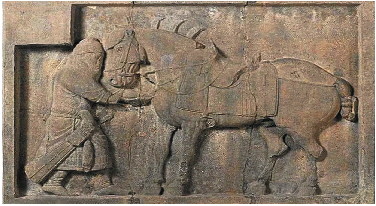
昭陵六骏

Search documents
李世民的昭陵六骏石刻,为何混入了一个人?
Xin Lang Cai Jing· 2026-02-27 10:13
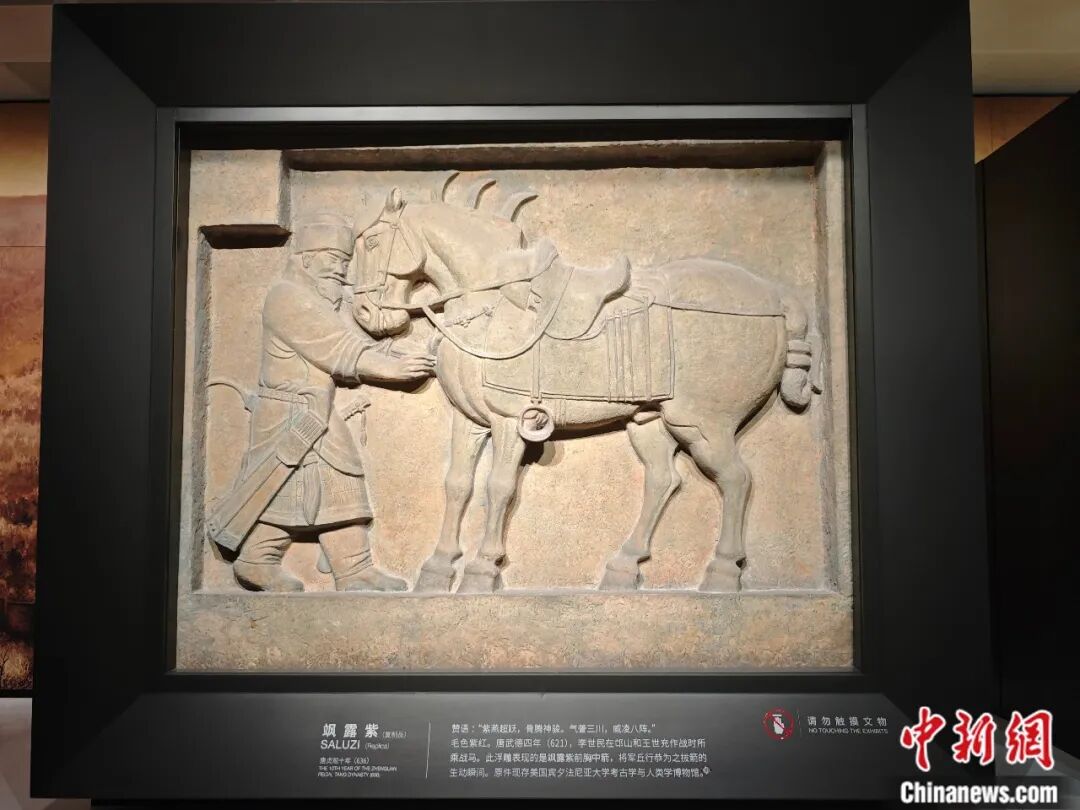
Core Viewpoint - The article discusses the significance of the Six Steeds of the Tang Taizong's mausoleum, highlighting their historical, cultural, and artistic value as symbols of military achievements and cross-cultural exchanges in ancient China [2][11]. Group 1: Historical Significance - The Six Steeds were chosen by Tang Taizong Li Shimin to accompany him in his mausoleum due to their special status as his "battle companions" that contributed to his military successes [3][4]. - Each steed represents a key battle, with the depiction of "Saluzi" illustrating a moment of bravery during the Battle of Luoyang in 621 AD [4][11]. - The selection of these specific steeds for the mausoleum marks a departure from traditional practices, creating a personal monument to military achievements rather than adhering strictly to ceremonial norms [9]. Group 2: Cultural and Artistic Value - The Six Steeds are considered a pinnacle of Tang Dynasty stone carving art, showcasing the collaboration of top artists and the integration of painting, literature, and calligraphy [7][8]. - The artistic techniques used in the carvings reflect the cultural prosperity and political stability of the early Tang Dynasty, capturing the aesthetic spirit of the era [8][9]. - Over time, the Six Steeds have come to symbolize the martial spirit and national strength of the Tang Dynasty, embodying the openness and inclusiveness of the era [8][11]. Group 3: Cross-Cultural Exchange - The introduction of superior horse breeds from the Western Regions significantly influenced military strategies and cultural exchanges in ancient China [10][11]. - The names of the steeds, derived from Turkic and Persian languages, highlight the cultural interactions and influences during the Tang Dynasty [10][11]. - The Six Steeds serve as tangible evidence of the cross-cultural exchanges that occurred during the Tang Dynasty, reflecting its openness to foreign influences [10][11]. Group 4: Legacy and Modern Interpretation - The phrase "Xiang Teng Bai Shi" (Galloping Through the Centuries) encapsulates the enduring spirit and cultural significance of the Six Steeds, emphasizing their continued relevance in contemporary culture [12][13]. - The Six Steeds have inspired generations of artists and scholars, ensuring their stories and representations remain alive in cultural memory [12][13]. - They have evolved from mere stone carvings to symbols of loyalty, courage, and the grandeur of the Tang Dynasty, representing a cultural totem that transcends time [12][13].

东西问丨马,何以成为东西共认的“英雄标配”?
Zhong Guo Xin Wen Wang· 2026-02-17 01:56
Group 1 - The article discusses the universal symbolism of horses as a representation of heroes in both Eastern and Western cultures, highlighting their shared significance across different civilizations [3][5][10] - It emphasizes the historical importance of horses in human civilization, noting that their domestication dates back approximately 5,500 years, while their evolutionary history spans around 56 million years [5][7] - The article illustrates how horses have been integral to heroic narratives, with examples from literature and history showcasing their loyalty and companionship to heroes [8][10] Group 2 - The text mentions specific historical and literary references to famous horses, such as the Red Hare of Guan Yu and Bucephalus of Alexander the Great, underscoring their legendary status [5][8] - It highlights the emotional bond between heroes and their horses, often depicted in stories where horses share the fate of their riders, reflecting deep loyalty and companionship [10] - The article concludes by stating that the admiration for heroes and their horses transcends cultural boundaries, representing a shared human experience [10]
名将配名马
Xin Lang Cai Jing· 2026-02-16 17:14
Core Viewpoint - The stories of famous generals and their horses throughout Chinese history illustrate a deep bond and mutual loyalty, transcending mere companionship to symbolize ideals of loyalty, bravery, and honor [1][2][3][4][5] Group 1: Historical Figures and Their Horses - Xiang Yu, the Western Chu overlord, is famously associated with his black steed, the "Wu Zhu," which played a crucial role in his military campaigns and symbolizes his tragic fate [1] - The legendary "Chi Tu" horse of the Three Kingdoms period, known for its loyalty, served both Lü Bu and Guan Yu, highlighting the themes of loyalty and honor in their narratives [1][2] - Qin Qiong's yellow horse, despite its frail appearance, exemplified the bond between man and horse, showcasing their shared struggles and triumphs [2] Group 2: Cultural Significance - The stories of these horses often blend historical fact with artistic embellishment, transforming them into cultural symbols that embody virtues such as loyalty and bravery [4] - The artistic representations of war horses, such as the six steeds of Emperor Taizong of Tang, serve as a testament to the martial spirit and the deep emotional connections between generals and their mounts [2][4] - The narratives surrounding these horses reflect a broader cultural appreciation for the values they represent, making them enduring symbols in Chinese literature and history [4][5]
【热气腾腾的中国年】马年说马丨昭陵六骏中的“鲜衣怒马少年时”
Xin Lang Cai Jing· 2026-02-16 10:55
Group 1 - The article highlights the historical significance of the six legendary horses known as "Zhaoling Liujun," which were closely associated with Emperor Taizong of Tang, Li Shimin, during his military campaigns [1][4] - In the tenth year of the Zhenguan era (636 AD), Emperor Taizong ordered the carving of these six horses to commemorate their contributions in battles, showcasing his deep bond with them [1][3] - The six horses are described in detail, including their colors and the specific battles they were involved in, reflecting their importance in the military history of the Tang dynasty [3][4] Group 2 - Four of the six horses were injured in battle, particularly during the fierce confrontations against Wang Shichong and Dou Jiande, emphasizing the intensity of these conflicts [4] - The presence of these horses in battle alongside the emperor illustrates his bravery and leadership, as he fought alongside his soldiers rather than remaining distant from the frontline [4] - The six horses serve as a symbol of Emperor Taizong's military achievements and a nostalgic reminder of his youthful vigor and past glories [4]
骁腾有如此,万里可横行
Xin Lang Cai Jing· 2026-01-30 18:43
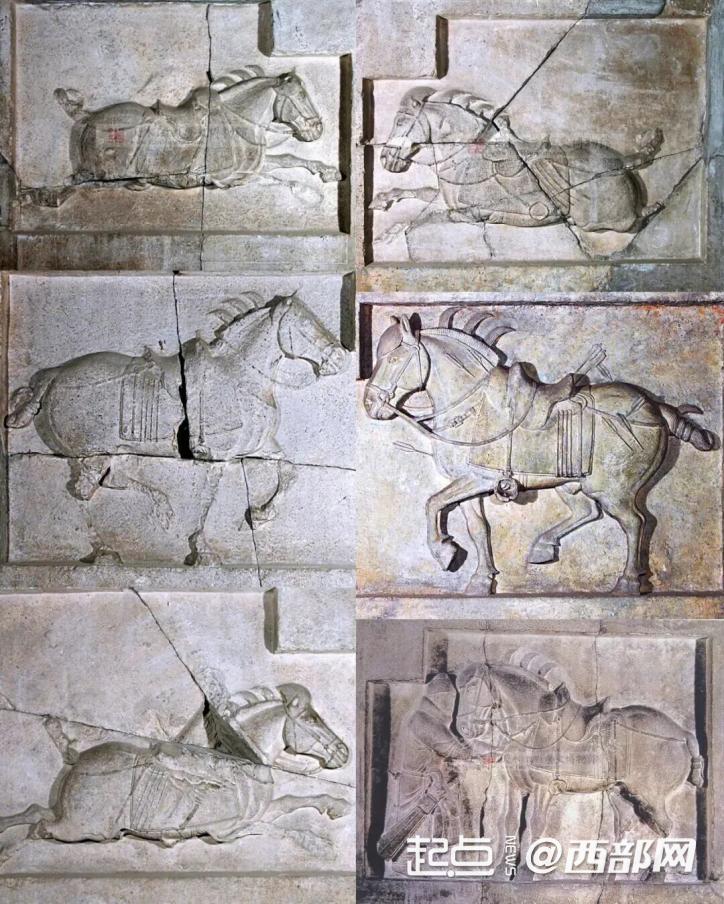
Core Insights - The article explores the historical significance of famous horses in Chinese history, illustrating how these steeds symbolize the ambitions of emperors and the fate of empires [2][3][4][6][7][10][12][13][14][15] Group 1: Historical Context - The obsession of Emperor Wu of Han with the "Heavenly Horse" from the Western Regions reflects his strategic vision for controlling the Xiongnu and expanding the empire [3][4] - The story of the "Red Hare" during the Three Kingdoms period highlights the personal connection between heroes and their horses, emphasizing loyalty and the tragic fate of both [6][12] - The "Six Steeds of Zhao Ling" serve as a testament to the military achievements of Emperor Taizong of Tang, with each horse representing a significant battle [7][8][9] Group 2: Cultural Significance - The horses of the Tang dynasty, such as "Jade Flower" and "Night White," symbolize the cultural and artistic flourishing of the era, showcasing the integration of equestrianism into courtly life [10][11][14] - The "Eight Steeds of Changling" from the Ming dynasty reflect the legacy of military prowess and the continuity of equestrian symbolism across dynasties [13] - In the Qing dynasty, horses became central to political rituals, with Emperor Qianlong using them to reinforce loyalty and governance among the Manchu and Mongolian tribes [14][15]
起底史上最疯狂的跨国文物盗卖案
Xin Lang Cai Jing· 2025-12-26 16:58
Core Viewpoint - The article discusses the historical significance of the "Six Steeds of Zhao Ling" and the subsequent international artifact smuggling case that ensued, highlighting the cultural and historical value of these artifacts and the challenges faced in preserving them [2][11]. Historical Context - The "Six Steeds of Zhao Ling" were associated with Emperor Li Shimin of the Tang Dynasty, who achieved significant military victories with the help of these horses [3][4]. - The horses were immortalized in stone carvings at Zhao Ling, showcasing the artistic craftsmanship of the Tang Dynasty [9][10]. Smuggling Incident - In 1913, a French antique dealer attempted to smuggle two of the steed sculptures, "Saluzi" and "Quanmiao," out of China, but the plan was thwarted by local villagers [11][12]. - Following the fall of the Qing Dynasty, local military leaders, including Zhang Yunshan, took interest in the artifacts, leading to their eventual relocation to the Shaanxi provincial government [12][14]. International Trade and Loss - The two sculptures were later sold to Lu Qinzai, a notorious artifact dealer, who facilitated their sale to the University of Pennsylvania Museum in the United States [14][15]. - The transaction was marked by deceit, as Lu claimed the sculptures were legally acquired, despite a ban on the export of ancient artifacts in China since 1914 [15][18]. Preservation Efforts - The remaining four steed sculptures were nearly smuggled out of China but were saved by local citizens who organized to protect them [17][18]. - After various preservation efforts, the four steed sculptures were eventually housed in the Shaanxi Provincial Museum, while the other two remain abroad [18][19]. Calls for Return - In recent years, there have been renewed calls for the return of "Saluzi" and "Quanmiao" to China, with public campaigns highlighting their cultural significance [18][19].