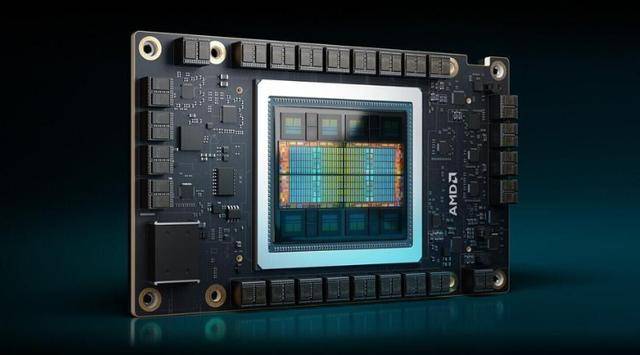
超微半导体(AMD)MI325X人工智能加速器芯片

Search documents
美国围堵半导体,中国反拿万亿订单,成熟制程藏逆袭密码
Sou Hu Cai Jing· 2026-01-17 11:42
Core Viewpoint - The recent imposition of a 25% import tariff on high-end AI chips by the U.S. government is aimed at reshaping the global semiconductor supply chain and boosting domestic production in the U.S. [1][4] Tariff Increase - The tariff is based on the Trade Expansion Act of 1962, citing "national security threats" as the reason for its implementation [4] - Future negotiations may lead to significant tariffs on a broader range of semiconductor imports, along with a "tariff offset mechanism" to incentivize investment in the U.S. semiconductor industry [4] Impact on China's Semiconductor Industry - In 2024, China is projected to import 549.26 billion chips, with an import value of $385.79 billion (approximately 2.8 trillion RMB), accounting for 14.9% of total goods imports [6] - High-end AI chips are 70% reliant on imports, while computing and control chips are 99% dependent on foreign sources, raising concerns about the impact of the tariffs [6] Export Performance - China's semiconductor exports are expected to reach $159.55 billion in 2024, a year-on-year increase of 17.4%, surpassing mobile phones as the largest export category [8] - The products affected by U.S. tariffs do not overlap significantly with China's main export items, indicating a strategic buffer against the tariff impact [8] Domestic Production and Innovation - The semiconductor equipment market in mainland China is projected to reach $49 billion in 2024, with domestic equipment's localization rate exceeding 50% for the first time, a significant increase from 4% in 2018 [11] - Specific sectors show notable advancements: etching equipment's localization rate exceeds 50%, while cleaning and stripping equipment's rate is over 70% [13] Strategic Focus - Multiple provinces and companies are focusing on mature process technologies to enhance self-sufficiency and gradually replace core components with domestic alternatives [15] - The strategy avoids direct confrontation with high-end products while allowing for market share acquisition to fund R&D [15] Response to External Pressures - The Chinese semiconductor industry is adapting to external pressures with strong policy support, including R&D subsidies and collaborative platforms between academia and industry [16] - Leading companies are increasing R&D investments and targeting niche markets to circumvent tariff impacts, focusing on areas outside of lithography equipment [16] Future Outlook - Industry forecasts suggest that by 2026, China will expand its global semiconductor market share, particularly in mature process technologies [19] - Although high-end chips still lag behind international standards, external pressures may accelerate industry upgrades, pushing China from "quantity" to "quality" improvements [19] Conclusion - The U.S. tariff strategy, while aggressive, is unlikely to significantly harm China's semiconductor industry, which is leveraging mature processes and domestic production to build resilience [21] - The industry is expected to transition from "catching up" to "competing" and potentially "leading" in various segments, altering the dynamics of global semiconductor competition [21]