超级崽崽APP

Search documents
AI玩具看着很美,但离成功还很远
Xin Lang Cai Jing· 2025-11-06 12:30
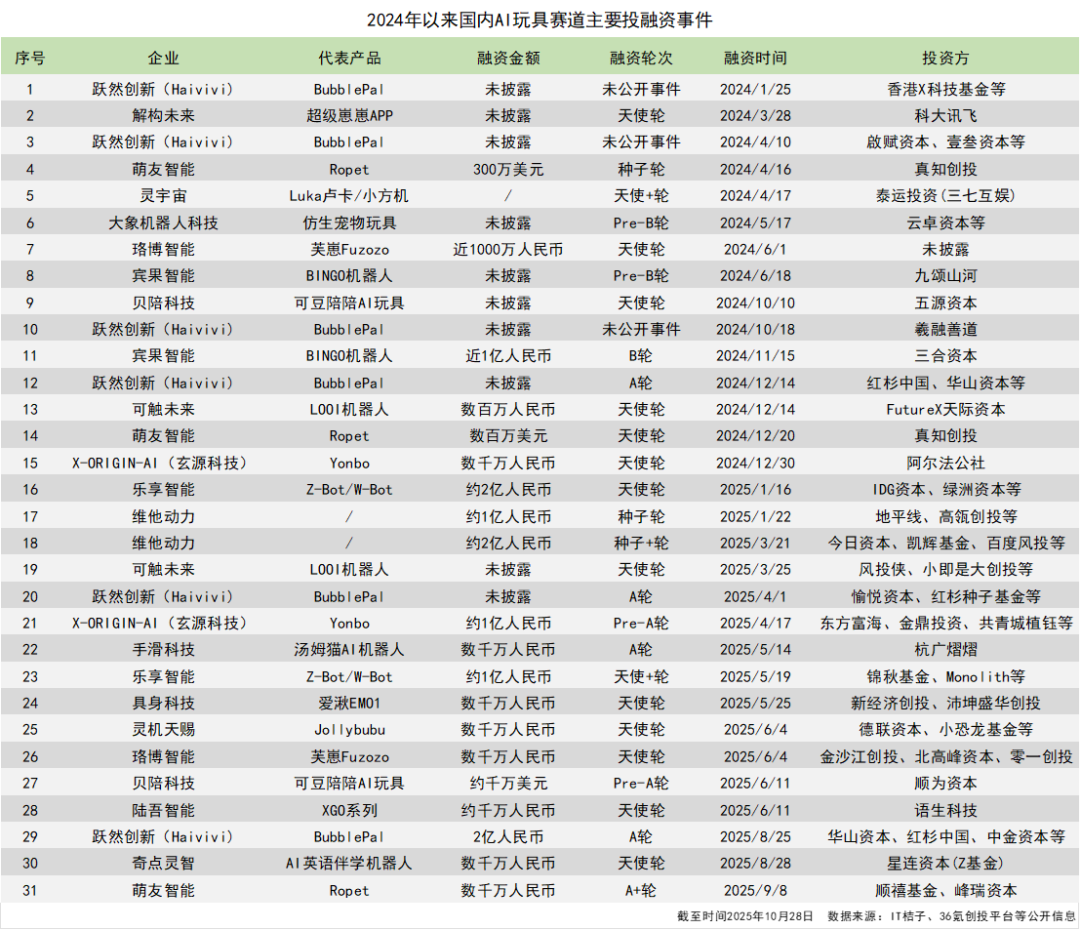
Core Insights - The AI toy industry is experiencing rapid growth, with significant investment and market potential, but faces challenges in hardware, user acceptance, and distribution channels [1][5][12] Investment and Market Activity - The AI toy sector has seen at least 31 investment events in 2024, with 16 major funding rounds since 2025, indicating a surge in both the number and amount of investments [2][4] - Major investment firms and tech companies are actively participating, with over 100 institutions involved in AI toy investments [4][5] Market Size and Growth Potential - The global AI toy market is projected to exceed $11 billion in 2024 and reach $58 billion by 2030, with an annual growth rate of over 20% [6] - In China, the market is expected to surpass $10 billion, with a compound annual growth rate exceeding 70% [6] Consumer Demand and Sales Performance - AI toys have shown impressive sales figures, with products like BubblePal selling over 250,000 units and generating over $10 million in revenue [6][7] - Sales of AI toys surged by 600% in the first half of 2025 compared to the previous period, with some stores introducing over 10 new AI toy models monthly [7] Profit Margins and Business Viability - AI toys offer higher profit margins compared to traditional toys, with basic models achieving 50-65% margins and high-end products reaching up to 90% [7] - The number of companies in the AI toy sector in China has reached 1,766, indicating a competitive landscape [7] Technological Advancements - The growth of AI toys is driven by advancements in AI technologies, including natural language processing and deep learning, which enhance user interaction [8][9] - The availability of affordable AI models has lowered development costs, making it easier for companies to enter the market [9] Market Segmentation and Target Audience - AI toys are expanding beyond traditional child-focused products to cater to a broader audience, including young adults and seniors, driven by emotional companionship needs [9][10] - Differentiated products are emerging to target specific demographics, such as educational toys for young children and companionship products for adults [9] Regulatory and Supply Chain Support - Government initiatives, such as the "Artificial Intelligence +" action plan, are promoting the integration of AI in various industries, including toys [10] - Guangdong province's robust toy manufacturing ecosystem supports the rapid development and production of AI toys [10] Challenges and Industry Concerns - Despite the promising outlook, the AI toy industry faces significant hurdles, including high hardware costs, user acceptance issues, and distribution challenges [12][13] - The industry has a high failure rate, with many startups struggling to survive due to operational difficulties and market competition [12][14] - User feedback indicates dissatisfaction with product performance, leading to high return rates of 30-40% [15]