车网互动系统

Search documents
广州充电桩数量突破25万台 构建深度融合智能调度体系
Zhong Guo Xin Wen Wang· 2025-12-15 01:05
Core Insights - Guangzhou has surpassed 250,000 charging piles and has established an intelligent scheduling system integrating "vehicle-pile-network-cloud" [1] - The number of new energy vehicles in Guangzhou has exceeded 1.25 million, with over 4,400 public charging and swapping stations and more than 400 charging operators [1] - The white paper outlines Guangzhou's pioneering V2G (Vehicle-to-Grid) pilot project, which allows vehicle owners to earn income through peak and valley electricity price differences [1] Group 1 - The white paper indicates that Guangzhou has built a leading charging infrastructure network in China [1] - The city plans to launch a city-level flexible response activity for vehicle-grid interaction in 2025, involving 138 charging operators and covering 1,003 charging stations and 10,172 charging piles [2] - If 10% of new energy vehicles participate in vehicle-grid interaction, Guangzhou can adjust an average daily electricity volume of 3.3 million kilowatt-hours, equivalent to the daily electricity consumption of 330,000 households [2] Group 2 - Guangzhou aims to leverage its strong automotive industry foundation and complete charging facilities to innovate in areas such as smart charging, virtual power plants, and integrated solar-storage-charging solutions [2] - The city is set to provide a model for the large-scale application of V2G technology and the coordinated transformation of transportation and energy in mega-cities [2]
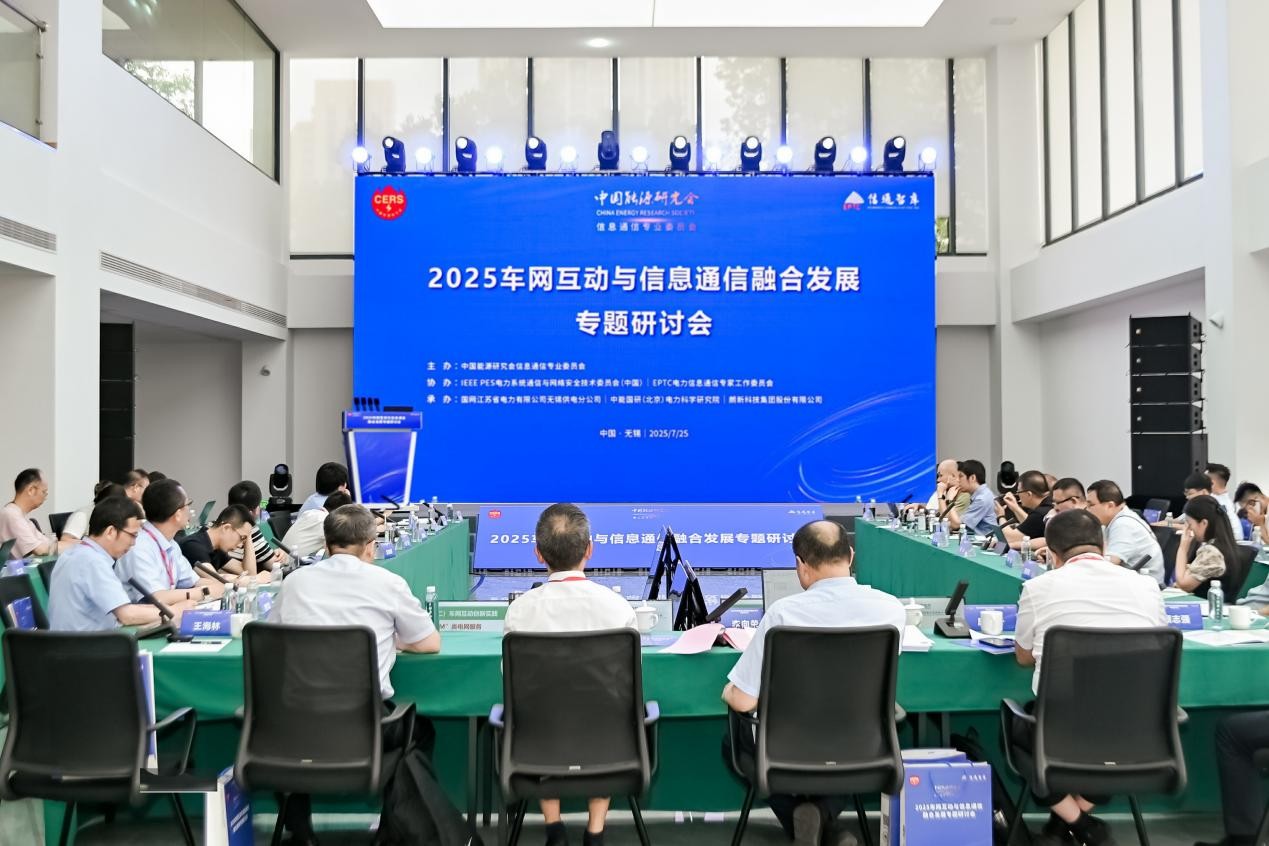
2025车网互动与信息通信融合发展专题研讨会在江苏无锡成功召开
Zhong Guo Neng Yuan Wang· 2025-07-31 11:57
Core Insights - The conference focused on the integration of vehicle-to-grid (V2G) technology and its role in energy transition, emphasizing the need for collaboration among various stakeholders to create a sustainable ecosystem [3][34] - Experts discussed the importance of overcoming technical barriers, enhancing cross-disciplinary research, and establishing a comprehensive technical standard system to facilitate the commercialization of V2G [3][11] Group 1: Policy and Industry Collaboration - The conference highlighted the value of vehicle-to-grid interaction in energy transition and its deep integration with information and communication technology [3][11] - Experts emphasized the dual collaboration model of energy interaction as the core of vehicle-to-grid, aiming for a sustainable development ecosystem through cooperation among academia, industry, and research [3][11] Group 2: Technological Development and Challenges - Huang Xueliang proposed a five-stage technical evolution framework for V2G, predicting significant distributed energy storage potential by 2030 [11][14] - Li Lili pointed out that V2G technology is nearing commercial viability, suggesting a dual-phase market activation strategy to overcome existing commercial barriers [16][18] - Direction Liang discussed the strategic significance of V2G in the new power system, identifying the need for a collaborative mechanism to address data flow barriers and control technology shortcomings [19][21] Group 3: Data-Driven Solutions and Market Dynamics - Zhong Jun proposed a data-driven platform to enhance vehicle-to-grid interaction in Shenzhen, addressing the low utilization rates of charging stations [22][24] - Yuan Xiaodong analyzed the economic, safety, and environmental challenges in the new power system, advocating for a collaborative approach to resource management through vehicle-to-grid interaction [25][27] - Liu Peng emphasized the importance of user charging behavior data in unlocking the potential of vehicle-to-grid interaction, proposing a framework for flexible evaluation and optimization strategies [28][30] Group 4: Future Outlook and Strategic Recommendations - The conference concluded with a consensus on the need for a collaborative ecosystem to support the scaling of electric vehicles and V2G technology, driven by national carbon reduction goals [32][34] - Experts called for accelerated development of V2G standards and a win-win profit-sharing mechanism to activate the entire industry chain [19][25]