
车网互动

Search documents
卖车不赚钱,车企改卖电
汽车商业评论· 2026-03-10 23:05
Core Viewpoint - The automotive industry is shifting its focus towards energy storage solutions as electric vehicle sales growth slows, with companies investing heavily in this new profitable sector that is closely tied to the future of energy [4][10]. Group 1: Industry Trends - By 2026, the trend of automotive companies entering the energy storage market is expected to accelerate, with significant investments and projects being launched globally [5]. - Major automotive companies like NIO, Ford, and Volkswagen are establishing energy storage facilities and partnerships to enhance their capabilities in this sector [6][7][8]. Group 2: Market Demand and Growth - According to BloombergNEF, the global energy storage market is projected to add 92GW/247GWh of new capacity in 2025, a 23% increase from 2024, indicating a shift from optional to essential energy storage systems [10][11]. - China and the U.S. are leading the way, with China accounting for over 50% of new installations and the U.S. following with 14% [12]. Group 3: Technological Advantages - Automotive companies have a natural advantage in entering the energy storage market due to their existing expertise in battery technology, which is similar for both electric vehicles and battery energy storage systems (BESS) [17][20]. - The production processes for electric vehicle batteries and storage batteries are largely compatible, allowing companies to repurpose existing manufacturing lines for energy storage [20]. Group 4: Financial Performance - Energy storage business models are proving to be more profitable than traditional automotive sales, with Tesla's energy storage gross margin reaching 31.4%, nearly double that of its automotive business [23]. - As electric vehicle sales face price wars and reduced margins, energy storage presents a lucrative alternative for companies like Tesla, Geely, and Volkswagen [24]. Group 5: Strategic Positioning - Automotive companies are leveraging their battery technology to create a dual market presence in both household and grid-side energy storage, with Tesla's Powerwall and BYD's Battery-Box being prominent examples [27][29]. - The shift towards energy storage allows companies to transform their business models from merely selling vehicles to providing energy services, enhancing customer engagement and loyalty [30][31]. Group 6: Challenges and Market Dynamics - The energy storage market is becoming increasingly competitive, with traditional energy companies and battery manufacturers posing significant challenges to automotive firms [55][56]. - Companies must navigate complex market dynamics, including user-side battery anxiety and the need for stable energy pricing mechanisms, to successfully implement vehicle-to-grid (V2G) solutions [60][61]. Group 7: Regulatory Environment - In China, government policies are increasingly supportive of integrating electric vehicles into the energy system, providing a favorable regulatory environment for automotive companies to expand their energy storage initiatives [62][66]. - In the U.S., market mechanisms and incentives are being developed to encourage user participation in energy storage programs, further driving the growth of this sector [67].






星星充电拟赴港IPO,2025年前三季度营收30.72亿元
Xin Lang Cai Jing· 2026-02-26 21:25
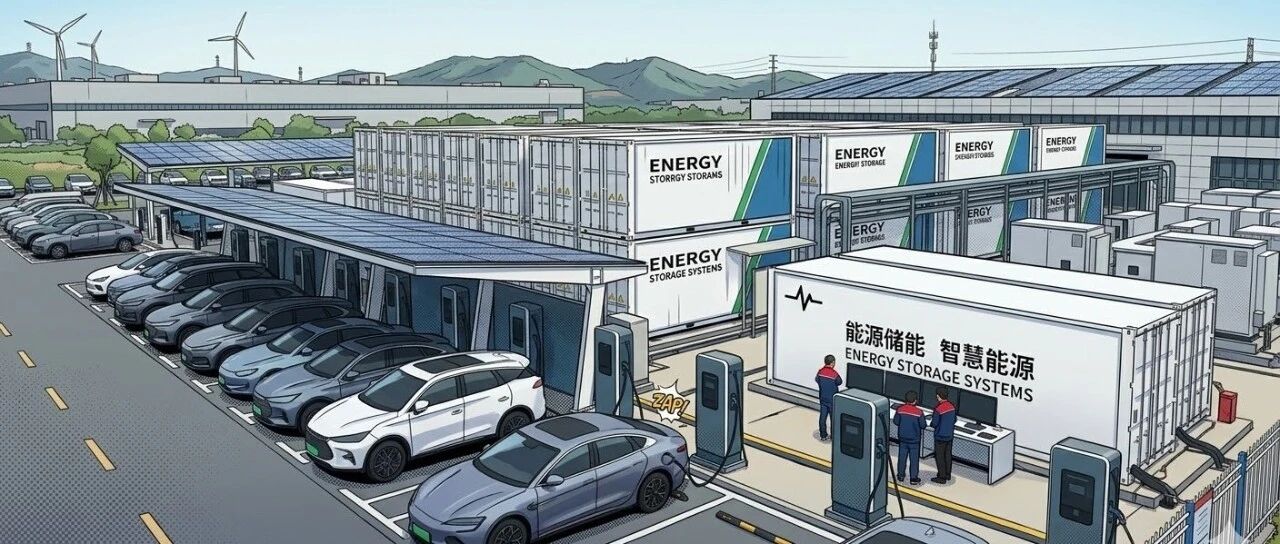
Company Overview - Star Charge (Wanbang Digital Energy Co., Ltd.) submitted its prospectus to the Hong Kong Stock Exchange on January 4, 2026, planning to list on the main board [1] - The company reported a revenue of 3.072 billion yuan for the first three quarters of 2025, with overseas revenue accounting for 18.6% [1] - Star Charge aims to expand its marketing network in Africa, the Middle East, Southeast Asia, South America, and North America [1] - If the listing process goes smoothly, it could become a significant IPO event in the charging pile sector for the year [1] Industry Policy and Environment - The National Energy Administration announced on February 23, 2026, plans to implement a new energy system and sector-specific planning, focusing on building new energy infrastructure [2] - Key initiatives include comprehensive coverage of charging facilities, promotion of high-power charging technology, and pilot projects for vehicle-grid interaction to support the construction of a high-quality charging service system [2] Industry Status - On February 25, 2026, Google announced the adoption of iron-air battery technology in its data centers, indicating progress in the energy storage sector [3] - Dongwu Securities reported that global energy storage demand is expected to grow significantly, with domestic large-scale storage potentially exceeding 60% growth in 2026 [3] - The application of new technologies may indirectly drive upgrades in charging infrastructure [3]
江苏常州:智能有序 保障车主便捷出行
Xin Hua She· 2026-02-22 03:46
Core Insights - The article discusses the surge in home charging demand for electric vehicles during the Spring Festival holiday, highlighting the challenges faced by community charging facilities and the implementation of a new intelligent orderly charging system in Jiangsu to alleviate these pressures [2][4]. Group 1: Intelligent Charging System - The intelligent orderly charging system in the Chuangxin Jiayuan community in Changzhou, Jiangsu, utilizes IoT, big data, and AI technologies to dynamically adjust charging power, guiding vehicles to charge during off-peak hours when electricity costs are lower [4]. - The system allows vehicle owners to set their charging needs via a mobile app, automatically optimizing the charging schedule to ensure travel needs are met while reducing costs and easing the burden on the power grid [4][6]. Group 2: Impact on Power Grid - During the Spring Festival, residential charging loads significantly increase, which can exacerbate pressure on the power grid. The intelligent orderly charging system actively adjusts charging times and power to effectively smooth out peak loads [6]. - Changzhou has prioritized the construction of 15 intelligent orderly charging pilot projects in residential communities facing distribution pressure, with a total adjustable load capacity of 2,870 kW, providing technical support for peak charging scenarios during holidays [6]. Group 3: User Experience - A resident from the Changzhou community reported that charging demand noticeably increased during the holiday, and by using the system, he was able to charge 30 kWh for only 21.9 yuan, saving over 6 yuan compared to daytime charging rates, demonstrating both convenience and cost-effectiveness [6].
济南:充电设施“广覆盖”“高互动”助力绿色出行
Xin Hua Wang· 2026-02-19 09:40
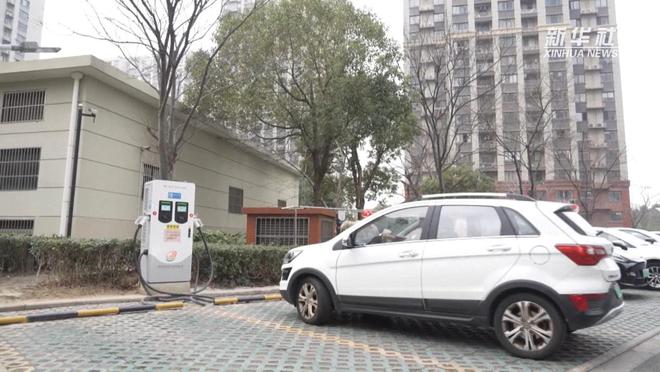
Core Insights - The article highlights the advancements in electric vehicle (EV) charging infrastructure in Jinan, Shandong, emphasizing the convenience and efficiency of charging services for residents [1][2] Group 1: Charging Infrastructure Development - Jinan has established a charging demonstration station that integrates photovoltaic, energy storage, and V2G (Vehicle-to-Grid) technologies, achieving an average daily charging volume of nearly 10,000 kilowatt-hours since its operation began in August 2024 [1] - The demonstration station is equipped with various charging options, including traditional DC fast chargers, liquid-cooled superchargers, V2G charging stations, and rail-mounted mobile charging stations, catering to diverse user needs [1] - The State Grid Jinan Power Supply Company has increased the frequency of inspections and maintenance of charging facilities from every three days to daily to ensure safety and reliability [1] Group 2: User Engagement and Market Integration - The State Grid Jinan Power Supply Company is optimizing a charging service network that includes urban, rural, and suburban areas, creating a "5-minute charging service circle" in urban centers and achieving full coverage of public charging stations in towns [2] - In 2025, Jinan plans to implement a market-based pricing policy for vehicle-grid interaction and residential charging station discharging, allowing EV owners to earn income by supplying electricity back to the grid during peak demand [2] - The current number of electric vehicles in Jinan exceeds 400,000, with public charging stations reaching 20,100, indicating a continuous improvement in the vehicle-to-charging station ratio [2]
山东济南:充电设施“广覆盖”“高互动”助力绿色出行
Xin Hua She· 2026-02-19 06:49
Core Insights - The article highlights the advancements in electric vehicle (EV) charging infrastructure in Jinan, Shandong, emphasizing the convenience and efficiency of charging services for residents [1][2] Group 1: Charging Infrastructure Development - Jinan has established a charging demonstration station that integrates photovoltaic, energy storage, and V2G (Vehicle-to-Grid) technologies, achieving an average daily charging volume of nearly 10,000 kilowatt-hours since its operation began in August 2024 [1] - The demonstration station is equipped with various charging options, including traditional DC fast chargers, liquid-cooled superchargers, V2G charging stations, and rail-mounted mobile charging stations, catering to diverse user needs [1] - The State Grid Jinan Power Supply Company has increased the frequency of inspections and maintenance of charging facilities from every three days to daily to ensure safety and reliability [1] Group 2: User Engagement and Market Integration - The State Grid Jinan Power Supply Company is optimizing a charging service network that includes urban, rural, and suburban areas, creating a "5-minute charging service circle" in urban centers and achieving full coverage of public charging stations in towns [2] - In 2025, Jinan plans to implement a market-based pricing policy for vehicle-to-grid interactions and residential charging station discharges, allowing EV owners to earn income by supplying electricity back to the grid during peak demand [2] - The current number of electric vehicles in Jinan exceeds 400,000, with public charging stations reaching 20,100, indicating a continuous improvement in the vehicle-to-charging station ratio [2]
【联合发布】商用车周报(2026年2月第2周)
乘联分会· 2026-02-14 08:39
Group 1: Low-altitude Economy and Digital Infrastructure - The Ministry of Industry and Information Technology and four other departments aim to establish a "digital foundation" for the low-altitude economy, targeting a 90% coverage of the national low-altitude public air route communication network by 2027 [4][5] - Key tasks include enhancing 5G network coverage below 300 meters and integrating satellite communication to support logistics and urban governance applications [5] - The low-altitude economy is projected to reach a scale of 3.5 trillion yuan by 2035, with over 200 billion yuan in new investments anticipated [5] Group 2: Electric Vehicle Market and Policy Changes - The establishment of a national unified electricity market is transforming electric vehicles from mere "electric terminals" to "mobile energy storage units," enhancing grid flexibility and creating new revenue models for vehicle owners [6][7] - Canada plans to eliminate the 100% additional tax on Chinese electric vehicles, allowing an annual quota of 49,000 vehicles to enter the market, which will gradually increase to 70,000 [18][21] - The Canadian government will also restart subsidy programs, investing 2.3 billion CAD to assist consumers with new vehicle costs and 1.5 billion CAD for charging infrastructure [21] Group 3: Automotive Industry Developments - FAW Jiefang is expanding its strategic cooperation and local production overseas, including a partnership with Cainiao Group to build a global auto parts e-commerce platform [8][9] - The company has launched its first locally produced LN 4×4 truck in Indonesia, with plans to invest up to 10 billion yuan in wealth management to enhance capital efficiency [9] - Shaanxi Automobile has officially changed its name to Shanxi Tongxi New Energy Vehicle Co., with a shift in control to Xi Heavy Automobile, marking a strategic pivot towards becoming a leader in new energy heavy trucks [10][11] Group 4: Autonomous Driving Collaborations - Autonomous driving companies are shifting from technology development to large-scale deployment through partnerships with automotive and mobility platforms, focusing on markets in China, the US, and the Middle East [12][13] - Notable collaborations include Pony.ai with Toyota for mass production of autonomous vehicles and Baidu's partnership with Uber for commercial operations in Dubai [13] - Waymo is expanding its autonomous taxi services in Nashville and plans to deploy 1,200 self-driving taxis in the Middle East by 2027 [13] Group 5: New Energy Heavy Trucks and Market Trends - The latest product announcements indicate a significant increase in the proportion of new energy heavy trucks, which now account for 40.3% of the market, with a notable rise in battery-swappable models [17] - The shift in purchasing decisions among light commercial vehicle users is moving towards a comprehensive evaluation of total cost of ownership (TCO) rather than just initial purchase price [23][24]

深入实施放宽市场准入特别措施,深圳加快构建更高水平开放型经济新体制
Sou Hu Cai Jing· 2026-02-10 22:05
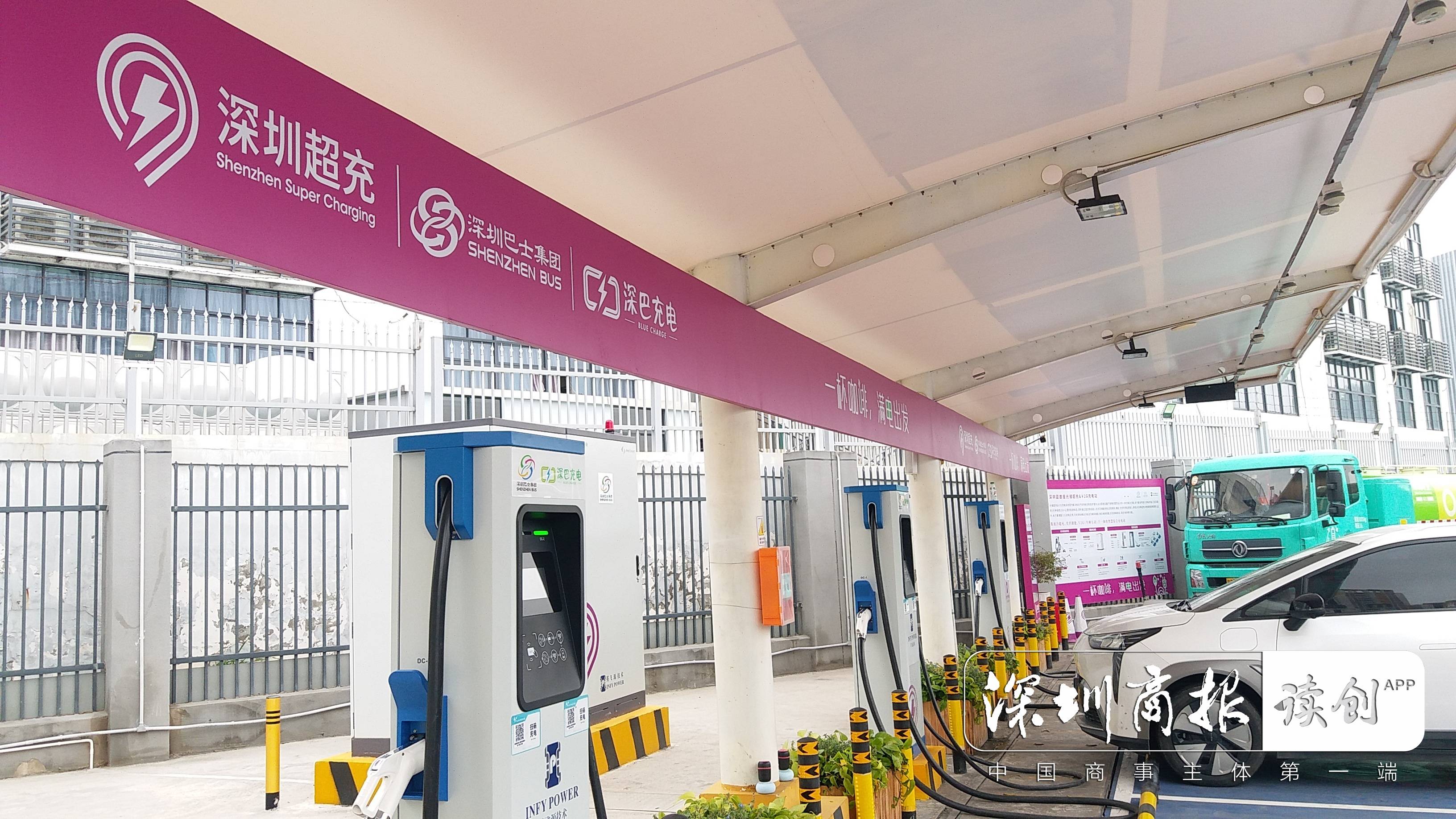
Group 1 - Shenzhen is focusing on relaxing market access and exploring a more flexible and scientific policy system to accelerate the construction of a socialist demonstration zone with Chinese characteristics [1] - The city aims to stimulate the vitality and creativity of various market entities by breaking down entry barriers and optimizing the market access environment [1] - Economic reforms in Shenzhen are designed to liberate and develop productive forces, continuously enhancing the internal motivation of various business entities [2] Group 2 - Shenzhen is building a robust international trading platform for electronic components and integrated circuits, establishing a data exchange center and an advanced technology application promotion center [2] - The city has introduced "Pengnong Loan" to support agricultural enterprises, providing a cumulative financial support of 42.7 billion yuan to enhance the agricultural supply chain [2] - Shenzhen has developed a low-altitude economy action plan, establishing 1,284 low-altitude takeoff and landing points to support logistics, manned flight, and emergency rescue operations [2] Group 3 - Shenzhen has been a pioneer in the pilot demonstration of infrastructure Real Estate Investment Trusts (REITs), leading the nation in the number and scale of issued products [3] - The city has achieved significant breakthroughs in the REITs sector, including the first pilot projects in clean energy and affordable rental housing [3] - Shenzhen's REITs projects have been recognized as typical cases for promoting effective investment through asset revitalization [3] Group 4 - Shenzhen has initiated the "Super Charging City 2.0" project, establishing over 1,098 supercharging stations and 536,000 charging facilities to create a comprehensive charging service network [6] - The city has been selected as a pilot city for large-scale vehicle-network interaction applications, contributing to the development of a virtual power plant with the highest adjustable capacity ratio in the country [6] Group 5 - Shenzhen has released the "Qianhai Green Building Assessment Standard," integrating national and Hong Kong standards to promote green building certification in the Greater Bay Area [7] - The standard aims to enhance the efficiency of green building practices across the entire lifecycle of new and existing buildings [7] Group 6 - Shenzhen is enhancing its open economic system by facilitating the "Hong Kong-Macao Drug and Medical Device Access" pilot program, with 17 medical institutions now covered [8] - The city has implemented high-level cross-border trade facilitation measures, including the inclusion of 166 quality enterprises in the pilot program and processing over 27 billion USD in facilitation payments [8] - Shenzhen has established the first and only international industry and standards organization cluster in the He Tao area, promoting the first international hospital accreditation standard in China [8]
富特科技定增闯过深交所首关 5.28亿加码新能源布局
Quan Jing Wang· 2026-02-09 14:08
Core Viewpoint - Zhejiang Fute Technology Co., Ltd. has received approval from the Shenzhen Stock Exchange for its plan to raise up to 528.22 million yuan through a private placement of shares, aimed at funding key projects in the electric vehicle sector and enhancing working capital [1] Group 1: Financial Performance and Projections - Fute Technology has experienced explosive growth in recent years, with a projected net profit of 210-250 million yuan for 2025, representing a year-on-year increase of 122%-164% [2] - The company’s domestic market share in vehicle power supplies has significantly increased, supported by its core client base, including major manufacturers like NIO, Xiaomi, and Xpeng [2] Group 2: International Expansion - The company’s international revenue share is expected to rise from approximately 6.8% in 2024 to over 17% in the first half of 2025, driven by successful partnerships with global clients like Renault and Stellantis [3] - The international market expansion is projected to enhance revenue scale and profitability while reducing reliance on a single market, with the overseas market space estimated to reach 42.5 billion yuan by 2030, growing at a CAGR of 18% from 2025 to 2030 [3] Group 3: Technological Advancements - Fute Technology is actively investing in R&D, particularly in V2G (Vehicle-to-Grid) technology, with products featuring bidirectional charging capabilities under development [4] - The company’s core production facilities are operating at full capacity, with the second factory successfully launched in early 2025, contributing to increased production capacity [4] Group 4: Industry Environment and Strategic Initiatives - The favorable policy environment for the electric vehicle industry, including stricter carbon emission standards in the EU, supports Fute Technology’s business growth [5] - The company’s fundraising plan, approved by the Shenzhen Stock Exchange, is seen as a critical step in its strategic expansion, with funds allocated to projects that align with industry trends towards high power density and smart connectivity [5]
一亿次换电启新程:中国能源转型的“换道超车”实践
中国能源报· 2026-02-08 02:08
Core Viewpoint - China is leading a profound energy transition, with electricity consumption expected to exceed 10 trillion kWh by 2025, surpassing the annual consumption of the US and the combined total of the EU, Russia, India, and Japan [1] Group 1: Energy Transition and Electric Vehicles - The new energy vehicle (NEV) industry is a core driver of China's energy transition, with a market volume of 49.37 million vehicles, accounting for half of the global NEV fleet [1] - NIO has established over 3,720 battery swap stations, covering more than 1,200 districts and counties, marking a significant milestone in the battery swap model [1][2] - The battery swap model has been validated at scale, with NIO achieving over 10 million battery swaps in a single day, demonstrating its viability as a mainstream solution for electric vehicle energy replenishment [2] Group 2: Economic and Energy Efficiency - NIO's 100 million battery swaps have saved users approximately 834.1 million hours compared to traditional charging, equating to a financial saving of over 26.3 billion yuan, or an average of over 27,000 yuan per user [3] - The battery swap model allows for battery health checks with each swap, ensuring safety and longevity, while also facilitating resource recycling [2][3] Group 3: Grid Interaction and Energy Management - Battery swap stations act as distributed energy storage units, providing advantages in grid demand response and load balancing, with a capacity demand only 30% of that required for large-scale charging stations [4] - NIO's collaboration with industry partners has led to the development of V2G (Vehicle-to-Grid) capabilities, contributing to grid stability and energy management [5] Group 4: Strategic Importance of Energy Systems - The integration of new energy vehicles with the grid is crucial for enhancing the flexibility of the power system, especially as renewable energy sources like wind and solar become more prevalent [6] - The shift from traditional power dispatch to an intelligent interaction model ("source-grid-load-storage") is essential for accommodating the variability of renewable energy generation [6]
打造济南城区“5分钟快充圈”
Qi Lu Wan Bao· 2026-01-29 11:05
Group 1 - The core viewpoint emphasizes that major infrastructure like the power grid is essential for economic operation, and ensuring power supply is crucial for economic stability [1] - During the 14th Five-Year Plan, over 20 billion yuan will be invested in power grid development in Shandong, stimulating over 700 upstream and downstream enterprises to expand production capacity and effectively boost consumption [1] - The total investment in Jinan's power grid development is expected to increase to 24 billion yuan over the next five years, further promoting private investment and driving the development of the industrial chain [1] Group 2 - The Jinan Power Supply Company has established the Jinan City Vehicle-Grid Interactive Smart Innovation Alliance, with a demonstration station in the starting area selected as one of the first national pilot projects for large-scale vehicle-grid interaction applications [2] - A total of 413 charging and swapping stations have been built, capable of charging over 50,000 new energy vehicles daily, with annual charging volume exceeding 200 million kilowatt-hours [2] - The company plans to implement a "three-year doubling" action for charging facilities, aiming to transform 100 low-power facilities by 2026 and create a "5-minute fast charging circle" in urban areas, with at least 30 vehicle-grid interactive demonstration stations to be built in three years [2]