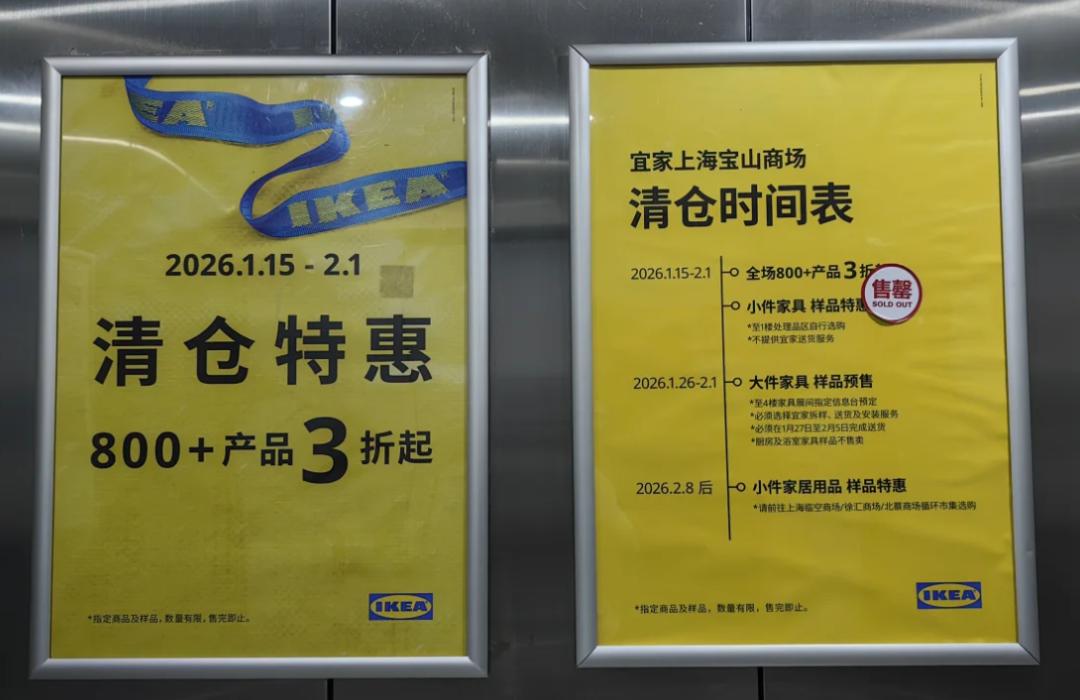
边柜

Search documents
清仓的宜家 被中产们抢成了“春运现场”?
Feng Huang Wang· 2026-02-15 01:15
Core Viewpoint - IKEA, referred to as the "Disney of home furnishings," announced the closure of seven large stores in early January, followed by a clearance sale lasting for half a month [1][8]. Group 1: Store Closures and Clearance Sales - The seven stores initiated a "clearance sale" with significant discounts on products, including the option to take apart display items [1][3]. - The clearance event attracted a large number of customers, leading to a rush reminiscent of a "Spring Festival travel rush," with many people traveling across cities to take advantage of the discounts [3][9]. - The clearance sale created a chaotic shopping environment, with customers competing fiercely for popular items like sofas, cabinets, and tableware [3][9][11]. Group 2: Customer Behavior and Experience - Customers displayed extreme enthusiasm, with some arriving hours early to queue, resulting in long lines that resembled those seen at major events [13][15]. - The shopping experience was described as intense, with customers exhibiting a "survival of the fittest" mentality, leading to a frenzied atmosphere in the stores [9][11][21]. - Despite the excitement, the clearance frenzy was viewed as a temporary phenomenon, with many recognizing it as a "last hurrah" before the store closures [26][30]. Group 3: Industry Context and Trends - The closure of IKEA stores reflects a broader trend of decline in large home furnishing stores, with many facing challenges from changing consumer behaviors and the rise of e-commerce [26][45]. - The home furnishing market is shifting towards smaller, lifestyle-oriented stores, with brands like MUJI and local companies like Yuan Shi Mu Yu gaining popularity [45][47]. - The traditional home furnishing market is experiencing a significant transformation, with many large stores struggling to maintain profitability and relevance in the current retail landscape [42][45].

为抢镜子站上货架大打出手,清仓的宜家被挤成“春运现场”
Sou Hu Cai Jing· 2026-02-06 23:06
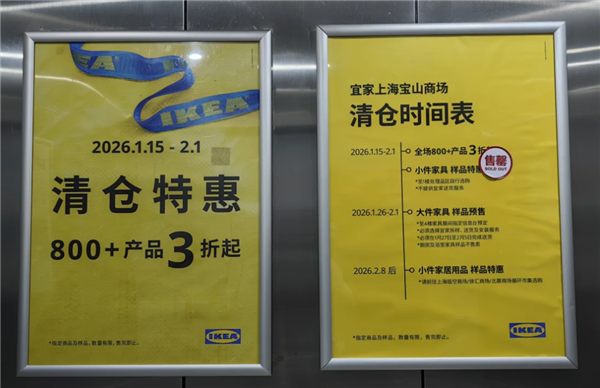
Core Viewpoint - IKEA has announced the closure of seven large stores, leading to a significant clearance sale that attracted a large number of customers, reminiscent of a "Spring Festival travel rush" [1][7][24]. Group 1: Store Closures and Clearance Sales - IKEA's decision to close seven stores was followed by a clearance sale lasting for half a month, where not only discounted products were sold, but even display items could be taken home [1][3]. - The clearance event saw a surge in customer interest, with many traveling from other cities to take advantage of the discounts, particularly on popular items like sofas, cabinets, and tableware [4][6]. - The atmosphere during the clearance was chaotic, with customers exhibiting competitive behavior akin to a survival training course, highlighting the urgency and frenzy of the shopping experience [8][11]. Group 2: Industry Trends and Challenges - The closure of IKEA stores reflects a broader trend of decline in large home furnishing stores, which have been struggling to adapt to changing consumer preferences and the rise of e-commerce [25][40]. - Major players in the home furnishing market, such as Red Star Macalline and Juran Home, have faced significant financial difficulties, with reports of substantial losses and declining store performance [30][33][36]. - The traditional home furnishing market is shifting towards smaller, lifestyle-oriented stores, with brands like MUJI and local companies like Yuan Shi Mu Yu gaining traction in the market [40][44]. Group 3: Consumer Behavior and Market Adaptation - Despite the decline of large home furnishing stores, consumer demand for furniture remains, with a notable shift towards smaller, more accessible shopping experiences in urban areas [40][46]. - The changing landscape has led to a rise in "lifestyle" stores that cater to modern consumer needs, contrasting with the traditional large-scale home furnishing stores [40][46]. - IKEA plans to open over ten smaller stores in key cities like Beijing and Shenzhen within the next two years, indicating a strategic shift to adapt to the evolving market [55].
清仓的宜家,被中产抢成了「春运现场」?
3 6 Ke· 2026-02-03 02:48
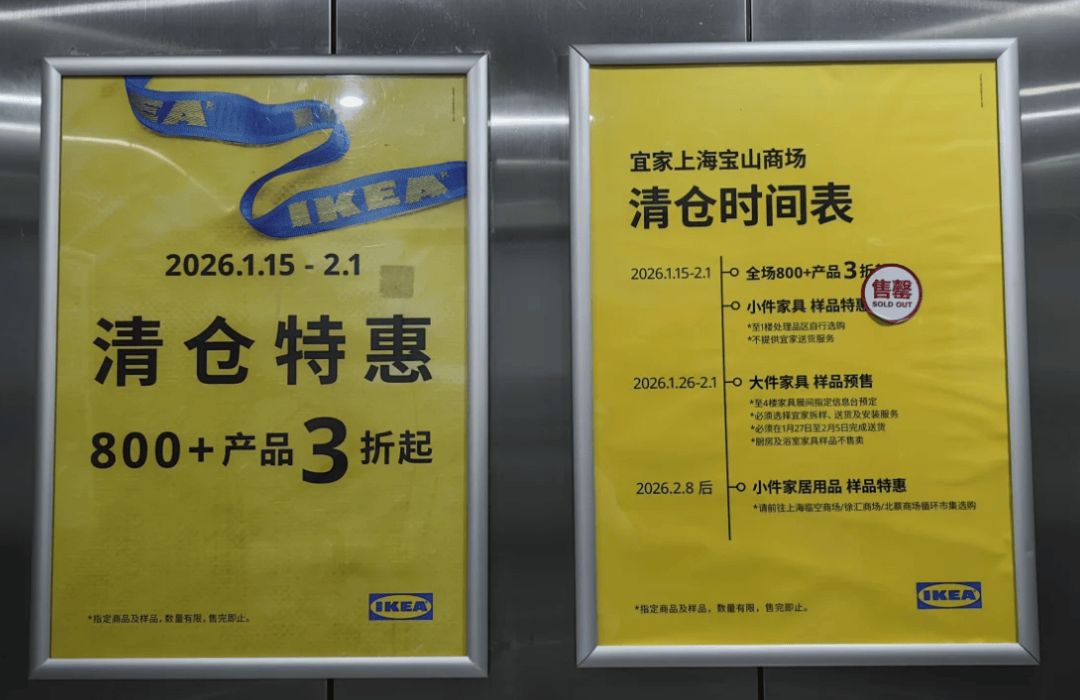
Core Insights - IKEA, referred to as the "Disney of home furnishings," announced the closure of seven large stores in early January, followed by a clearance sale lasting for two weeks [1] - The clearance sale attracted significant customer interest, with many people traveling across cities to take advantage of the discounts [2][5] - The phenomenon of customers aggressively purchasing items during the clearance reflects a broader trend of declining foot traffic in traditional home furnishing stores [28] Group 1: Store Closures and Clearance Sales - IKEA's decision to close seven stores and conduct a clearance sale has drawn attention, leading to a surge in customer visits [1] - The clearance sale featured deep discounts on products, including the option to take apart display items [1] - Customers engaged in competitive buying behavior, reminiscent of a "Spring Festival travel rush," indicating a high level of consumer demand during the sale [6][14] Group 2: Changing Consumer Behavior - The clearance event highlighted a shift in consumer behavior, with many customers adopting a "grab what you can" mentality, leading to chaotic shopping experiences [21][22] - Despite the frenzy, the clearance sales are seen as a temporary spike in interest, with the underlying trend of declining sales in large home furnishing stores remaining [28] - The traditional home furnishing market is experiencing a decline, with many consumers now preferring smaller, lifestyle-oriented stores over large home furnishing centers [51] Group 3: Industry Trends and Future Outlook - The decline of large home furnishing stores is part of a broader trend, with many companies in the sector facing challenges, including reduced foot traffic and increased competition from e-commerce [44] - IKEA plans to open over ten smaller stores in key cities like Beijing and Shenzhen within the next two years, indicating a strategic shift towards more accessible retail formats [60] - The overall market for home furnishings is evolving, with a rise in "light home" stores and lifestyle shops, contrasting with the struggles of traditional home furnishing giants [44][47]