
餐具

Search documents
清仓的宜家 被中产们抢成了“春运现场”?
Feng Huang Wang· 2026-02-15 01:15
Core Viewpoint - IKEA, referred to as the "Disney of home furnishings," announced the closure of seven large stores in early January, followed by a clearance sale lasting for half a month [1][8]. Group 1: Store Closures and Clearance Sales - The seven stores initiated a "clearance sale" with significant discounts on products, including the option to take apart display items [1][3]. - The clearance event attracted a large number of customers, leading to a rush reminiscent of a "Spring Festival travel rush," with many people traveling across cities to take advantage of the discounts [3][9]. - The clearance sale created a chaotic shopping environment, with customers competing fiercely for popular items like sofas, cabinets, and tableware [3][9][11]. Group 2: Customer Behavior and Experience - Customers displayed extreme enthusiasm, with some arriving hours early to queue, resulting in long lines that resembled those seen at major events [13][15]. - The shopping experience was described as intense, with customers exhibiting a "survival of the fittest" mentality, leading to a frenzied atmosphere in the stores [9][11][21]. - Despite the excitement, the clearance frenzy was viewed as a temporary phenomenon, with many recognizing it as a "last hurrah" before the store closures [26][30]. Group 3: Industry Context and Trends - The closure of IKEA stores reflects a broader trend of decline in large home furnishing stores, with many facing challenges from changing consumer behaviors and the rise of e-commerce [26][45]. - The home furnishing market is shifting towards smaller, lifestyle-oriented stores, with brands like MUJI and local companies like Yuan Shi Mu Yu gaining popularity [45][47]. - The traditional home furnishing market is experiencing a significant transformation, with many large stores struggling to maintain profitability and relevance in the current retail landscape [42][45].

高金价改变韩国人黄金消费习惯
Xin Lang Cai Jing· 2026-02-08 08:12
Core Insights - The rising international gold prices are reshaping traditional consumption patterns in South Korea, particularly regarding gold jewelry purchases for significant life events such as weddings and children's first birthdays [1][2][3] Group 1: Changing Consumer Behavior - Consumers are either reducing the quantity of gold purchased or seeking alternatives due to the high costs associated with gold jewelry, which has become a financial burden [1] - The price of a typical 24K gold ring for a child's first birthday has increased significantly, from approximately 200,000 KRW ten years ago to over 1,100,000 KRW today [1] - Some consumers are opting for lighter gold rings weighing 1.875 grams or even 1 gram to maintain the symbolic significance without the financial strain [1] Group 2: Impact on Wedding Traditions - The tradition of gifting gold jewelry during weddings is declining as couples are increasingly choosing to use cash instead due to soaring gold prices [2] - Many couples are reconsidering their wedding budgets, with some opting for simpler, less expensive jewelry options or even foregoing traditional gold items altogether [2] - The rising costs of gold have led to a shift in preferences towards lesser-known jewelry brands that offer simpler designs, which are perceived as better investments [2] Group 3: Market Trends and Economic Implications - As of early October, the spot price of gold in South Korea was around 245,000 KRW per gram, an increase of approximately 80% from the previous year [3] - Over the past decade, gold prices have surged nearly fivefold, prompting both individuals and companies to reassess their gold consumption practices [3] - Companies that traditionally awarded gold gifts to employees for long service are now shifting to cash bonuses due to the financial pressures of rising gold prices [3]

为抢镜子站上货架大打出手,清仓的宜家被挤成“春运现场”
Sou Hu Cai Jing· 2026-02-06 23:06
Core Viewpoint - IKEA has announced the closure of seven large stores, leading to a significant clearance sale that attracted a large number of customers, reminiscent of a "Spring Festival travel rush" [1][7][24]. Group 1: Store Closures and Clearance Sales - IKEA's decision to close seven stores was followed by a clearance sale lasting for half a month, where not only discounted products were sold, but even display items could be taken home [1][3]. - The clearance event saw a surge in customer interest, with many traveling from other cities to take advantage of the discounts, particularly on popular items like sofas, cabinets, and tableware [4][6]. - The atmosphere during the clearance was chaotic, with customers exhibiting competitive behavior akin to a survival training course, highlighting the urgency and frenzy of the shopping experience [8][11]. Group 2: Industry Trends and Challenges - The closure of IKEA stores reflects a broader trend of decline in large home furnishing stores, which have been struggling to adapt to changing consumer preferences and the rise of e-commerce [25][40]. - Major players in the home furnishing market, such as Red Star Macalline and Juran Home, have faced significant financial difficulties, with reports of substantial losses and declining store performance [30][33][36]. - The traditional home furnishing market is shifting towards smaller, lifestyle-oriented stores, with brands like MUJI and local companies like Yuan Shi Mu Yu gaining traction in the market [40][44]. Group 3: Consumer Behavior and Market Adaptation - Despite the decline of large home furnishing stores, consumer demand for furniture remains, with a notable shift towards smaller, more accessible shopping experiences in urban areas [40][46]. - The changing landscape has led to a rise in "lifestyle" stores that cater to modern consumer needs, contrasting with the traditional large-scale home furnishing stores [40][46]. - IKEA plans to open over ten smaller stores in key cities like Beijing and Shenzhen within the next two years, indicating a strategic shift to adapt to the evolving market [55].
海南封关看变化:数读日用消费品“零关税”政策
Zhong Guo Xin Wen Wang· 2026-02-06 09:00
Core Viewpoint - The Hainan Free Trade Port has introduced a "zero tariff" policy for 202 imported consumer goods, aimed at enhancing the quality of life for local residents and meeting their diverse consumption needs [2][3]. Group 1: Zero Tariff Policy Details - The "zero tariff" list includes 202 items, primarily focusing on fast-moving consumer goods such as food, beverages, daily necessities, and baby products, which are frequently purchased by residents [2]. - Over 100 food items are included, catering to diverse dietary preferences, with categories such as seafood, dairy, fruits, beverages, and chocolate [2]. - The list also features essential baby products like infant formula, diapers, and toys, as well as daily necessities like shampoos and kitchenware, ensuring that the items are relevant to residents' daily lives [2]. Group 2: Implementation Strategy - The policy will undergo a phased implementation, starting with the initial list of 202 items, with plans for future adjustments based on consumer demand and policy execution [3]. - Five duty-free stores for daily consumer goods will open in Haikou, Sanya, and Danzhou on February 11, with a strategy of gradual rollout [4]. - The government will enhance public awareness through shopping guides, improve service levels in stores, optimize product offerings for the holiday season, and provide promotional incentives such as consumer vouchers [4]. Group 3: Target Audience - The policy benefits three categories of individuals: local residents with Hainan ID cards, new residents with Hainan residence permits or social security cards, and foreign residents with valid residence documents [5]. - This initiative reflects the goal of the Hainan Free Trade Port to facilitate the movement of people and extend policy benefits to expatriates and long-term residents [5].
清仓的宜家,被中产抢成了「春运现场」?
3 6 Ke· 2026-02-03 02:48
Core Insights - IKEA, referred to as the "Disney of home furnishings," announced the closure of seven large stores in early January, followed by a clearance sale lasting for two weeks [1] - The clearance sale attracted significant customer interest, with many people traveling across cities to take advantage of the discounts [2][5] - The phenomenon of customers aggressively purchasing items during the clearance reflects a broader trend of declining foot traffic in traditional home furnishing stores [28] Group 1: Store Closures and Clearance Sales - IKEA's decision to close seven stores and conduct a clearance sale has drawn attention, leading to a surge in customer visits [1] - The clearance sale featured deep discounts on products, including the option to take apart display items [1] - Customers engaged in competitive buying behavior, reminiscent of a "Spring Festival travel rush," indicating a high level of consumer demand during the sale [6][14] Group 2: Changing Consumer Behavior - The clearance event highlighted a shift in consumer behavior, with many customers adopting a "grab what you can" mentality, leading to chaotic shopping experiences [21][22] - Despite the frenzy, the clearance sales are seen as a temporary spike in interest, with the underlying trend of declining sales in large home furnishing stores remaining [28] - The traditional home furnishing market is experiencing a decline, with many consumers now preferring smaller, lifestyle-oriented stores over large home furnishing centers [51] Group 3: Industry Trends and Future Outlook - The decline of large home furnishing stores is part of a broader trend, with many companies in the sector facing challenges, including reduced foot traffic and increased competition from e-commerce [44] - IKEA plans to open over ten smaller stores in key cities like Beijing and Shenzhen within the next two years, indicating a strategic shift towards more accessible retail formats [60] - The overall market for home furnishings is evolving, with a rise in "light home" stores and lifestyle shops, contrasting with the struggles of traditional home furnishing giants [44][47]
净利润预减超5成 富岭股份发布2025年业绩预告
Xi Niu Cai Jing· 2026-01-30 08:55
Core Viewpoint - Fuling Co., Ltd. (001356.SZ) has announced a profit forecast for 2025, expecting a significant decline in net profit and non-recurring net profit compared to the previous year, primarily due to changes in U.S. tariff policies and initial cost pressures from a new production base in Indonesia [2][4]. Group 1: Financial Performance - The company forecasts a net profit attributable to shareholders of 79 million to 99 million yuan, representing a year-on-year decline of 55.02% to 64.11% [2]. - The expected non-recurring net profit is projected to be between 77 million and 97 million yuan, reflecting a decrease of 55.33% to 64.54% year-on-year [2]. - Basic earnings per share are anticipated to be between 0.13 yuan and 0.17 yuan [2]. - For the first three quarters of 2025, the company reported revenue of 1.509 billion yuan, a year-on-year decline of 11.55%, and a net profit of 77.69 million yuan, down 52.64% year-on-year [5]. Group 2: Reasons for Performance Decline - The decline in performance is attributed to changes in U.S. tariff policies affecting revenue and gross profit, along with initial cost pressures from the new production base in Indonesia, rising labor costs, and exchange rate fluctuations [4]. - In the first half of 2025, the company experienced a decrease in sales volume and revenue due to increased tariffs imposed by the U.S. on global regions [4]. - The new production base in Indonesia is in the early stages of ramping up production efficiency, leading to increased fixed costs such as depreciation, which has put pressure on current profits [4]. Group 3: Company Overview - Fuling Co., Ltd. specializes in producing environmentally friendly food service products and provides one-stop food packaging solutions, including fully biodegradable PLA straws, tableware, film bags, paper cups, and bowls [4]. - The company is a designated supplier for major U.S. fast-food chains such as KFC, McDonald's, Taco Bell, Burger King, Subway, Wendy's, Chipotle, Dunkin' Donuts, and retail giant Walmart, as well as numerous well-known domestic restaurant chains [4].

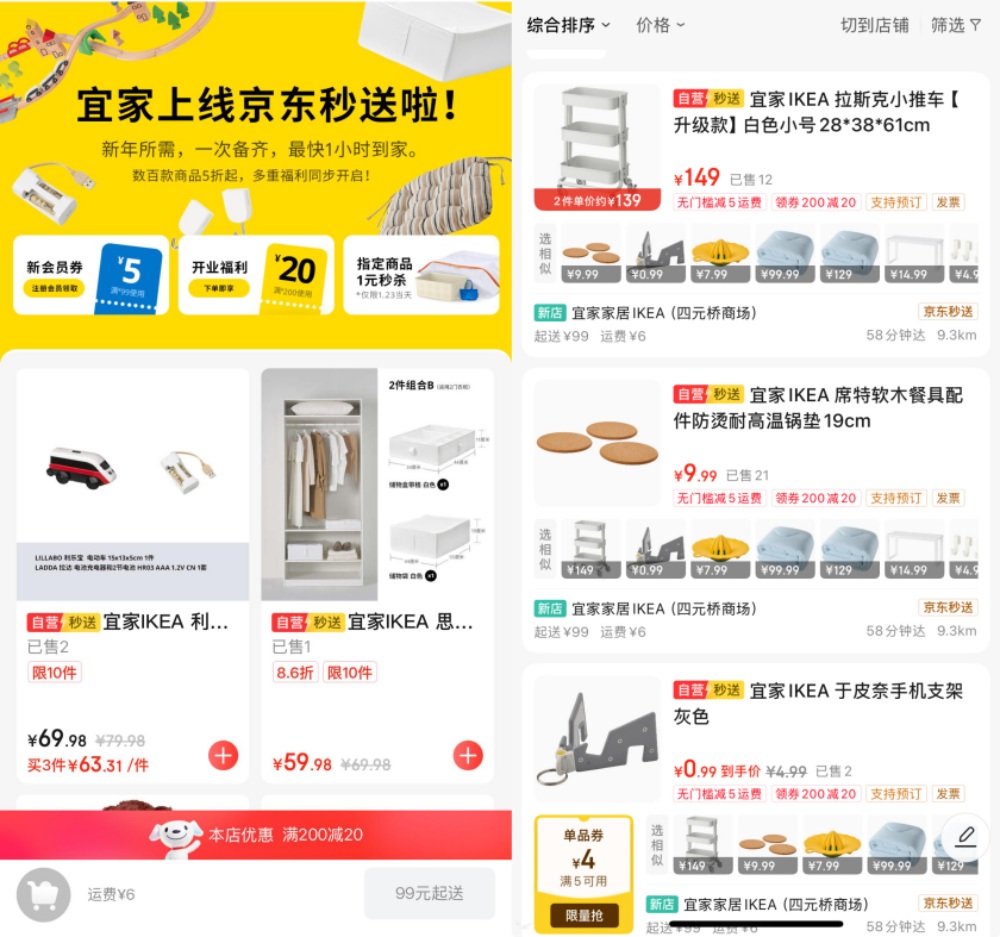
宜家首次支持即时零售:上线京东秒送,限时4公里内满99免运费
Xin Lang Cai Jing· 2026-01-23 04:26
Core Insights - IKEA has launched an instant retail service on JD.com, marking its entry into the instant retail sector, covering 9 cities and 13 stores in China [1][4] - The service offers a range of lightweight home products, with promotional activities to attract customers [1][3] Group 1: Instant Retail Launch - IKEA's instant retail service is available in cities including Beijing, Guangzhou, and Shenzhen, allowing consumers to order through the JD app [1] - The service features promotional offers such as 1 yuan flash sales and discounts for new customers [1][3] - The operating hours for the instant retail stores are from 10:00 to 20:00, shorter than traditional store hours [3] Group 2: Product Offering and Pricing - The product range includes storage items, tableware, kitchenware, bedding, lighting, and furniture, focusing on lighter items [3][4] - A specific example includes a drawer cabinet priced at 349 yuan, which can be purchased for 335.5 yuan after discounts and fees [3] Group 3: Market Context and Strategy - IKEA is facing a store closure trend in China, with plans to close 7 stores by February 2026 [5] - The company aims to shift from expansion to focused growth, planning to open over ten small stores in key markets like Beijing and Shenzhen [5] - IKEA's sales in China for FY2024 are projected to be approximately 11.15 billion yuan, a decline of nearly 1 billion yuan from the previous fiscal year [5]

千余家企业带来超10万种优质年货
Xin Lang Cai Jing· 2026-01-22 19:12
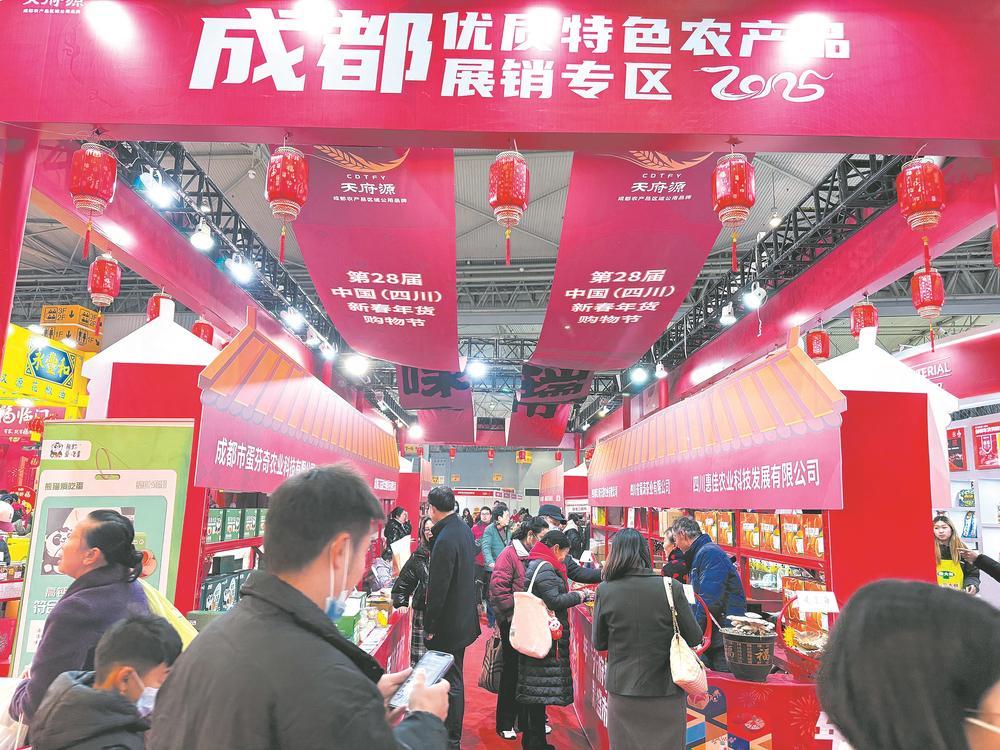
Core Viewpoint - The 29th China (Sichuan) Spring Festival Shopping Festival will take place from January 30 to February 11, showcasing over 100,000 high-quality New Year goods from more than 1,000 enterprises across 36 countries and regions, with a main venue in Chengdu and a sub-venue in Chongqing [2][3]. Group 1: Event Overview - The event will be held at the Chengdu Century City New International Exhibition Center, covering an area of 50,000 square meters [2]. - It will feature products from nearly 30 provinces, municipalities, and autonomous regions in China [2]. Group 2: Product Offerings - The festival will present over 1,000 imported goods, including French wine, German beer, Belgian chocolate, Australian beef, and New Zealand milk powder, as well as various lifestyle products [3]. - A special "川字号" (Chuan brand) exhibition area will showcase high-quality local products from 21 cities in Sichuan, including unique agricultural products and crafts [4]. Group 3: Special Features - A dedicated liquor pavilion will highlight Sichuan's renowned liquor brands, featuring promotional activities under the theme "Taste Sichuan Liquor, Enjoy Life, Respect the Future" [4]. - The event will also include a "New Product Launch Area" to display innovative products and packaging [4]. Group 4: Activities and Engagement - Over 60 special activities will be organized throughout the festival, focusing on consumer engagement and interactive experiences [5][7]. - Cultural performances, traditional crafts, and a food market featuring popular local snacks will enhance the festive atmosphere [7]. Group 5: Transportation and Accessibility - To facilitate access for citizens, a special shopping bus line will be established between the subway station and the exhibition center [7].
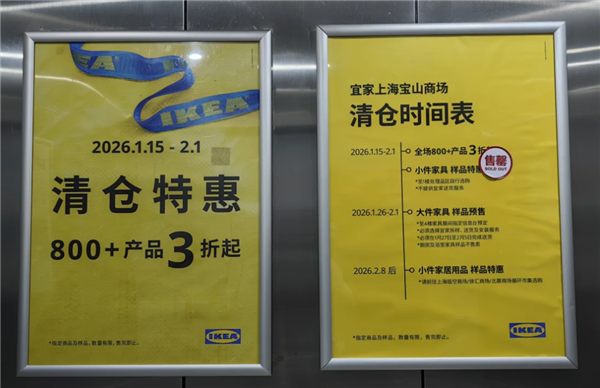
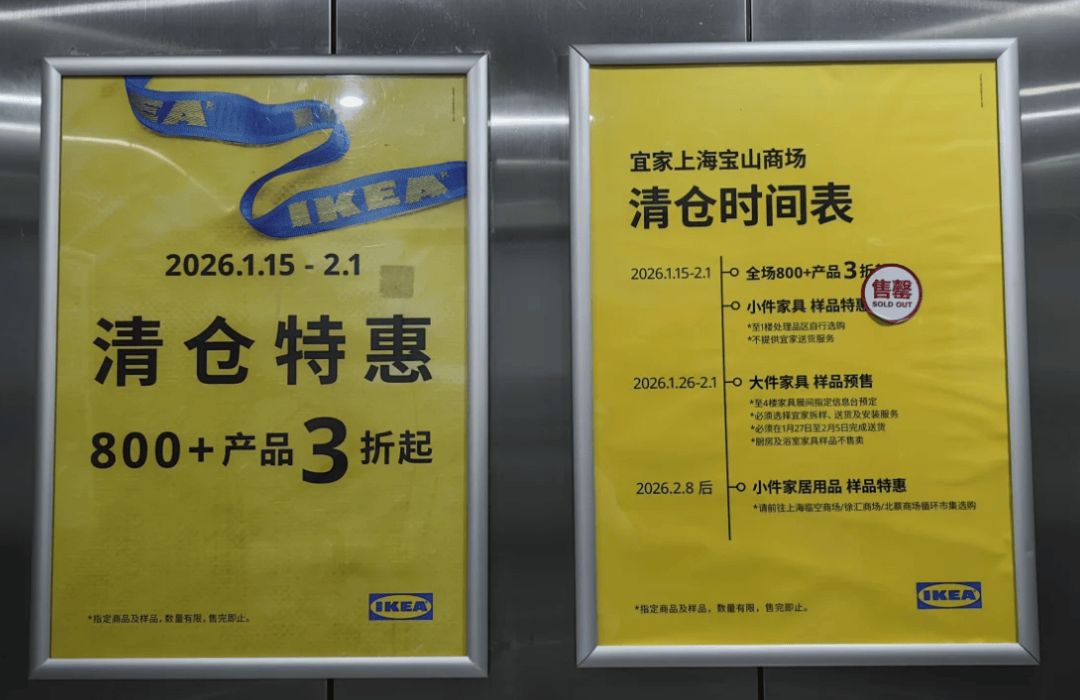
宣布闭店后的宜家人满为患 但打折活动15日才开启
Sou Hu Cai Jing· 2026-01-10 13:22
Core Viewpoint - IKEA is undergoing a significant strategic transformation in response to declining sales and changing consumer behaviors, moving away from large-scale expansion to focus on community-based smaller stores and online retail [1][19]. Group 1: Store Closures and Consumer Reactions - IKEA announced the closure of seven stores in China, including locations in Shanghai, Guangzhou, and Ningbo, effective February 2 [4][8]. - Following the announcement, there was a surge in customer traffic at the remaining stores, with long queues and crowded aisles as consumers rushed to take advantage of clearance sales starting January 15 [5][6]. - Many customers expressed nostalgia and shared memories associated with IKEA, highlighting its role as a significant part of their lives beyond just a shopping destination [5][10]. Group 2: Financial Performance and Market Challenges - IKEA's global revenue declined by 5.5% to €41.864 billion in 2024, while IKEA China's sales dropped from a peak of ¥15.77 billion in 2019 to approximately ¥11.15 billion in 2024, a nearly 30% decrease [19][20]. - The traditional drivers of the home goods market, such as new housing deliveries and large-scale renovations, are diminishing, impacting sales [20]. - The rise of local brands offering competitive pricing and tailored designs has intensified competition, with IKEA falling to seventh place in the Tmall furniture sales rankings during the 2024 Double Eleven shopping festival [20][21]. Group 3: Strategic Shift and Future Plans - IKEA is shifting its strategy to focus on smaller, community-oriented stores and enhancing its online presence, with plans to open over ten small stores in key cities like Beijing and Shenzhen in the next two years [21]. - The company aims to adapt to the evolving market by optimizing costs and improving efficiency, indicating a proactive approach to its transformation rather than a reaction to financial distress [19][21]. - The transition reflects broader trends in retail, where large-format stores are being replaced by smaller, more accessible formats to meet changing consumer preferences [21].

4岁女孩竟感染梅毒!医生紧急提醒:奶奶这个习惯害了她
Xin Lang Cai Jing· 2025-12-27 07:22
Core Viewpoint - A 4-year-old girl was diagnosed with congenital syphilis after being infected by her grandmother, who had untreated syphilis and fed her using her mouth, leading to indirect transmission through saliva [1][2]. Group 1: Transmission Methods - Syphilis can be transmitted through various means beyond sexual contact, including mother-to-child transmission during pregnancy or childbirth [3]. - Blood transmission can occur through contaminated blood transfusions or shared medical equipment [4]. - Indirect contact transmission can happen through shared utensils, mouth-to-mouth feeding, or kissing, especially if both parties have oral mucosal injuries [4]. Group 2: Saliva as a Transmission Pathway - Saliva is highlighted as a significant but often overlooked transmission route for various diseases, particularly in family or communal settings [5]. - Common risky behaviors include adults feeding children with their mouths, testing food temperatures, and kissing children on the mouth [6]. Group 3: Other Diseases Transmitted via Saliva - Helicobacter pylori, influenza viruses, herpes viruses, and bacteria causing cavities can also be transmitted through saliva [7][8]. - Close contact behaviors, such as kissing and sharing food, increase the risk of transmission for these pathogens [8]. Group 4: Prevention Recommendations - Personal items like toothbrushes and towels should not be shared, and children should have their own sanitized utensils [9]. - Unhygienic practices, such as mouth feeding and kissing on the mouth, should be avoided [10]. - Regular health check-ups and prompt treatment of infectious diseases are essential for family health [10].