运行管理系统

Search documents
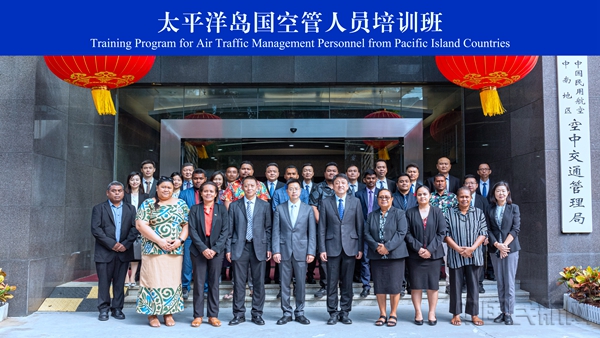
架起空中丝路连心桥——太平洋岛国空管人员培训班侧记
Zhong Guo Min Hang Wang· 2025-11-11 02:41
Core Viewpoint - The successful completion of the first air traffic control training program for Pacific Island countries marks a significant step in enhancing cooperation between China and these nations in civil aviation, showcasing China's commitment to sharing its air traffic management expertise [1][11]. Group 1: Training Overview - The training program, held in Guangzhou, involved 13 civil aviation professionals from Fiji, Nauru, Papua New Guinea, Samoa, and the Solomon Islands, and lasted for two weeks [1]. - This initiative is part of the Civil Aviation Administration of China’s efforts to implement cooperation agreements with Pacific Island leaders and promote collaboration in civil aviation [1][11]. Group 2: Training Structure and Content - The training was designed with a focus on "theory foundation, practical empowerment, and cultural integration," tailored to meet the specific needs of the Pacific Island countries [5]. - A comprehensive training plan was developed, including 15 theoretical courses, 2 simulation training courses, and 3 site visits, with a team of 15 instructors [5][6]. - The training utilized domestically developed simulation equipment and provided bilingual training materials, ensuring relevance to the Pacific Island airspace structure and operational characteristics [6]. Group 3: Teaching Methodology - The teaching approach combined lectures with group discussions and case studies, facilitating a two-way communication model that enhanced learning outcomes [7]. - Participants expressed that the practical training experience was unprecedented in their professional careers, highlighting the effectiveness of the training methods [7]. Group 4: Cultural Exchange and Experience - In addition to technical training, participants engaged in cultural exchanges, visiting local cultural sites and experiencing the modern development of Guangzhou, which deepened their understanding of China's growth under the Belt and Road Initiative [8]. - The training not only focused on technical skills but also aimed to build lasting relationships and cultural ties between China and the Pacific Island nations [9]. Group 5: Future Implications - The successful execution of this training program is expected to serve as a model for future international training collaborations, promoting sustainable and replicable cooperation in civil aviation [9][11]. - The initiative aims to inject new momentum into the development of civil aviation in Pacific Island countries, reinforcing the "Air Silk Road" as a cooperative link [11].