全国流量管理系统

Search documents
“天路”守护员
Xin Lang Cai Jing· 2026-01-31 22:38
"很多人以为飞机在天上是自由飞行,其实不是。就像地面交通需要红绿灯和交警指挥一样,每一架飞 机何时起飞、何时降落、选择哪条航线,等等,同样需要精密调度。"张伟告诉记者,通过实时整合空 域结构、机场保障能力、天气状况等多种数据,全国流量管理系统可以精准计算出每架飞机的最优航线 与起降时间,统一调配。他和团队需要保障系统稳定运行,让飞机精准有序飞行。 利用先进的监控运维工具,持续不间断地全面检查系统各项指标是否正常;梳理分析系统运行薄弱环 节;排查处置每一个可能存在的运行风险;每周开展应急培训与演练…… 1月26日晚上近10点,上海机场灯火通明,此时南京莱斯信息技术股份有限公司运维总监张伟乘坐的飞 机刚刚落地。27日前往合作单位商讨技术问题,28日完成任务立即搭乘晚班飞机回北京,落地后直接赶 赴中国民航全国流量管理系统指挥中枢……春运临近,张伟每天忙得像个陀螺,有时连饭都顾不上吃。 这样高强度的工作节奏,43岁的张伟早习以为常,"每年寒暑假尤其是春运期间,正是我们一年中最忙 的时候"。 万里蓝天之上航班如织,如何保障成千上万架飞机安全、顺畅、高效飞行,离不开一套强大的"空中交 通智慧大脑"——全国流量管理系统。这 ...
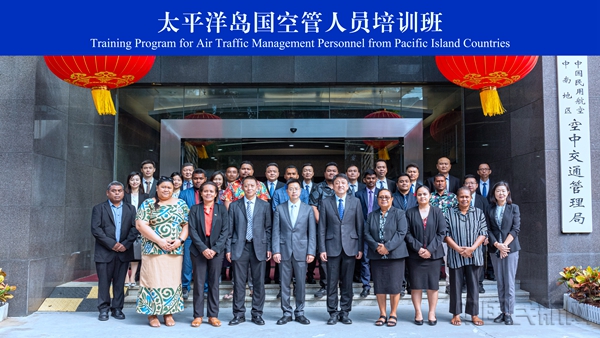
架起空中丝路连心桥——太平洋岛国空管人员培训班侧记
Zhong Guo Min Hang Wang· 2025-11-11 02:41
Core Viewpoint - The successful completion of the first air traffic control training program for Pacific Island countries marks a significant step in enhancing cooperation between China and these nations in civil aviation, showcasing China's commitment to sharing its air traffic management expertise [1][11]. Group 1: Training Overview - The training program, held in Guangzhou, involved 13 civil aviation professionals from Fiji, Nauru, Papua New Guinea, Samoa, and the Solomon Islands, and lasted for two weeks [1]. - This initiative is part of the Civil Aviation Administration of China’s efforts to implement cooperation agreements with Pacific Island leaders and promote collaboration in civil aviation [1][11]. Group 2: Training Structure and Content - The training was designed with a focus on "theory foundation, practical empowerment, and cultural integration," tailored to meet the specific needs of the Pacific Island countries [5]. - A comprehensive training plan was developed, including 15 theoretical courses, 2 simulation training courses, and 3 site visits, with a team of 15 instructors [5][6]. - The training utilized domestically developed simulation equipment and provided bilingual training materials, ensuring relevance to the Pacific Island airspace structure and operational characteristics [6]. Group 3: Teaching Methodology - The teaching approach combined lectures with group discussions and case studies, facilitating a two-way communication model that enhanced learning outcomes [7]. - Participants expressed that the practical training experience was unprecedented in their professional careers, highlighting the effectiveness of the training methods [7]. Group 4: Cultural Exchange and Experience - In addition to technical training, participants engaged in cultural exchanges, visiting local cultural sites and experiencing the modern development of Guangzhou, which deepened their understanding of China's growth under the Belt and Road Initiative [8]. - The training not only focused on technical skills but also aimed to build lasting relationships and cultural ties between China and the Pacific Island nations [9]. Group 5: Future Implications - The successful execution of this training program is expected to serve as a model for future international training collaborations, promoting sustainable and replicable cooperation in civil aviation [9][11]. - The initiative aims to inject new momentum into the development of civil aviation in Pacific Island countries, reinforcing the "Air Silk Road" as a cooperative link [11].