近零碳钢铁

Search documents
视频丨近零碳钢铁是怎样炼成的?独家探访绿色钢铁“梦工厂”
Xin Lang Cai Jing· 2025-12-25 13:18
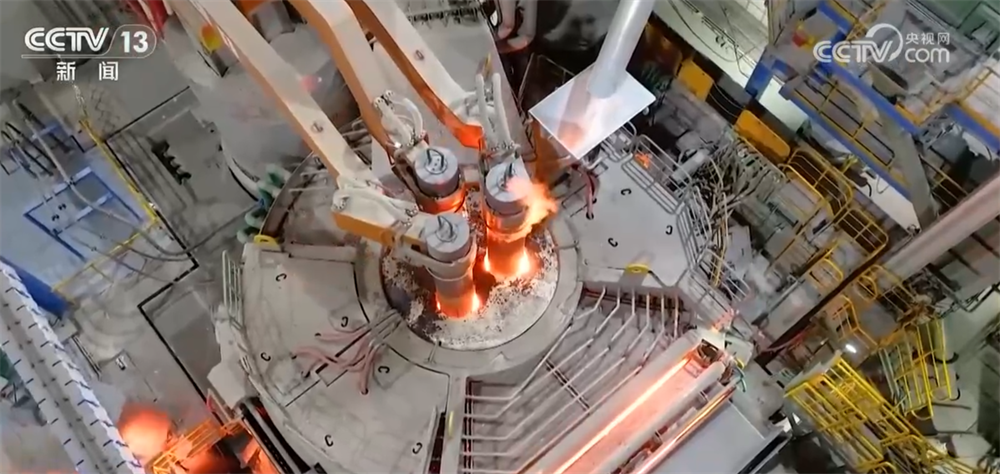
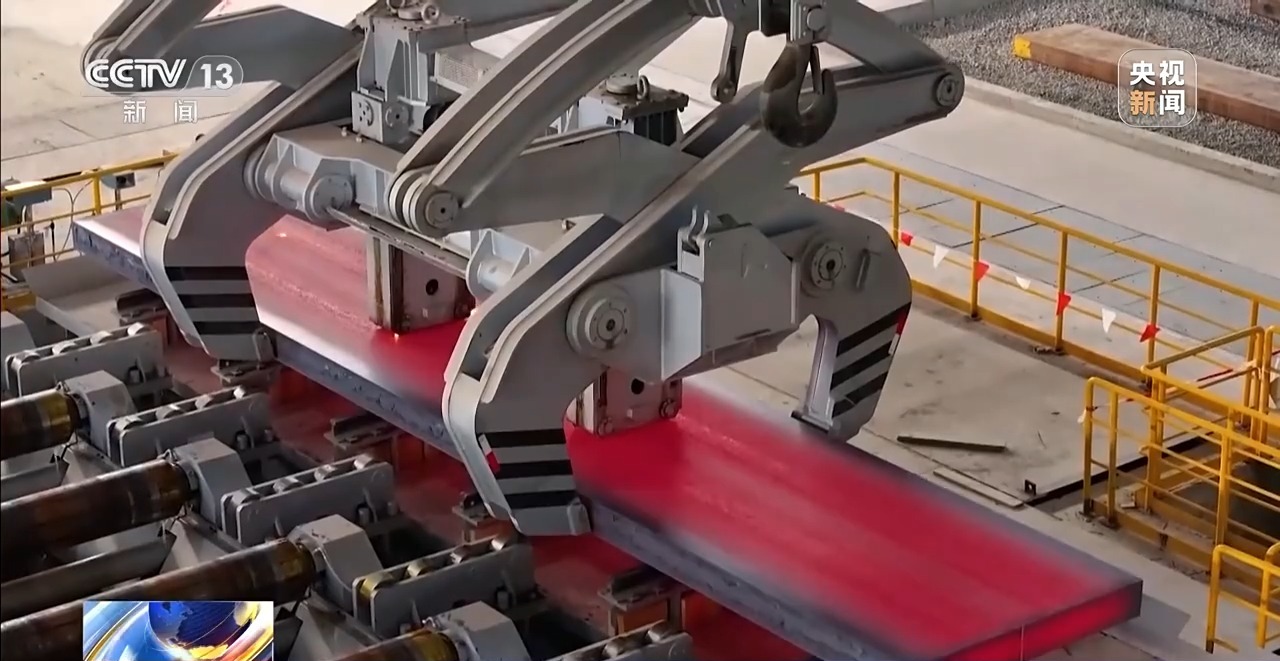
Core Viewpoint - The establishment of China's first million-ton near-zero carbon steel production line in Zhanjiang marks a significant breakthrough in the green and low-carbon development of the steel industry [1][3]. Group 1: Technological Advancements - The production line utilizes advanced hydrogen metallurgy and electric melting technology, replacing traditional coke with hydrogen, significantly reducing carbon emissions [3]. - Compared to traditional processes, this production line can achieve a carbon reduction of 50% to 80% [3]. - The hydrogen-based steelmaking technology transforms the high-energy consumption and pollution of traditional steelmaking methods into a greener and low-carbon process [3][6]. Group 2: Environmental Impact - The million-ton near-zero carbon steel production line can reduce carbon emissions by over 3.14 million tons annually, equivalent to creating 2,000 square kilometers of forest [5]. - The production process can eliminate 2,500 tons of CO2 emissions per day, making it the most environmentally friendly and lowest carbon steelmaking process currently available [6]. - The electric furnace used in the production can smelt 220 tons of steel at once, producing 80,000 amperes of current and reaching temperatures of up to 5,000°C, while reducing carbon emissions by over 80% compared to traditional methods [8]. Group 3: Industry Development - The "14th Five-Year Plan" is a critical period for the steel industry to achieve high-quality development, with green transformation becoming a prominent theme [11]. - The number of new green factories in the steel industry is increasing annually, with a total of 126 new green factories expected from 2021 to 2024 [13]. - Key enterprises in the steel industry have significantly reduced pollutant emissions, with SO2, particulate matter, and NOx emissions decreasing by 28%, 26.7%, and 36.5% respectively by the end of Q3 2025 compared to the end of 2021 [13]. Group 4: Resource Efficiency - Water resource utilization efficiency in the steel industry has improved, with the water consumption per ton of steel decreasing from 2.50 cubic meters in 2021 to 2.33 cubic meters in 2024, a reduction of 6.8% [15]. - The steel industry is expected to achieve a total energy saving of approximately 10.5 million tons of standard coal and a carbon reduction of about 27.5 million tons by 2024 [16].


“数”里行间透视“十四五”期间中国钢铁向“绿”而兴发展轨迹
Yang Shi Wang· 2025-12-24 02:34
Core Viewpoint - The establishment of China's first million-ton near-zero carbon steel production line in Zhanjiang marks a significant breakthrough in the green and low-carbon development of the steel industry, utilizing advanced hydrogen metallurgy technology to replace traditional coke and significantly reduce carbon emissions [1][4]. Group 1: Production Technology and Environmental Impact - The new production line employs hydrogen as the main reducing agent, achieving a carbon reduction of 50% to 80% compared to traditional methods [1]. - The hydrogen-based vertical furnace produces direct reduced iron with a metalization rate that meets expected targets, while efficient electric furnaces enhance energy utilization [1]. - The facility can reduce carbon dioxide emissions by 2,500 tons per day, making it the most environmentally friendly and lowest carbon emission smelting process currently available [3]. Group 2: Annual Carbon Reduction and Industry Contribution - The million-ton near-zero carbon steel production line is expected to reduce carbon emissions by over 3.14 million tons annually, equivalent to creating 2,000 square kilometers of forest [4]. - This project serves as a model for low-carbon transformation in the steel industry and contributes to high-quality development [4]. Group 3: Industry Trends and Goals - During the "14th Five-Year Plan" period, the steel industry is focusing on green transformation, with a significant increase in the number of green factories, totaling 126 new green factories from 2021 to 2024 [11]. - Key pollutants such as sulfur dioxide, particulate matter, and nitrogen oxides have seen significant reductions, with respective decreases of 28%, 26.7%, and 36.5% by the end of Q3 2025 compared to the end of 2021 [11]. - Water resource efficiency in the steel industry has improved, with water consumption per ton of steel decreasing from 2.50 cubic meters in 2021 to 2.33 cubic meters in 2024, a reduction of 6.8% [14]. Group 4: Energy Efficiency and International Competitiveness - The steel industry has initiated an extreme energy efficiency project, aiming for a total energy saving of approximately 10.5 million tons of standard coal and a carbon reduction of about 27.5 million tons by 2024 [16]. - The launch of the environmental product declaration platform for the steel industry has registered over 9,000 users, enhancing the international competitiveness of Chinese steel products by breaking down foreign green trade barriers [19].