还债信托

Search documents
贾跃亭、张近东相继设立还债信托
2 1 Shi Ji Jing Ji Bao Dao· 2025-11-21 00:30
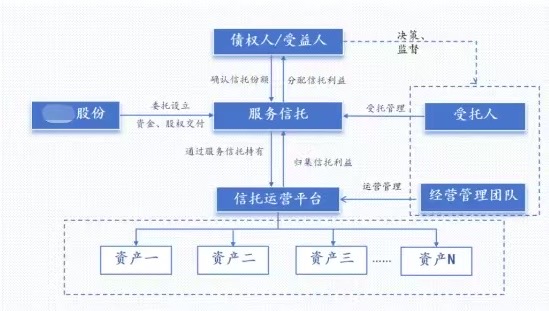
Core Viewpoint - The establishment of debt repayment trusts is becoming a popular solution for companies and individuals facing significant debt, allowing them to manage their assets and obligations more effectively while providing creditors with a clearer path to repayment [1][7]. Group 1: Debt Repayment Trusts - Faraday Future's founder, Jia Yueting, has set up a second debt repayment trust to expedite the repayment of debts in China [1]. - The trust mechanism involves placing valuable assets into a trust specifically for debt repayment, enhancing creditors' confidence in recovering their debts [1][6]. - The demand for bankruptcy service trusts has surged as more companies in debt seek similar solutions [1]. Group 2: Operational Mechanism - The assets placed in the trust are categorized into operational and liquidation assets, with management typically remaining under the original team but under strict supervision [3]. - There are two main models for risk disposal service trusts: the ongoing restructuring model and the sale restructuring model, each with different approaches to asset management and creditor repayment [3][6]. Group 3: Protection of Creditors' Rights - Creditors' rights are safeguarded through mechanisms such as asset independence, conversion of uncertain debts into clear trust beneficiary rights, and governance structures that include beneficiary meetings and management committees [5][6]. - The actual repayment amount to creditors depends on the execution of the trust plan, the quality of underlying assets, the trustee's professional capabilities, and the rationality of the trust scheme design [6]. Group 4: Breaking the "Prisoner's Dilemma" - Establishing a debt repayment trust helps alleviate the "prisoner's dilemma" faced by debtors, allowing for a more stable operational environment and the potential for new investments [7][8]. - Jia Yueting's previous and current trusts illustrate the strategy of transferring personal and company assets into trusts to protect them from immediate creditor actions while facilitating future repayment [7][8].

贾跃亭、张近东相继设立,“大负翁”们的“还债信托”如何运作?
2 1 Shi Ji Jing Ji Bao Dao· 2025-11-20 12:54
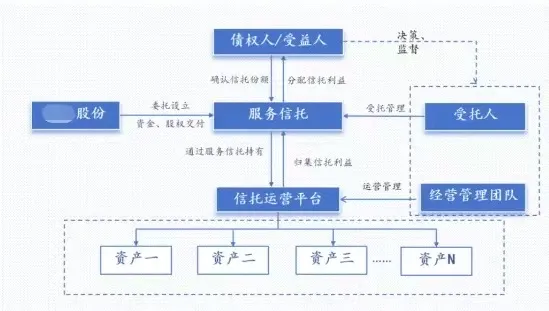
Group 1 - Faraday Future's founder Jia Yueting has established a second debt repayment trust to expedite the repayment of debts in China, amidst a backdrop of significant financial distress [1][6] - Zhang Jindong, the former richest man in Jiangsu, plans to set up a bankruptcy reorganization trust to manage the equity of Suning Group and his personal assets for debt repayment, highlighting a trend among indebted companies to utilize similar trusts for financial recovery [1][6] - The demand for bankruptcy service trusts has surged as more companies in debt seek to resolve their financial issues through these mechanisms [1] Group 2 - Debt repayment trusts operate by placing valuable assets of the company or its owners into a trust specifically established for debt repayment, thereby enhancing creditors' confidence in recovering their debts [1][4] - Creditors become beneficiaries of the trust, with the proceeds from asset disposal and operational income directed towards debt repayment [1][4] - The trust is typically managed by a trustee, and in some cases, a trust asset management company is established to oversee the operation and disposal of the underlying assets [1][4] Group 3 - The assets in the proposed Suning bankruptcy reorganization trust are categorized into operational retention and disposal for liquidation, with the new Suning Group and Nanjing Zhongcheng Asset Management Co. set to manage these assets [3] - The original management team usually continues to oversee daily operations, although they are subject to strict supervision, ensuring that the company remains operational while addressing debt issues [3][4] - Two primary models of risk disposal service trusts exist: the ongoing reorganization model, where creditors become beneficiaries, and the sale reorganization model, which involves selling quality assets to restore operations quickly [3][4] Group 4 - To protect creditors' interests, trusts implement mechanisms such as asset independence, converting uncertain debts into clear trust beneficiary rights, and establishing governance structures to oversee trustee operations [4][5] - A beneficiary assembly, composed of all creditors, serves as the highest decision-making body for the trust, with a management committee to oversee operations and ensure accountability [4][5] - The amount creditors ultimately receive depends on the execution of the trust plan, the quality of underlying assets, the trustee's management capabilities, and the rationality of the trust scheme design [5] Group 5 - Jia Yueting's establishment of a second debt repayment trust follows his first trust set up in 2019, which was approved by a California bankruptcy court, indicating a strategic approach to managing his financial obligations [6][7] - The new trust includes assets from both Faraday Future and AIXC, with significant debt pressures highlighted by Suning's liabilities exceeding 230 billion yuan, necessitating a comprehensive restructuring plan [6][7] - The creation of such trusts helps alleviate the "prisoner's dilemma" faced by debtors, allowing for a more stable operational environment and the potential for new investments to revitalize distressed assets [7]