破产服务信托

Search documents
做强而非“分掉”杉杉股份 是杉杉集团重整破局的关键
Mei Ri Jing Ji Xin Wen· 2026-02-10 10:55
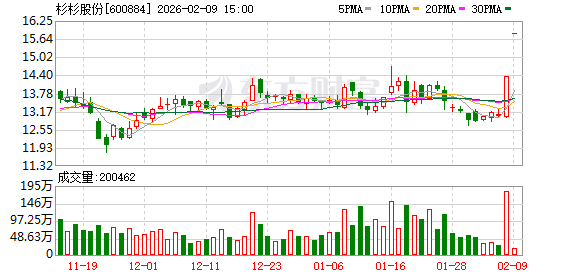
Core Viewpoint - Shanshan Group has reached a significant milestone in its restructuring process by signing an investment agreement with Anhui Wanwei Group and Ningbo Jinzi, marking a potential turnaround for the company after nearly a year of challenges [1] Group 1: Restructuring Details - The restructuring plan involves a combination of "equity acquisition + bankruptcy service trust + future stock acquisition" [1] - Anhui Wanwei Group will invest 4.987 billion yuan to directly acquire 13.5% of Shanshan Co., Ltd.'s shares, with an immediate purchase price of 11.50 yuan per share [1] - The plan allows Anhui Wanwei Group to control 21.88% of Shanshan Co., Ltd.'s voting rights through various arrangements, potentially changing the controlling shareholder to Anhui Wanwei Group and the actual controller to the Anhui Provincial State-owned Assets Supervision and Administration Commission [1] Group 2: Market Reaction and Comparison - The restructuring plan has received initial market approval, with Shanshan Co., Ltd.'s stock hitting the daily limit up on February 9, although it fell by 4.36% on February 10 [2] - The current restructuring plan offers a significantly higher acquisition price of 16.42 yuan per share compared to the previous plan's price of 11.44 yuan per share, representing a premium of over 43.53% [2] Group 3: Benefits for Creditors - The bankruptcy service trust provides creditors with two options: immediate cash compensation at 11.50 yuan per share or the ability to repurchase shares at a lower price after receiving cash compensation, ensuring creditors benefit from any stock price appreciation [3] - The design of the trust allows for risk protection for Anhui State-owned Assets while maximizing creditor interests, with the trust isolating potential legal disputes related to pledged or frozen shares [2][3] Group 4: Strategic Implications - The involvement of Anhui Wanwei Group is expected to enhance industrial synergy, as it can recommend staff and initiate board changes, deepening its management role in Shanshan Co., Ltd. [3] - The acquisition is seen as a strategic move to fill the gap in the lithium battery anode materials manufacturing sector in Anhui, which is already strong in the new energy vehicle industry [3] Group 5: Challenges Ahead - Despite the positive developments, the complexity of Shanshan Group's debt issues and the potential for intense negotiations among stakeholders could pose challenges to the successful implementation of the restructuring [4] - The key to breaking the deadlock lies in maximizing the value of Shanshan Co., Ltd. as a core asset, with a focus on achieving the highest possible recovery rate for creditors [4]

做强而非“分掉”杉杉股份,是杉杉集团重整破局的关键
Mei Ri Jing Ji Xin Wen· 2026-02-09 11:07
Core Viewpoint - Shanshan Group has reached a significant milestone in its restructuring process by signing an investment agreement with Anhui Wanwei Group and Ningbo Jinzi, marking a potential turnaround for the company after nearly a year of challenges [2] Group 1: Restructuring Agreement - The restructuring plan involves a combination of "equity acquisition + bankruptcy service trust + forward stock acquisition" [2] - Anhui Wanwei Group will invest 4.987 billion yuan to directly acquire 13.5% of Shanshan Co., Ltd.'s shares [2] - The acquisition price is set at 11.50 yuan per share, which will serve as a repayment resource for creditors, along with a bankruptcy service trust for up to 8.38% of shares, amounting to approximately 2.168 billion yuan [2] Group 2: Comparison with Previous Plans - The current restructuring plan offers a significantly higher acquisition price of 16.42 yuan per share, representing a premium of over 43% compared to the previous plan's price of 11.44 yuan per share [3] - This higher pricing is expected to enhance the repayment capacity for Shanshan Group's debts and improve creditor recovery rates [3] Group 3: Benefits for Creditors - The bankruptcy service trust provides creditors with two options: immediate cash compensation at 11.50 yuan per share or the opportunity to repurchase shares at the same price plus an annual interest of 3.5% if the stock price rises [4] - The design of the trust ensures that any excess gains from share appreciation will belong to the creditors, protecting their interests [4] Group 4: Strategic Industry Collaboration - The agreement allows Anhui Wanwei Group to recommend up to four staff members to Shanshan Co., Ltd. and initiate board elections after certain investment milestones are met [5] - Anhui's strong position in the new energy sector, particularly in lithium battery materials, is expected to enhance Shanshan's growth potential, thereby securing creditor interests [5] Group 5: Challenges Ahead - Despite the promising restructuring plan, Shanshan Group's debt issues remain complex, and the success of the restructuring will depend on navigating the interests of various stakeholders [5] - The focus should remain on maximizing the value of Shanshan Co., Ltd. as the core asset to achieve successful restructuring [5]

贾跃亭、张近东相继设立,“大负翁”们的“还债信托”如何运作?
2 1 Shi Ji Jing Ji Bao Dao· 2025-11-20 12:54
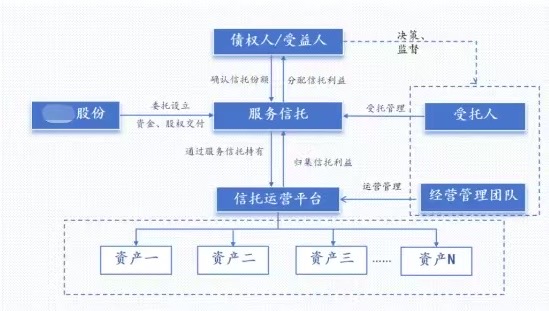
Group 1 - Faraday Future's founder Jia Yueting has established a second debt repayment trust to expedite the repayment of debts in China, amidst a backdrop of significant financial distress [1][6] - Zhang Jindong, the former richest man in Jiangsu, plans to set up a bankruptcy reorganization trust to manage the equity of Suning Group and his personal assets for debt repayment, highlighting a trend among indebted companies to utilize similar trusts for financial recovery [1][6] - The demand for bankruptcy service trusts has surged as more companies in debt seek to resolve their financial issues through these mechanisms [1] Group 2 - Debt repayment trusts operate by placing valuable assets of the company or its owners into a trust specifically established for debt repayment, thereby enhancing creditors' confidence in recovering their debts [1][4] - Creditors become beneficiaries of the trust, with the proceeds from asset disposal and operational income directed towards debt repayment [1][4] - The trust is typically managed by a trustee, and in some cases, a trust asset management company is established to oversee the operation and disposal of the underlying assets [1][4] Group 3 - The assets in the proposed Suning bankruptcy reorganization trust are categorized into operational retention and disposal for liquidation, with the new Suning Group and Nanjing Zhongcheng Asset Management Co. set to manage these assets [3] - The original management team usually continues to oversee daily operations, although they are subject to strict supervision, ensuring that the company remains operational while addressing debt issues [3][4] - Two primary models of risk disposal service trusts exist: the ongoing reorganization model, where creditors become beneficiaries, and the sale reorganization model, which involves selling quality assets to restore operations quickly [3][4] Group 4 - To protect creditors' interests, trusts implement mechanisms such as asset independence, converting uncertain debts into clear trust beneficiary rights, and establishing governance structures to oversee trustee operations [4][5] - A beneficiary assembly, composed of all creditors, serves as the highest decision-making body for the trust, with a management committee to oversee operations and ensure accountability [4][5] - The amount creditors ultimately receive depends on the execution of the trust plan, the quality of underlying assets, the trustee's management capabilities, and the rationality of the trust scheme design [5] Group 5 - Jia Yueting's establishment of a second debt repayment trust follows his first trust set up in 2019, which was approved by a California bankruptcy court, indicating a strategic approach to managing his financial obligations [6][7] - The new trust includes assets from both Faraday Future and AIXC, with significant debt pressures highlighted by Suning's liabilities exceeding 230 billion yuan, necessitating a comprehensive restructuring plan [6][7] - The creation of such trusts helps alleviate the "prisoner's dilemma" faced by debtors, allowing for a more stable operational environment and the potential for new investments to revitalize distressed assets [7]
直击业绩会|金科股份:管理人已经启动破产服务信托招募和遴选,将进一步聚焦川渝、京沪等高能级城市
Mei Ri Jing Ji Xin Wen· 2025-05-29 17:05
Core Viewpoint - The restructuring investment of 2.6 billion yuan is not a direct replacement for debt repayment but part of a systematic rebirth through risk investment pricing, asset credit release, and business model reconstruction [2][4]. Financial Performance - In 2024, the company's operating revenue was 27.555 billion yuan, a year-on-year decrease of 56.43%; the net profit attributable to shareholders was -31.970 billion yuan, a year-on-year decrease of 266.11% [3]. - The decline in performance was attributed to several factors, including a decrease in real estate sales and turnover scale, prudent inventory impairment provisions, significant increases in financial expenses, and losses from passive asset disposals [3]. Restructuring Plan - The Chongqing No. 5 Intermediate People's Court approved the restructuring plan for the company on May 10 and 11, 2024, and has entered the execution phase [2]. - The restructuring investors have already paid a total of approximately 1.4 billion yuan in performance bonds for the first and second phases, with the remaining amount expected to be paid ahead of schedule [3]. Strategic Investment - The 2.6 billion yuan investment is not directly for debt repayment but represents the entry price for strategic investors, aimed at ensuring stable operations and enhancing company value [4][5]. - The strategic investors are expected to revitalize core assets and restore sustainable operational capabilities [4]. Future Development - The company will focus on three major changes post-restructuring: a shift in business model from traditional development and sales to integrated asset management; a change in core capabilities from scale and speed to quality and value-added services; and a focus on high-energy cities such as Chengdu, Chongqing, Beijing, and Shanghai [6]. - The new positioning of the company will be as a comprehensive real estate operator centered on technological innovation and operational management [5][6].