适老化床垫

Search documents
视频丨打造老人满意“爆款” 多地创新银发消费场景
Yang Shi Xin Wen Ke Hu Duan· 2026-01-18 13:02
Group 1 - The Ministry of Civil Affairs and other departments are promoting the integration of elderly care services with daily consumption to support the silver economy [2] - A silver store in Shanghai offers a variety of products tailored to elderly needs, creating an experiential shopping environment rather than a traditional retail space [2] - Feedback from elderly consumers is being utilized as a "signal light" for product iteration, with companies actively responding to specific requests [4][6] Group 2 - A company producing electric nursing beds has identified pain points from elderly feedback, leading to product design improvements such as adding wheels and adjustable guardrails [6] - Sales of elderly-friendly products have increased by approximately 20%, indicating a strong demand for such offerings [8] - High-tech elderly care products are evolving towards being lighter and more user-friendly, with advancements in exoskeleton technology based on user feedback [8][10] Group 3 - In Xiamen, banks are integrating elderly care services with financial services, creating a one-stop experience for product trials and subsidy applications [10][12] - The collaboration between banks and local civil affairs departments has led to the establishment of smart health elderly care centers, enhancing the accessibility of government subsidy policies [12] - Elderly consumers are finding it convenient to learn about and experience products in these integrated service environments [14] Group 4 - In Jinan, the integration of big data and artificial intelligence into home care services is enhancing the convenience and personalization of elderly care [13] - Home care workers are utilizing AI to create detailed care plans, improving the quality of service provided to elderly clients [16] - The local government is promoting the application of AI in the silver economy, focusing on intelligent safety, rehabilitation assistance, and virtual companionship [18] Group 5 - Companies are leveraging AI to better capture the needs of the elderly, leading to increased market competitiveness and steady growth in production orders [22] - A new model of a lightweight, carbon fiber cane has been developed through AI design, showcasing innovation in elderly care products [20]

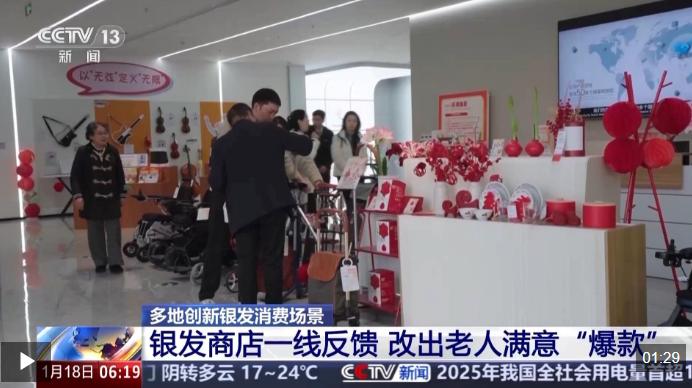
养老“爆款”产品更“轻”更“暖” “硬核”科技给老年人生活添便利
Yang Shi Wang· 2026-01-18 08:39
Core Viewpoint - The Chinese government is actively promoting the development of the silver economy by integrating elderly care services with daily consumption, shifting from a supply-driven model to a demand-driven approach that focuses on the needs of the elderly [1]. Group 1: Market Trends and Consumer Feedback - A silver store in Shanghai has become a hub for elderly consumers, offering a variety of products such as walking aids and smart wearable devices, creating an experiential shopping environment [5]. - Feedback from elderly consumers is being utilized to improve product design, with companies quickly adapting to specific requests, such as adding wheels to electric nursing beds and adjusting the height of guardrails [5][8]. - Sales of elderly-friendly products have seen a growth of approximately 20% due to increased demand for offline shopping experiences [6]. Group 2: Technological Integration in Elderly Care - High-tech products in elderly care are evolving towards being lighter and more user-friendly, with companies successfully reducing the weight of exoskeleton robots based on user feedback [8]. - A bank in Xiamen has established a smart health and elderly care center that combines financial services with product experiences and subsidy applications, creating a new service model for elderly care [11][17]. - The integration of artificial intelligence in home care services is enhancing the quality of care, with AI-driven solutions providing detailed care plans for elderly individuals [20][22]. Group 3: Business Growth and Demand - Companies are experiencing a steady increase in production orders, with one firm reporting over 400,000 orders since January, extending their order backlog to April 2026 [27]. - The use of AI in product development and market analysis is becoming a core driver for companies in the silver economy, allowing for more precise capture of elderly consumer needs [24][25].
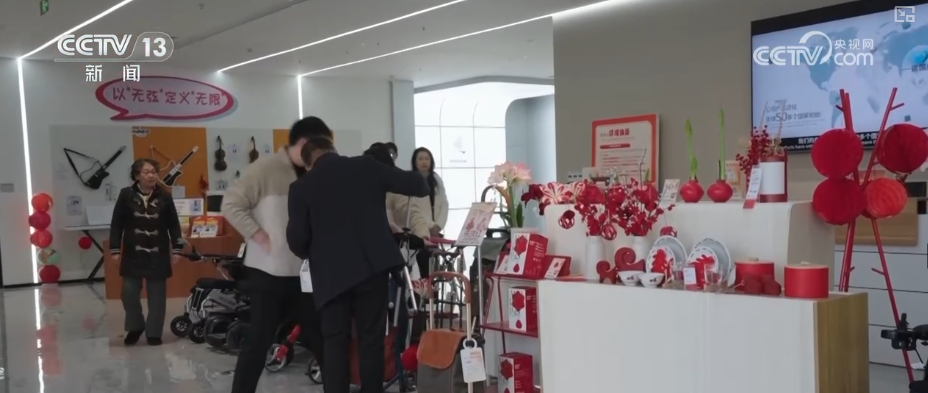
视频|打造老人满意“爆款” 多地创新银发消费场景
Yang Shi Xin Wen Ke Hu Duan· 2026-01-18 06:54
Core Insights - The Chinese government is promoting the development of the silver economy by integrating elderly care services with daily consumption, shifting from a supply-driven model to a demand-driven one [1] Group 1: Market Trends - A silver goods store in Shanghai is experiencing high foot traffic, offering a variety of products such as walking aids, electric wheelchairs, and smart wearable devices, resembling a home living experience [3] - Feedback from elderly consumers is being utilized as a "signal light" for product iteration, with companies actively responding to specific needs [4] Group 2: Product Innovation - An electric nursing bed company has identified pain points from elderly feedback, leading to design changes such as adding wheels and adjusting guard heights [6] - Sales of elderly-friendly products have increased by approximately 20% due to direct consumer feedback [8] - A company specializing in exoskeleton robots has successfully reduced the weight of their devices based on user feedback, enhancing usability for elderly individuals [10] Group 3: Service Integration - In Xiamen, banks are creating smart health and elderly care hubs that combine financial services with product experiences and subsidy applications, streamlining the process for elderly consumers [11] - A local bank has partnered with government departments to provide a platform for experiencing products and accessing government subsidies for elderly care modifications [15] Group 4: Technological Advancements - In Jinan, the integration of big data and artificial intelligence in home care services is enhancing convenience and personalization for elderly clients [18] - Home care workers are utilizing AI to create detailed care plans, significantly improving service delivery [20] - A local company has incorporated AI throughout its production process, leading to increased market competitiveness and a steady rise in orders, with over 400,000 units ordered since January [27]