
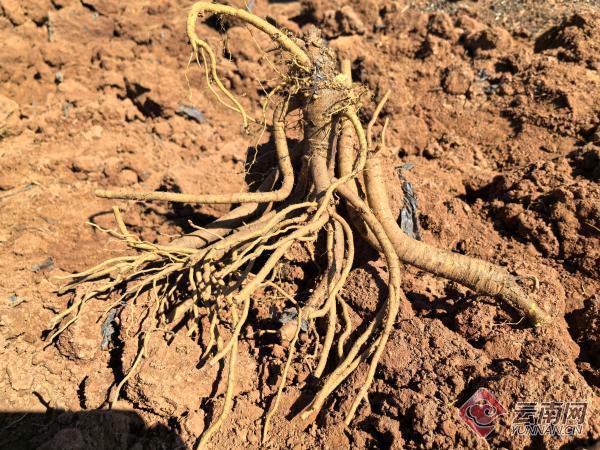
重楼

Search documents
云南祥云:“产研学用+北药南种+林地生金”促产业振兴
Xin Lang Cai Jing· 2026-01-23 09:39
Core Insights - The article discusses the successful implementation of a production measurement event for traditional Chinese medicinal herbs, specifically focusing on the cultivation of Huangqin (Scutellaria baicalensis) and Danggui (Angelica sinensis) in Xiangyun County, Yunnan Province, showcasing the integration of research, education, and practical application in the industry [1][4]. Group 1: Industry Development - Xiangyun County is leveraging its ecological advantages to explore the potential of traditional medicinal herbs, particularly through the "North Medicine South Planting" strategy, which aims to enhance the cultivation of local medicinal resources [3][4]. - The county has established a complete innovation ecosystem involving policy guidance, technological research and development, talent cultivation, industrial transformation, and market application, thereby facilitating the application of agricultural technology [4][5]. Group 2: Agricultural Practices - The cultivation practices include the introduction of mechanized farming techniques for Huangqin and Danggui, addressing labor shortages and high costs associated with manual labor in mountainous regions [5][7]. - A total of 400 acres of Huangqin and 300 acres of Danggui have been introduced, with an investment of 15 million yuan for the cultivation of various other medicinal plants, creating a comprehensive industrial chain [7]. Group 3: Research and Collaboration - The event involved collaboration among various institutions, including Yunnan Agricultural University and the Yunnan Academy of Agricultural Sciences, to ensure effective measurement and assessment of the medicinal herb production [1][4]. - The expert group confirmed the successful large-scale introduction of Huangqin in Yunnan, indicating a positive demonstration effect that enhances the capabilities of local communities [7].

五批援藏人接力高原建起现代农业园
Si Chuan Ri Bao· 2026-01-04 07:19
Core Insights - The modern agricultural demonstration park in Jin County has significantly improved the income of local impoverished households, with an average income increase of over 6,000 yuan per person this year [1][2] - The park, supported by a total investment of 21.4 million yuan from Meishan City since 2016, has become a key project for poverty alleviation and economic development in the region [1] - The park covers an area of 12,000 acres and involves 2,871 agricultural residents, focusing on the cultivation of various fruits and traditional Chinese medicinal herbs [1] Income Generation - Over 130 impoverished individuals have benefited from employment opportunities in the park, with expectations of earning 10,000 yuan next year as the park fully operates [1] - The park's fruit production, including snow pears, yellow peaches, and strawberries, has generated over 4 million yuan in revenue this year [1] Community Support - The "fly-in + return" model allows business owners in the park to return 10% of their profits to 12 impoverished villages and 379 impoverished households, contributing to an average income increase of 600 yuan per household [2] - The park is expected to enter a phase of increased production next year, with larger yields anticipated for fruits and medicinal herbs, further enhancing the income of local farmers [2]
云南巍山:中药材产业助农增收
Xin Lang Cai Jing· 2026-01-02 00:56
Core Viewpoint - The article highlights the development of traditional Chinese medicine (TCM) industry in Weishan County, Dali Prefecture, Yunnan Province, through a model that integrates companies, cooperatives, bases, and farmers, effectively addressing production, supply, and sales challenges while boosting income and employment for local residents [3]. Group 1 - Weishan County leverages its mountainous climate resources to promote the cultivation of TCM materials such as safflower, heavy building, and angelica [3]. - The development model involves providing seedlings and order-based purchasing to farmers, which helps to resolve difficulties in production and sales [3]. - This initiative is part of a broader strategy to inject new momentum into rural revitalization and enhance the income channels for local communities [3].
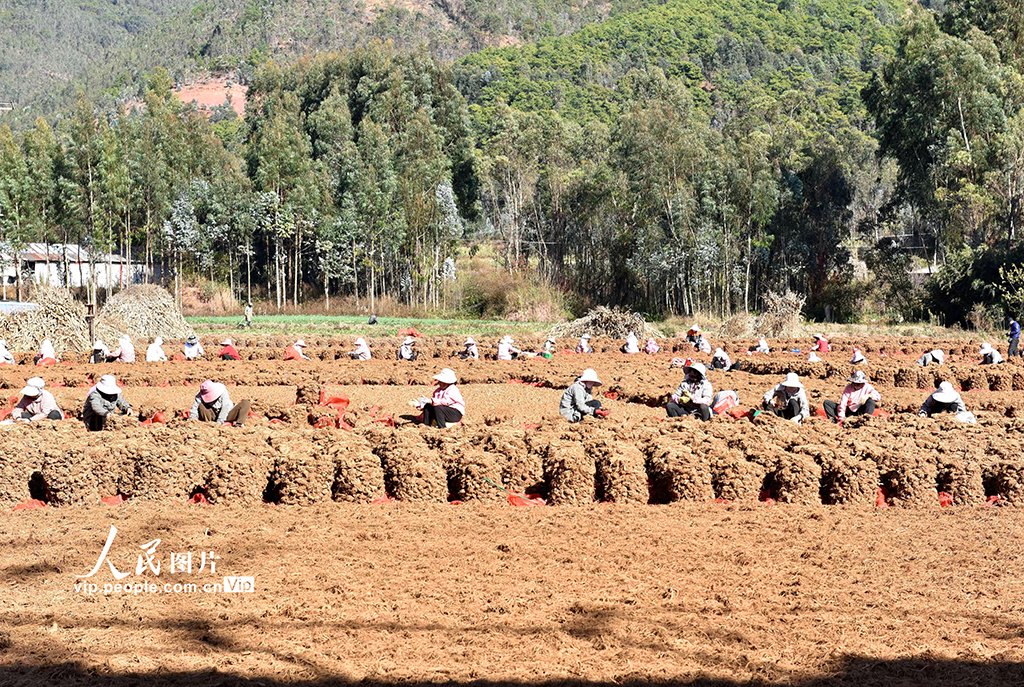
云南禄劝中药材种植面积逾17万亩 赋能乡村振兴
Zhong Guo Xin Wen Wang· 2025-12-27 09:15
Core Insights - The article highlights the growth of traditional Chinese medicine (TCM) herb cultivation in Luchuan County, Yunnan, with a target of 178,000 acres by 2025 and a current output value of 1.289 billion yuan, indicating significant growth for rural revitalization [1][6]. Group 1: Industry Growth - Luchuan County has rich TCM resources, with over 1,000 species of wild medicinal herbs and more than 60 cultivated varieties, making it one of the top ten TCM resource counties in China [1]. - The county's TCM industry benefits over 50,000 farming households and creates employment for over 90,000 people [6]. Group 2: Economic Impact - The TCM cultivation area in Luchuan County was 167,400 acres in 2024, generating an output value of 1.205 billion yuan, with processing output exceeding 40,000 tons and a processing value of 320 million yuan [6]. - By 2025, the expected output value is projected to reach 1 billion yuan for the 16,000 acres of TCM herbs in Malutang Township alone [5]. Group 3: Local Initiatives - Local farmers, such as He Yingqing, have transitioned from traditional crops to TCM herbs, significantly increasing their annual income, with some expecting over 200,000 yuan this year [2]. - Agricultural technology companies are also involved, with plans to expand cultivation areas and varieties, thereby increasing local employment and income [5].

从林下散种迈向全链增值
Jing Ji Ri Bao· 2025-07-01 22:28
Core Viewpoint - The development of the forest-based Chinese medicinal herb industry in China has shown significant progress, with various regions implementing measures to promote high-quality growth through the utilization of forest ecological environments and the cultivation of medicinal herbs under forest canopies [1][2]. Group 1: Industry Development - The industry has seen the establishment of geographical indication products such as Ganoderma lucidum and Camellia flower tea in Guangxi, and the promotion of the "Xiang Nine Flavors" under-forest cultivation system in Hunan [1]. - There is a shift from traditional cultivation to initial processing and deep processing of medicinal herbs, leading to a diverse product system including Chinese medicinal slices, extracts, proprietary Chinese medicines, health foods, and cosmetics [1][2]. Group 2: Advantages of Under-Forest Cultivation - Under-forest cultivation allows for wild-simulated planting, reducing human intervention and enhancing the quality of medicinal herbs [1]. - The method enables the use of different types of medicinal herbs in various forest types, maximizing resource utilization through multi-layered planting [1]. - Breakthroughs in selecting shade-tolerant and shade-loving varieties have addressed challenges related to canopy density, ensuring higher yields and quality [1]. Group 3: Challenges in the Industry - There are significant issues regarding environmental adaptability, as different medicinal herbs have varying light requirements that must be matched with forest canopy density for optimal growth [2]. - The industry faces bottlenecks in germplasm and cultivation technology, with problems such as mixed and degraded seed sources and a lack of standardized seedlings [2]. - Harvesting and processing technologies are limited due to the complex terrain of under-forest areas, restricting the use of traditional harvesting machinery and the availability of initial processing facilities [2]. Group 4: Strategies for High-Quality Development - Technological empowerment is essential for driving high-quality development in the under-forest medicinal herb industry, transitioning from reliance on natural conditions to data-driven approaches [2]. - Brand building is crucial for enhancing product value and market competitiveness, addressing the issue of "high quality but low price" [2]. - The integration of primary, secondary, and tertiary industries is vital for transforming the industry from a simple "planting and selling" model to a modern integrated system encompassing cultivation, processing, and services [2][3]. Group 5: Ecological and Economic Balance - Achieving a balance between ecological protection and economic benefits requires tailored planning based on forest resource distribution, appropriate variety selection, and rational planting density [3]. - Focusing on specialty industries and exploring the ecological potential of forest land can enhance the value of local medicinal herbs and promote deep processing [3]. - Strengthening regulatory frameworks and implementing standardized production practices are necessary to ensure product quality and safeguard the healthy development of the industry [3].