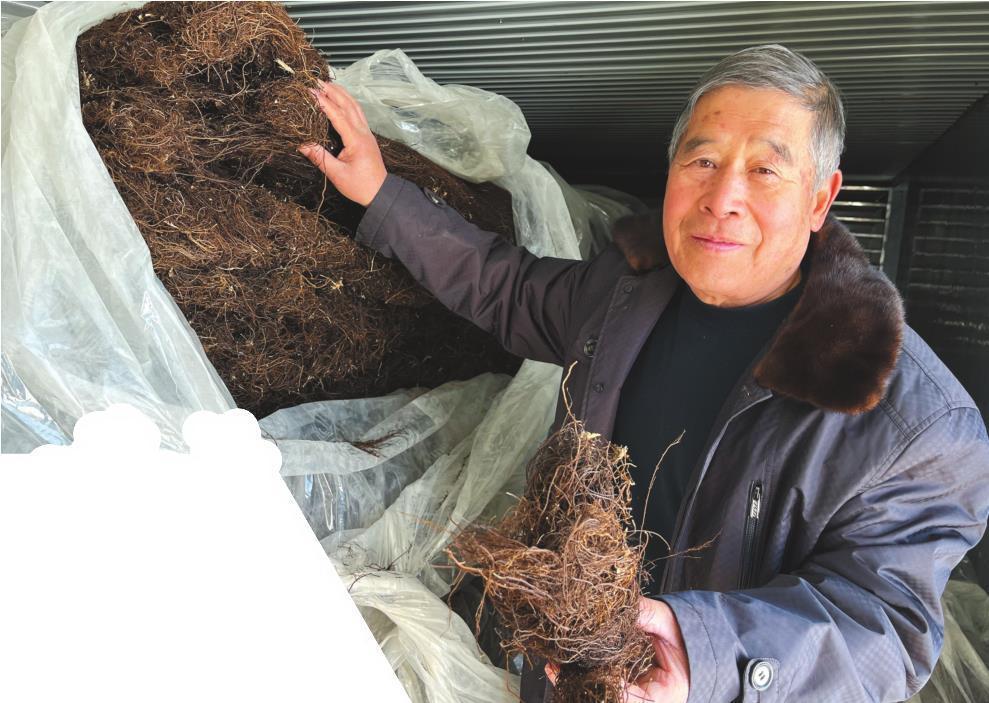
中药材种植

Search documents
那山 那人 那草
Xin Lang Cai Jing· 2026-02-27 22:33
Core Viewpoint - The article highlights the transformation of Chuanzi Gou Village in Qingyuan County, Liaoning, where the majority of villagers have shifted to cultivating traditional Chinese medicinal herbs, leading to economic growth and community development [6][7][8]. Group 1: Village and Agricultural Practices - Chuanzi Gou Village has a unique agricultural landscape characterized by scattered and irregularly shaped fields, primarily covered in snow during winter, where 95% of villagers grow medicinal herbs [6][7]. - The village has become a "one village, one product" community, focusing on the cultivation of various medicinal herbs, including Huangjing and Baixianpi [6][7]. - Villagers have expanded their cultivation efforts beyond local land, renting additional plots in nearby regions to meet the growing demand for medicinal herbs [7][8]. Group 2: Historical Context and Personal Journey - The story of Xu Dengyi, who began his life in Chuanzi Gou at the age of 13, illustrates the deep connection between the villagers and the mountains, which serve as both a barrier and a source of opportunity [9][10]. - Xu's early experiences in foraging for herbs laid the foundation for his later success in cultivating medicinal plants, demonstrating a profound understanding of the local ecosystem [12][13]. Group 3: Economic Development and Innovation - Xu Dengyi's innovative approach to ginseng cultivation, which included the use of organic fertilizers, significantly increased yields and established him as a pioneer in the local agricultural sector [16][17]. - The establishment of a medicinal herb processing facility reflects the village's shift towards value-added production, aiming to enhance profitability and sustainability in the medicinal herb industry [20][21]. - Xu's commitment to sharing knowledge and resources with fellow villagers has fostered a collaborative environment, leading to collective economic improvement [26][27]. Group 4: Future Outlook and Community Impact - The article emphasizes the importance of adapting to market changes and technological advancements in the medicinal herb industry, with a focus on deep processing to increase product value [21][22]. - Xu's son, Xu Enguo, represents the next generation's embrace of modern technology and information, ensuring the continuation of the family's agricultural legacy [22][23]. - The community's collective efforts have transformed Chuanzi Gou from a subsistence farming village into a thriving hub for medicinal herb cultivation, showcasing the potential for rural revitalization through traditional practices [27][28].

小种苗撬动大产业 云南鲁甸独蒜兰开出“共富花”
Zhong Guo Xin Wen Wang· 2026-02-17 10:53
Core Viewpoint - The development of the independent garlic orchid industry in Yunnan's Zhaotong City is being driven by innovative agricultural practices and collaboration with research institutions, leading to increased production and economic benefits for local farmers [1][2][3] Group 1: Industry Development - The independent garlic orchid, a nationally protected wild plant, is cultivated in Zhaotong due to its favorable climate and geographical conditions, making it an ideal growing area [1] - The company has established the largest independent garlic orchid breeding base in China, increasing seedling survival rates from below 5% to over 85% [1] - The company has cultivated over 1,300 acres of independent garlic orchid and has the capacity to produce 35 million seedlings in a single batch [1] Group 2: Research and Collaboration - The company collaborates with institutions like the Chinese Academy of Medical Sciences and the Kunming Institute of Botany to promote sustainable industry development through research and technology [2] - Five superior strains of independent garlic orchid have been selected, resulting in a nearly 30% increase in yield per acre [2] Group 3: Economic Impact - Over 300 local households are involved in the cultivation of independent garlic orchid, contributing to stable income growth [2] - A returnee farmer reported an annual income of around 50,000 yuan from cultivating independent garlic orchid, which is significantly higher than traditional crops [2]
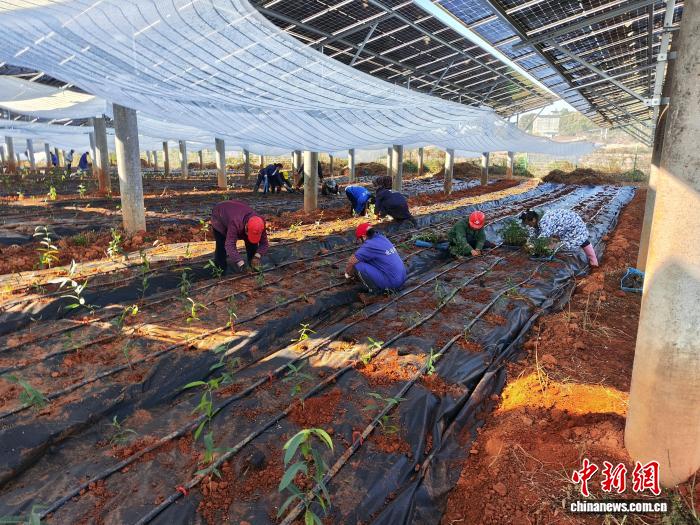
(新春走基层)板上发电、板下种药 农光互补让村民“借光”生财
Zhong Guo Xin Wen Wang· 2026-02-16 07:33
Core Insights - The article discusses a successful "agriculture-photovoltaics complementary" project in Jishui County, Jiangxi Province, which combines solar power generation with the cultivation of medicinal herbs, specifically the local herb "Shan Xiang Yuan" [1][2]. Group 1: Project Overview - The project involves the installation of over 174,000 solar panels that generate approximately 110 million kilowatt-hours of electricity annually, yielding over 40 million yuan in revenue [3][4]. - The project has transformed previously underutilized land into productive agricultural space, allowing for the cultivation of high-demand medicinal herbs while simultaneously generating solar energy [2][3]. Group 2: Economic Impact - The cultivation of Shan Xiang Yuan can yield an annual income of 10,000 yuan per acre, which is five times higher than traditional crops, with a stable market price of 30 to 32 yuan per kilogram [3][4]. - The project has created significant income opportunities for local villagers, with an average annual increase of 5,000 yuan per household, benefiting around 80 households [4][5]. Group 3: Community Engagement - The project has facilitated land leasing, labor opportunities, and skill training for villagers, contributing to a collective annual dividend of 240,000 yuan for the village [4]. - Local farmer Zhu Xingchang has become a model for success, using his earnings from the project to invest in further solar initiatives and diversify agricultural practices [5].
耿福能代表:从“靠天吃饭”到“靠技增收”
Ren Min Ri Bao· 2026-02-13 06:45
Group 1 - The core idea of the articles highlights the efforts of a company led by a representative to promote the development of traditional Chinese medicine and agricultural resources in Liangshan, contributing to rural revitalization and poverty alleviation [1][2] - The company has established a profit-sharing mechanism involving "company + party branch + cooperative + base + farmers," providing free quality seeds and training to local farmers, thus transitioning them from traditional farming to a technology-driven income model [1] - By 2025, the company aims to cultivate 34,300 acres of traditional Chinese medicinal herbs across 23 villages in 10 counties, benefiting over 149,000 farmers with stable income [1] Group 2 - In addition to traditional Chinese medicine, the company is also developing various agricultural resources to strengthen local specialty industries, ensuring stable prices and timely payments for farmers [2] - The company emphasizes the importance of serving the community and promoting high-quality development in the traditional Chinese medicine industry while consolidating poverty alleviation achievements [2] - The company's initiatives aim to connect small farmers with larger industries, facilitating the movement of local products out of the mountains and increasing their value [2]
《文登西洋参保护和发展条例》构建全链条质量保障体系
Qi Lu Wan Bao· 2026-02-10 13:52
Core Viewpoint - The implementation of the "Weihai City Wendeng American Ginseng Protection and Development Regulations" starting March 1 aims to enhance the quality control and protection of the American ginseng industry in Wendeng, recognized as the "Capital of Chinese American Ginseng" [1][2] Group 1: Industry Overview - Wendeng's American ginseng cultivation area is approximately 55,000 acres, accounting for over 60% of the national total, with an annual fresh ginseng production of 7,500 to 8,000 tons [1] - The industry supports over 45,000 workers across more than 200 villages, benefiting from unique climatic conditions that enhance the quality of ginseng [1] Group 2: Quality Control Measures - The regulations establish a comprehensive quality control system throughout the entire production chain, emphasizing the importance of quality as the core competitive advantage of Wendeng American ginseng [1][2] - A multi-layered protection system is created, including the development of a protection plan by the local government that considers ecological and cultural factors [1] Group 3: Planting and Processing Regulations - The regulations strengthen the protection of germplasm resources and require the establishment of standardized planting techniques, prohibiting harmful agricultural practices [2] - Specific processing standards are mandated, including the use of safe water sources and the prohibition of harmful chemicals, ensuring that only high-quality ginseng is processed [2] - A traceability system is established, requiring detailed records of seed sources and agricultural inputs, ensuring quality control throughout the entire supply chain [2]
“产业促进+服务保障”双轮驱动,威海出台文登西洋参专项法规
Qi Lu Wan Bao· 2026-02-09 06:51
Core Viewpoint - The "Regulations on the Protection and Development of Western Ginseng in Wendeng City" have been approved and will take effect on March 1, aiming to address key bottlenecks in the industry through a dual approach of "industry promotion + service guarantee" [1][2]. Group 1: Land Constraints - The regulations require the Wendeng District government to conduct surveys on suitable land for planting Western ginseng and to plan the planting area in accordance with industry development needs and land resource capacity [1]. - The regulations support universities, research institutions, and enterprises in improving soil quality and promoting advanced soil improvement technologies to expand planting space [1]. Group 2: Financial Support - The regulations establish a multi-party investment mechanism, mandating local governments to create financial policies that support industry development and encourage financing through equity and bond issuance [2]. - Financial institutions are encouraged to develop credit products tailored to the Western ginseng industry and to innovate financial service models to meet funding needs across production and operation [2]. - The regulations promote the development of specialized insurance products to mitigate natural and market risks faced by producers [2]. Group 3: Industry Upgrading - The regulations focus on extending the industry chain and enhancing added value, supporting the R&D and industrial application of products derived from Western ginseng [2]. - There is an emphasis on integrating the Western ginseng industry with food and beverage, healthcare, beauty, and cultural tourism sectors to develop unique tourism products and experiences [2]. - The regulations encourage the establishment of industry-academia-research cooperation mechanisms to foster technological innovation and talent development for sustainable industry growth [2]. Group 4: Long-term Mechanism - The measures aim to address current challenges while establishing a long-term mechanism for industry development, facilitating a transition from scale advantages to quality and efficiency advantages for the Western ginseng industry [3].
文登西洋参产业引领全国,打造特色农业高质量发展样板
Qi Lu Wan Bao· 2026-02-09 04:13
Core Insights - The Wending American Ginseng industry has developed over 40 years, becoming a benchmark for characteristic agriculture in Weihai City, with significant competitive advantages and a solid development foundation [1] Group 1: Industry Overview - Wending District is located in the golden climate zone at 37°N latitude, producing American ginseng with saponin content significantly higher than similar products domestically and internationally, establishing its authenticity [1] - The industry leads nationally and globally, with a stable planting area of approximately 50,000 acres and an annual production of 2,200 tons of dried ginseng, accounting for nearly 60% of national output and about 30% of global output, earning the title "Capital of Chinese American Ginseng" [1] Group 2: Support System - A robust organizational structure has been established, featuring a "three-level party organization + cooperative" model, involving 1,400 ginseng farmers and over 15,000 practitioners [2] - The establishment of a ginseng research institute has led to the completion of 13 provincial-level projects, 17 authorized patents, and 16 provincial standards, enhancing the average yield per acre from 400 kg to 500 kg [2] Group 3: Policy and Development - The industry benefits from national modern agricultural park policies, with a total investment of 1.8 billion yuan, and seven projects have been initiated [2] - Wending American Ginseng has developed 30 deep-processing products, achieving a processing conversion rate exceeding 80% and increasing added value by over 50% [2] Group 4: Brand and Market Position - The regional public brand value of "Wending American Ginseng" has reached 11.643 billion yuan, and it has been included in the national list of high-quality agricultural products [2] - By 2025, through large promotional activities and media coverage, the brand's recognition is expected to significantly increase [2]
张玉杰参加宜阳县代表团审议
Xin Lang Cai Jing· 2026-02-08 05:06
Group 1 - The core message emphasizes the implementation of the "1+2+10+6" work deployment to achieve high-quality development and efficient governance in Yiyang County [1][2] - The city government aims to strengthen advanced manufacturing by leveraging advantages in transportation, industrial foundation, and park facilities, focusing on key industries such as aviation equipment, bearings, and leisure food [2] - There is a strong push for the high-quality development of the cultural tourism industry, with plans to enhance cultural experience tourism, ecological tourism, and rural leisure tourism, positioning it as a pillar industry [2] Group 2 - The government is committed to building livable and business-friendly rural areas, promoting specialty industries like chili and traditional Chinese medicine, and improving rural living environments [2] - There is a focus on effectively managing risks in key areas to ensure social stability and safety, while also addressing the "three guarantees" at the grassroots level [2] - The government aims to ensure a strong start in the first quarter by solidly implementing key work initiatives [2]
林下产业串珠成链
Xin Lang Cai Jing· 2026-02-07 22:52
Core Insights - The development of the under-forest economy in Guizhou is gaining momentum, with significant investments in medicinal herb and edible fungus cultivation [1][2] - The Guizhou government is actively promoting under-forest economic activities, aiming to enhance local employment and income levels [1][2] Group 1: Under-Forest Economic Development - Guizhou has established 28 demonstration bases for under-forest cultivation, each over 200 acres, to promote local agricultural practices [1] - The Guizhou Qianzhang Medicinal Herb Co., Ltd. has expanded its cultivation area to over 1,000 acres, providing employment for hundreds of local residents with an average annual income increase of over 30,000 yuan [1] - The edible fungus cultivation in Baiyun District has created stable job opportunities for 200-300 villagers, with products sold to major cities like Shanghai and Guangzhou [1] Group 2: Economic Impact and Statistics - In the previous year, Guizhou completed under-forest cultivation of 146,100 acres, including 62,000 acres of medicinal herbs and 6,300 acres of edible fungi, generating significant economic benefits [2] - The average output value per acre for under-forest cultivation is reported at 1,305 yuan, contributing to a total industry chain value of 11.68 billion yuan [2] - The under-forest economy has engaged over 7,200 forest farmers, with labor wages exceeding 86 million yuan distributed [2]
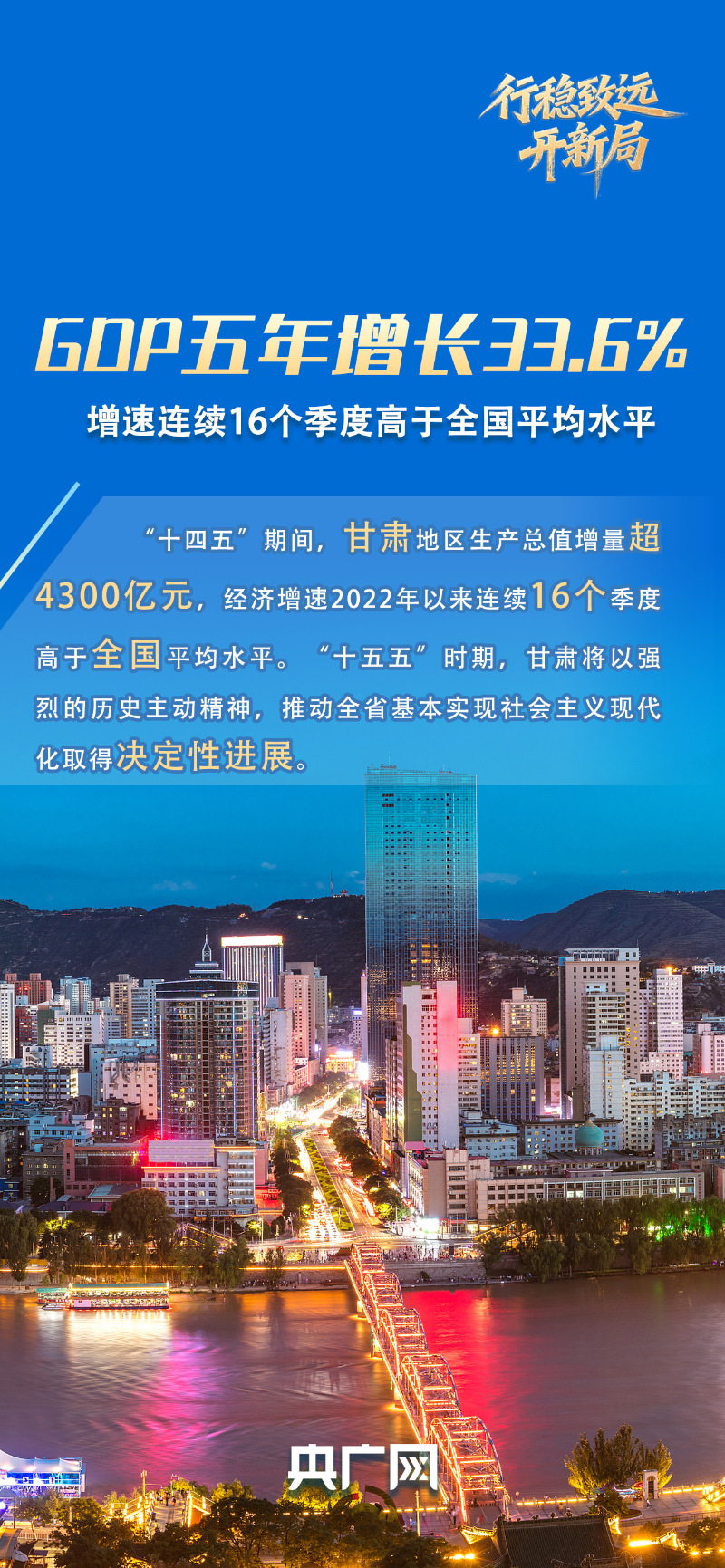
GDP增速连续16季跑赢“全国线” “甘”劲从何而来?
Xin Lang Cai Jing· 2026-02-07 08:26
Group 1: Economic Growth and Development - Gansu's GDP reached 1.36975 trillion yuan, an increase of 437.44 billion yuan or 33.6% compared to the end of the 13th Five-Year Plan [4] - The economic growth rate has been above the national average for 16 consecutive quarters since 2022 [4] - Gansu aims to significantly enhance high-quality development, technological innovation, and social civilization during the 14th Five-Year Plan [4] Group 2: Tourism and Cultural Heritage - Gansu received 1.752 billion tourists during the 14th Five-Year Plan, with tourism spending reaching 1.27 trillion yuan, marking increases of 32.9% and 41.6% respectively [12] - The "Night Tour of the Yellow River" project attracted 1.5 million visitors over three years, showcasing Gansu's tourism potential [12] - The Dunhuang Academy has implemented non-contact detection technology for cultural relics, setting new international standards for ancient mural protection [9] Group 3: Agricultural and Rural Development - The area of cultivated sand onion in Minqin County reached 15,000 acres, with an annual output of 51,000 tons and a total output value exceeding 200 million yuan [16] - Gansu has established nine national-level advantageous characteristic industrial clusters and 12 modern agricultural industrial parks during the 14th Five-Year Plan [19] - The average income of farmers in Yuangu Village exceeded 21,500 yuan, with collective economic income surpassing 1.2 million yuan [18] Group 4: Social Welfare and Elderly Care - Gansu has built 8,620 elderly care institutions with 111,000 beds, increasing the proportion of nursing beds from 45% to 62.5% [26] - The province invested 15.5 billion yuan in the construction of 520 comprehensive elderly care service centers and 900 mutual happiness homes [22] - A new elderly care service information network platform has been established, enhancing service accessibility for over 12,900 registered elderly individuals [23] Group 5: Education and Youth Development - Gansu has implemented the "County Middle School Revitalization" project, improving educational resources and reducing the number of students leaving the county for schooling [26] - The province aims to support 10,000 unemployed college graduates to work in grassroots positions by 2026 [21] - The "Increase in Educational Capacity" project added 131,000 urban compulsory education places [26] Group 6: Future Goals and Strategic Vision - Gansu's 15th Five-Year Plan targets an average annual GDP growth of over 5% and aims to create four national advanced manufacturing clusters [27] - The province plans to enhance the quality of life and promote common prosperity for all residents [27] - Gansu is positioned to leverage national strategies and policies to accelerate its development and improve its economic standing [27]